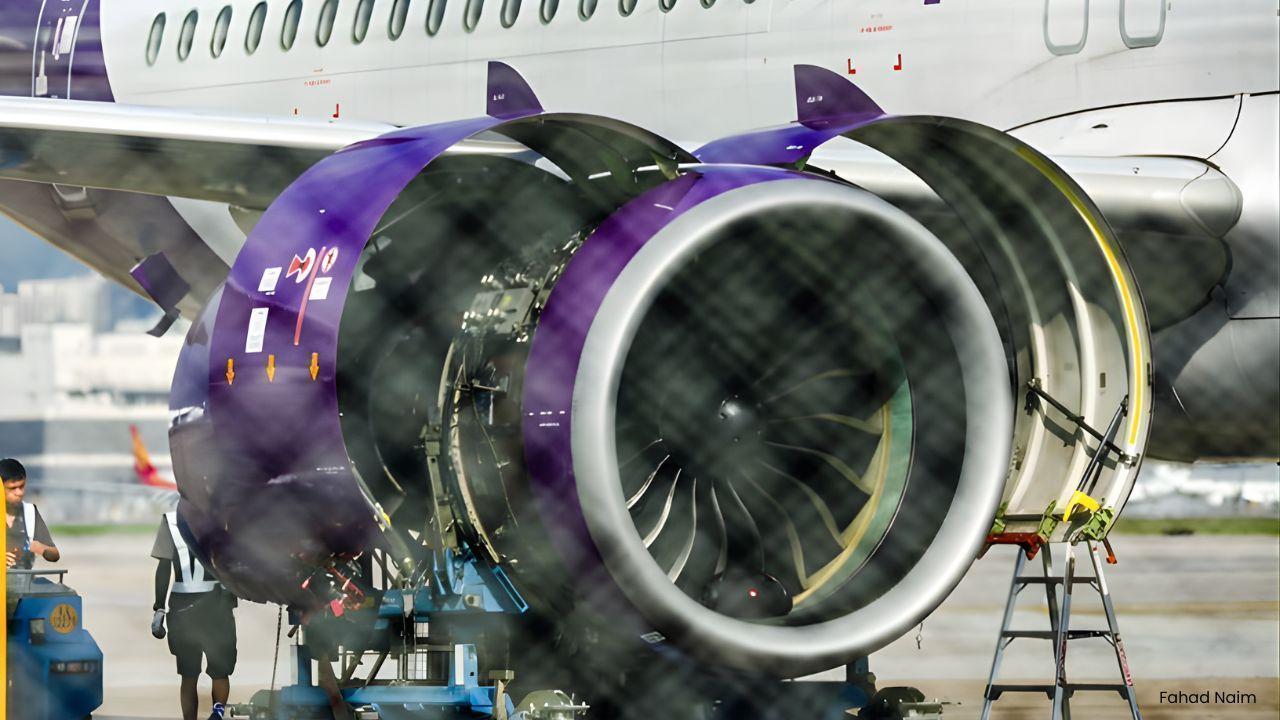
Post by : Avinab Raana
Photo : X / Fahad Naim
A surprising shift is unfolding in the global aftermarket as the neo teardowns trend accelerates and it’s sending a clear signal about today’s overheated engine market dynamics. Aircraft that are barely four or five years old are now being dismantled, not because they’ve reached the end of their economic life, but because their engines and components are suddenly worth more in parts than in service.
This unusual activity reflects mounting pressure in the propulsion sector, where supply constraints, repair bottlenecks and durability challenges are reshaping the aviation MRO outlook in ways few predicted.
Traditionally, aircraft teardowns occur late in life after decades of service. But the current neo teardowns trend flips that logic. Operators and asset managers are discovering that engines especially next-generation narrowbody powerplants are commanding premium valuations due to shortages and extended maintenance turnaround times.
In some cases, the engines alone justify acquiring and parting out relatively young aircraft. That reality exposes the imbalance in engine market dynamics, where limited shop capacity and production constraints have pushed spare engine demand to historic highs.
The aviation MRO outlook remains strained as repair shops grapple with unprecedented workloads. Engine shop visits are taking longer than expected, parts supply chains remain tight, and airlines are holding onto spare assets longer to protect schedules.
As a result, usable serviceable material (USM) extracted from young aircraft has become an attractive alternative. Components such as fan modules, combustor sections and high-pressure turbine parts are being snapped up quickly, often at elevated prices.
The neo teardowns trend, therefore, is not a sign of weak demand, it is a reflection of intense demand meeting constrained supply.
Aircraft lessors and asset managers are also recalibrating strategies. Instead of simply leasing aircraft for long cycles, some are evaluating whether part-out values provide stronger near-term returns.
This shift underscores evolving engine market dynamics, where liquidity in spare engines and modules has become critical to keeping airline fleets operational. The market has effectively placed propulsion systems at the center of aircraft asset valuation.
The big question facing the aviation MRO outlook is whether this is a temporary market spike or a longer structural reset. If production rates stabilise and durability improvements take hold, teardown economics may normalise. However, if constraints persist, early-life disassembly could become a recurring strategy.
What is clear is that propulsion availability not airframe age, is currently driving decisions.
The rise in younger neo teardowns highlights a pivotal shift in aircraft economics. Engines have become the most strategic asset in aviation, reshaping leasing models, maintenance planning and aftermarket valuations.
In today’s environment, the message is unmistakable: whoever controls engine availability controls operational stability. And until supply catches up with demand, the neo teardowns trend will remain one of the most telling indicators of a red-hot engine market.
neo teardowns trend, engine market dynamics, aviation MRO outlook





Advances in Aerospace Technology and Commercial Aviation Recovery
Insights into breakthrough aerospace technologies and commercial aviation’s recovery amid 2025 chall

Defense Modernization and Strategic Spending Trends
Explore key trends in global defense modernization and strategic military spending shaping 2025 secu

Tens of Thousands Protest in Serbia on Anniversary of Deadly Roof Collapse
Tens of thousands in Novi Sad mark a year since a deadly station roof collapse that killed 16, prote

Canada PM Carney Apologizes to Trump Over Controversial Reagan Anti-Tariff Ad
Canadian PM Mark Carney apologized to President Trump over an Ontario anti-tariff ad quoting Reagan,

The ad that stirred a hornets nest, and made Canadian PM Carney say sorry to Trump
Canadian PM Mark Carney apologizes to US President Trump after a tariff-related ad causes diplomatic

Bengaluru-Mumbai Superfast Train Approved After 30-Year Wait
Railways approves new superfast train connecting Bengaluru and Mumbai, ending a 30-year demand, easi



