Post by : Amit
Photo: Reuters
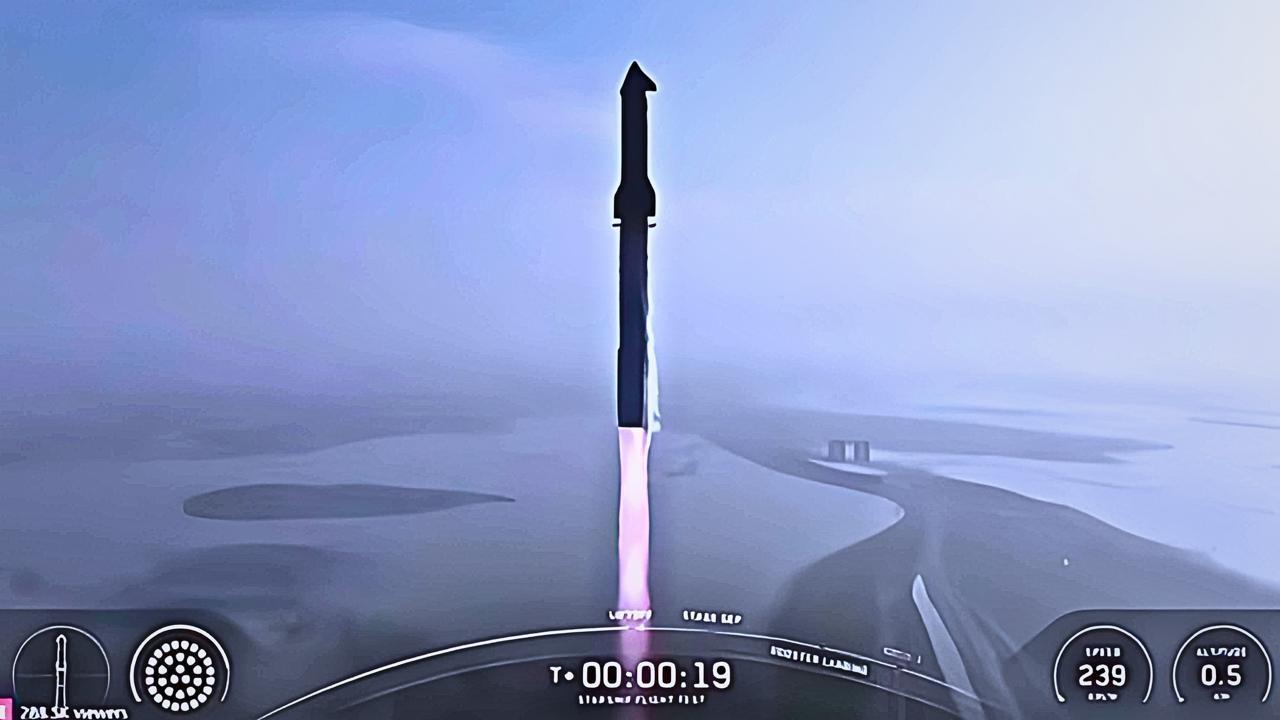
June 26, 2025 | Huntsville, Alabama — In a pioneering leap for materials science and aerospace engineering, NASA has successfully launched a rocket prototype made using 3D-printed components built from a cutting-edge superalloy, dubbed GRX-810. Developed at NASA’s Marshall Space Flight Center, the alloy represents a major technological advancement, offering remarkable durability, heat resistance, and structural strength — making it ideal for the extreme environments of deep space missions.
The test launch took place at NASA's Marshall facility and marks the first time this revolutionary metal was used in flight. GRX-810 is being hailed as one of NASA’s most promising innovations for the future of deep space propulsion systems and reusable launch vehicle components.
GRX-810 is a oxide-dispersion-strengthened (ODS) alloy, a next-generation metal designed to survive extreme temperatures and mechanical stress far beyond what traditional aerospace metals can withstand. According to NASA engineers, it is:
These qualities make it ideal for mission-critical components like combustion chambers, fuel injectors, and turbine blades that must endure temperatures exceeding 2,000°F (1,093°C) during operation.
The rocket prototype wasn’t just using a new alloy — it was also built using advanced 3D printing techniques, allowing for faster, more precise production with less waste and more design flexibility.
Traditionally, building rocket parts from such high-performance alloys would be time-consuming and expensive, requiring complex machining and heat treatment. But additive manufacturing allows NASA to print components directly in GRX-810, opening new doors for rapid prototyping and custom part production — both critical for next-gen space missions where speed, reliability, and adaptability are key.
The engine tested used 3D-printed parts made entirely from GRX-810, including high-heat regions such as nozzle and combustion areas, which are often the most vulnerable parts of traditional engines. During the test, the engine fired successfully and sustained high-thrust output, validating the alloy’s real-world performance in extreme flight conditions.
Dale Thomas, Associate Director of NASA Marshall, noted:
“This is more than a test — it’s a proof-of-concept that changes what’s possible for future missions to the Moon, Mars, and beyond. GRX-810 could extend the life of critical systems and reduce maintenance cycles dramatically.”
As NASA looks toward long-term exploration missions, such as Artemis Moon landings and crewed Mars missions, durability and reusability of parts become mission-critical. GRX-810’s resistance to heat and corrosion means fewer part failures, lower costs, and greater mission safety — especially on multi-year missions where replacements aren’t an option.
Additionally, using 3D-printed superalloy parts could cut down on launch vehicle weight, increasing payload efficiency and fuel savings — key goals for any space agency.
The breakthrough is the result of collaboration between NASA scientists and materials engineers, utilizing AI-driven materials modeling, advanced microscopy, and thermal testing to accelerate alloy development.
GRX-810 is expected to be used not just in NASA missions but could soon find applications in:
NASA has confirmed plans to integrate GRX-810 in future SLS upgrades, in-space propulsion modules, and next-generation landers.
NASA’s successful test of a 3D-printed rocket engine using GRX-810 signals a powerful shift in aerospace innovation. The combination of additive manufacturing and high-performance materials could reshape how humanity builds, launches, and maintains spacecraft for decades to come.
As space travel pushes farther from Earth, technologies like GRX-810 will ensure our rockets are tougher, smarter, and more ready than ever to explore the unknown.
NASA, Rocket Launch









Advances in Aerospace Technology and Commercial Aviation Recovery
Insights into breakthrough aerospace technologies and commercial aviation’s recovery amid 2025 chall

Defense Modernization and Strategic Spending Trends
Explore key trends in global defense modernization and strategic military spending shaping 2025 secu

Tens of Thousands Protest in Serbia on Anniversary of Deadly Roof Collapse
Tens of thousands in Novi Sad mark a year since a deadly station roof collapse that killed 16, prote

Canada PM Carney Apologizes to Trump Over Controversial Reagan Anti-Tariff Ad
Canadian PM Mark Carney apologized to President Trump over an Ontario anti-tariff ad quoting Reagan,

The ad that stirred a hornets nest, and made Canadian PM Carney say sorry to Trump
Canadian PM Mark Carney apologizes to US President Trump after a tariff-related ad causes diplomatic

Bengaluru-Mumbai Superfast Train Approved After 30-Year Wait
Railways approves new superfast train connecting Bengaluru and Mumbai, ending a 30-year demand, easi



