Post by : Avinab Raana
Photo : X / NDTV Profit
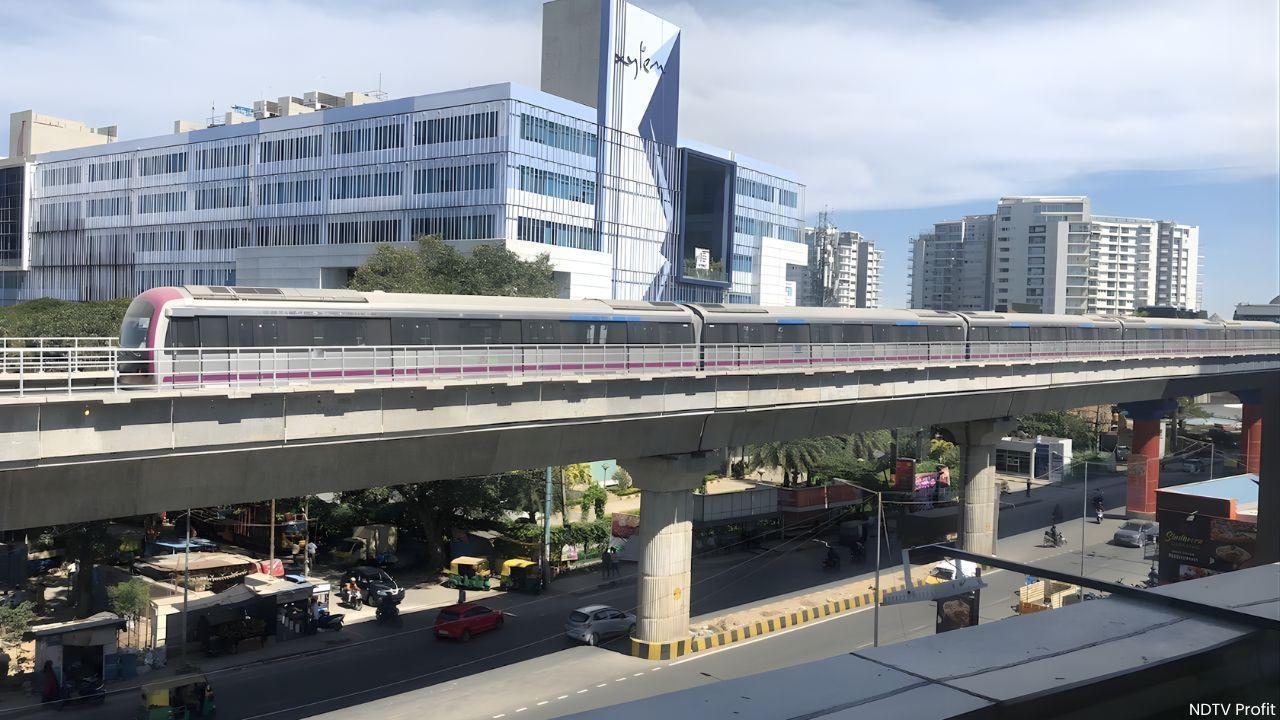
Bengaluru’s rapid urban expansion has brought with it an undeniable reality public transport systems are under immense pressure to keep pace. The Namma Metro, once seen as a relief for the city’s notorious traffic, is now facing its own capacity challenges, particularly on the heavily used Purple and Green lines. Daily commuters are increasingly encountering packed platforms, extended wait times, and peak-hour congestion that reflects the city’s booming population and economic growth. Against this backdrop, the planned addition of new train sets is being seen as a critical intervention to restore efficiency and commuter confidence.
To directly address overcrowding, authorities are preparing to introduce additional train sets on the Purple and Green corridors, a move expected to significantly ease congestion. With passenger volumes rising steadily across the network, the new trains are designed to improve service frequency and reduce waiting times during peak hours. Currently, overcrowding has reached a point where passengers often wait for multiple trains before boarding, especially at key interchange stations like Majestic.
The introduction of new rolling stock is expected to bring intervals closer to optimal urban metro standards, ensuring smoother passenger flow and a more predictable commuting experience. This step is not just about adding capacity, it is about recalibrating the system to match Bengaluru’s evolving mobility needs.
The Purple Line, connecting major commercial hubs from Whitefield to Challaghatta, and the Green Line, linking key residential and industrial zones, form the backbone of Bengaluru’s metro network. These corridors serve some of the city’s busiest routes, making them particularly vulnerable to overcrowding.
As Bengaluru continues to expand outward with tech parks, residential clusters, and business districts, these lines have witnessed a sharp rise in ridership. The pressure is further amplified by the interchange at Majestic, where both lines converge, creating one of the most crowded transit points in the city. The need for capacity expansion here is not optional, it is essential for maintaining system reliability.
While the metro network is expanding with upcoming lines like the Pink and Blue corridors, operational challenges on existing lines highlight the gap between infrastructure growth and real-time demand. The addition of new train sets is part of a broader strategy to bridge this gap, ensuring that current operations remain efficient even as the network scales.
Moreover, new train deliveries and approvals are tied to regulatory clearances, testing, and system integration, which often delay deployment timelines. This makes the upcoming approvals for new trains a crucial milestone in accelerating relief for commuters.
The move to expand train capacity reflects a larger shift toward smarter urban mobility planning in Bengaluru. As cities worldwide invest in high-capacity transit systems to reduce congestion and emissions, Bengaluru’s metro upgrades align with global trends in sustainable urban transport. Increasing train frequency not only improves commuter experience but also encourages more people to shift from private vehicles to public transport, an essential step in tackling traffic congestion and environmental challenges.
The approval and deployment of new trains could mark a turning point for Namma Metro, transforming it from an overburdened system into a more balanced and efficient urban transit network. However, this is just one piece of a larger puzzle. Continued investments in infrastructure, timely execution of expansion projects, and operational optimization will be key to sustaining long-term growth.
As Bengaluru positions itself as a global tech and innovation hub, its metro system must evolve at the same pace. The introduction of new trains is not just a solution to overcrowding, it is a signal that the city is ready to rethink and strengthen its mobility backbone for the future.
#trending #latest,#NammaMetro #BengaluruMetro #UrbanTransit #MetroExpansion #SmartMobility






Advances in Aerospace Technology and Commercial Aviation Recovery
Insights into breakthrough aerospace technologies and commercial aviation’s recovery amid 2025 chall

Defense Modernization and Strategic Spending Trends
Explore key trends in global defense modernization and strategic military spending shaping 2025 secu

Tens of Thousands Protest in Serbia on Anniversary of Deadly Roof Collapse
Tens of thousands in Novi Sad mark a year since a deadly station roof collapse that killed 16, prote

Canada PM Carney Apologizes to Trump Over Controversial Reagan Anti-Tariff Ad
Canadian PM Mark Carney apologized to President Trump over an Ontario anti-tariff ad quoting Reagan,

The ad that stirred a hornets nest, and made Canadian PM Carney say sorry to Trump
Canadian PM Mark Carney apologizes to US President Trump after a tariff-related ad causes diplomatic

Bengaluru-Mumbai Superfast Train Approved After 30-Year Wait
Railways approves new superfast train connecting Bengaluru and Mumbai, ending a 30-year demand, easi



