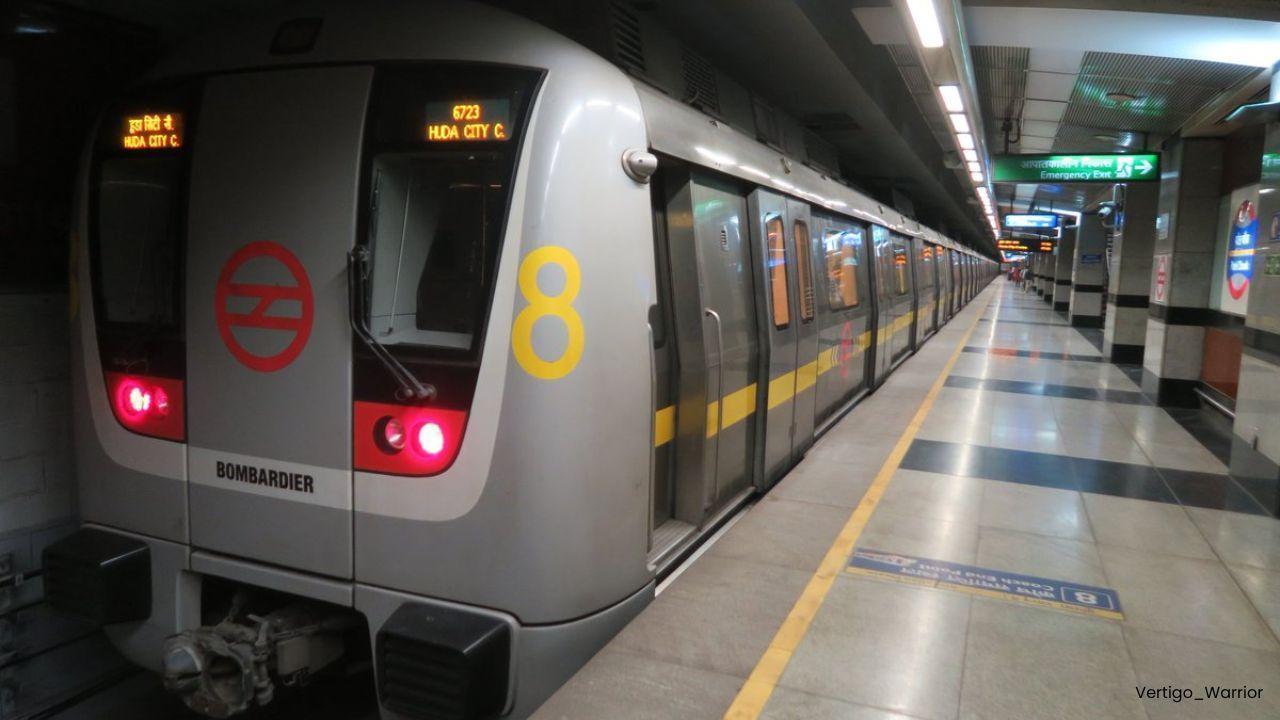
Post by : Avinab Raana
Photo : X / Vertigo_Warrior
The Delhi Metro has officially achieved a historic milestone, emerging as the world’s longest metro rail network with a total operational route length of 420 kilometres. This achievement underscores India’s rapid progress in urban mass transit infrastructure and positions Delhi at the forefront of global urban mobility developments.
The expansion reflects years of systematic planning, phased construction and coordinated execution under the Delhi Metro Rail Corporation’s (DMRC) guidance. With a sprawling network that now surpasses other well-known metro systems, Delhi’s metro has become a linchpin of daily mobility for millions of commuters who depend on efficient, reliable and sustainable transit options.
Over the past decade, Delhi Metro has steadily expanded its footprint across the National Capital Region (NCR), linking residential zones, employment centres, educational hubs and satellite cities. The achievement of 420 km metro networkstatus highlights how urban density and commuter demand have shaped large-scale urban transit expansion.
From Phase I’s initial corridors to the most recent extensions reaching far-flung outer districts, the metro has evolved into a true back-bone of city transport. Notably, the network seamlessly integrates with feeder bus services, e-rickshaws and last-mile connectivity initiatives enhancing commuter accessibility and reducing dependence on private vehicles.
For daily passengers, the expanded metro network has delivered clear benefits: reduced travel times, decongested roads and improved comfort during peak journeys. With millions boarding metro trains each day, the system has significantly alleviated pressure on traditional road networks, cutting down both fuel consumption and urban emissions.
Environmental advocates note that a metro system of this scale contributes substantially to cleaner air and more sustainable urban living, a priority for megacities striving to balance growth with environmental responsibility.
Beyond mobility, the Delhi Metro’s growth has catalysed economic activity around station precincts. Transit-oriented development patterns have emerged along major lines, attracting retail investment, commercial offices and residential projects that benefit from proximity to high-frequency mass transit.
Analysts highlight that such transit-linked development not only improves land values but also supports inclusive growth by bringing jobs and services closer to communities.
With the title of the world’s longest metro system secured, Delhi continues to plan further expansions and new lines to connect emerging urban nodes. Each extension reinforces the city’s leadership in urban transit expansion and sets a benchmark for other fast-growing metropolitan regions.
As the metro network continues to evolve, Delhi stands as a global model for sustainable, integrated and commuter-centric urban transport, a legacy measured not just in kilometres, but in the quality of daily life improvements for its citizens.
Delhi Metro world’s longest, 420 km metro network, urban transit expansion









Advances in Aerospace Technology and Commercial Aviation Recovery
Insights into breakthrough aerospace technologies and commercial aviation’s recovery amid 2025 chall

Defense Modernization and Strategic Spending Trends
Explore key trends in global defense modernization and strategic military spending shaping 2025 secu

Tens of Thousands Protest in Serbia on Anniversary of Deadly Roof Collapse
Tens of thousands in Novi Sad mark a year since a deadly station roof collapse that killed 16, prote

Canada PM Carney Apologizes to Trump Over Controversial Reagan Anti-Tariff Ad
Canadian PM Mark Carney apologized to President Trump over an Ontario anti-tariff ad quoting Reagan,

The ad that stirred a hornets nest, and made Canadian PM Carney say sorry to Trump
Canadian PM Mark Carney apologizes to US President Trump after a tariff-related ad causes diplomatic

Bengaluru-Mumbai Superfast Train Approved After 30-Year Wait
Railways approves new superfast train connecting Bengaluru and Mumbai, ending a 30-year demand, easi



