Post by : Amit
Mumbai’s Bullet Train Project Reaches 80% Completion at BKC Station
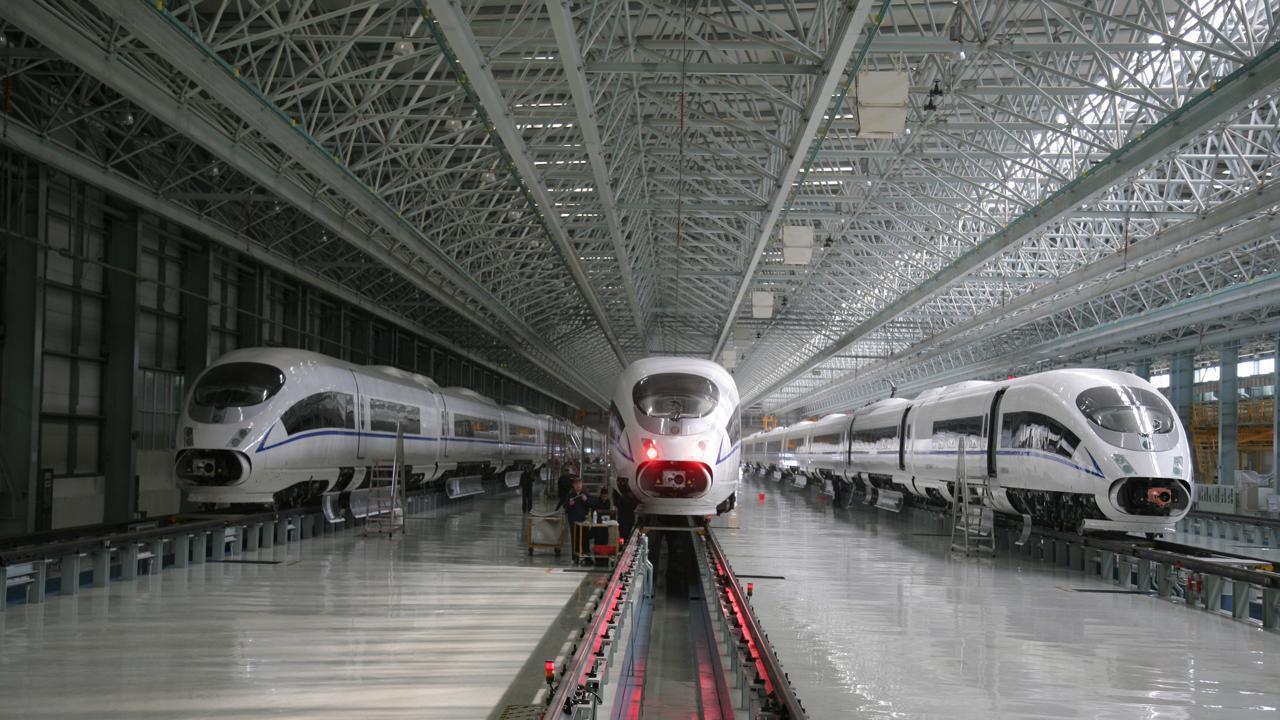
A monumental shift is underway beneath the bustling heart of Mumbai, as the country’s first bullet train inches closer to reality with nearly 80% of construction completed at the Bandra Kurla Complex (BKC) station. This underground station, set to anchor the southern end of the Mumbai-Ahmedabad High-Speed Rail Corridor, marks a defining moment in India's transport history—bringing together cutting-edge Japanese Shinkansen technology and world-class engineering to revolutionize mobility.
With each milestone, the dream of ultra-fast, reliable intercity travel inches closer to becoming a daily reality for millions.
BKC Station: Strategic Gateway to a New Mobility Era
Nestled in Mumbai’s commercial nucleus, BKC station is poised to be the linchpin of the 508-kilometer bullet train corridor. As the southern terminal for the high-speed route, the station is designed to handle enormous passenger volumes while integrating seamlessly with the city’s urban fabric—all within an entirely underground structure.
The project is spearheaded by the National High-Speed Rail Corporation Limited (NHSRCL) in collaboration with Japan International Cooperation Agency (JICA), making it not only a feat of engineering but also a testament to Indo-Japanese technological partnership. With its deep excavation, tunnel interfaces, and precision-designed platforms, BKC station represents a fusion of innovation and ambition in India's evolving infrastructure story.
Engineering Feat Amidst Urban Challenges
Reaching the 80% completion mark in a densely populated zone like Mumbai is no small feat. The construction has involved excavating over 467,000 cubic meters of earth, constructing multi-level underground facilities, and aligning every phase with stringent Japanese and Indian safety regulations. Even with the logistical hurdles posed by working below one of the city's busiest business districts, progress has remained steady and focused.
The station’s layout, featuring advanced fire safety systems, automated passenger handling, and ultra-modern amenities, has been planned to global standards. Despite pandemic-era slowdowns and the inherent risks of tunneling beneath high-density zones, the project remains on track—both technically and symbolically—for delivering India’s first high-speed railway experience.
High-Speed Rail: Redefining India’s Transit Paradigm
The bullet train corridor between Mumbai and Ahmedabad isn’t just a transportation initiative—it’s a transformative leap in national connectivity. With trains designed to travel at 320 km/h, the travel time between the two cities will shrink from over six hours to just around two, turning India’s first high-speed rail corridor into a game-changer for business, tourism, and regional development.
Adopting Japan’s world-renowned Shinkansen model, the corridor promises enhanced safety, punctuality, and passenger comfort. The project is being heralded as the fastest rail line in Indian history, backed by seismic-proof infrastructure and systems designed for minimal environmental impact.
Economic Ripple Effects: From Employment to Innovation
Beyond travel time and speed, the economic ripple effects of the bullet train project are already taking hold. Thousands of jobs in construction, civil engineering, and allied services have been generated, along with a surge in demand for local manufacturing under the Make in India initiative. Japanese technological know-how is being seamlessly transferred to Indian teams, cultivating new skills and laying the foundation for domestic high-speed rail capabilities.
Moreover, the high-speed corridor is poised to stimulate real estate growth, catalyze urban regeneration around station nodes, and attract private sector investment in towns along the route. For BKC, the bullet train terminal is expected to bolster its standing as a global financial and connectivity hub.
A Sustainable Transit Blueprint
Environmental considerations are integral to the bullet train’s design. The underground BKC station ensures minimal disruption to the existing urban layout and reduces the surface footprint. Meanwhile, energy-efficient systems, sustainable materials, and green construction practices are being prioritized to align with India’s broader climate goals.
Once operational, high-speed trains are expected to offer a cleaner alternative to road and air travel on the same corridor, reducing greenhouse gas emissions and improving the overall sustainability of intercity transport.
What Lies Ahead: From Tunnels to Tracks
With BKC station nearing completion, the next focus shifts to completing tunnel boring, especially the undersea section linking BKC to Shilphata, as well as laying high-speed tracks and integrating advanced signaling systems. Procurement of rolling stock and readiness for trial runs are also in advanced stages of planning.
Authorities remain confident that the core components will align in time to meet projected deadlines, with phased operations expected to begin in the coming years. As BKC station nears structural readiness, it will serve as a vital operational hub once commercial services commence.
Managing Complexities: Land, Costs, and Public Expectations
Despite the substantial progress, challenges persist. Cost overruns and delays linked to land acquisition, regulatory approvals, and shifting public expectations continue to be pain points. However, international precedents show that high-speed rail investments often yield long-term gains in mobility, economic integration, and quality of life.
Government agencies and project leaders are working to mitigate concerns by accelerating clearances, promoting transparent communication, and building public support around the project’s transformative potential.
Reimagining Indian Railways for the 21st Century
The Indian Railways network, steeped in legacy and scale, has long been the backbone of national transport. But the bullet train represents a bold reimagination of this legacy—one that blends heritage with high-tech vision. BKC station stands as a symbol of this evolution, where world-class rail infrastructure is no longer an aspiration but an emerging reality.
The bullet train is set to redefine expectations about speed, safety, and passenger experience, positioning India among the elite nations with modern, efficient high-speed rail systems.
Accelerating Toward a High-Speed Future
As work at BKC station surges past the 80% mark, India’s high-speed future is no longer a faraway dream—it is emerging, tangible, and structurally taking shape beneath Mumbai’s surface. The Mumbai-Ahmedabad Bullet Train corridor is not just a megaproject—it’s a movement toward smarter mobility, stronger economies, and cleaner cities.
Each concrete slab and steel girder at BKC adds momentum to a future where distance is shortened not by compromise, but by engineering excellence. And with every passing day, India moves closer to boarding its high-speed destiny.
Mumbai, Bullet Train, BKC Station





Advances in Aerospace Technology and Commercial Aviation Recovery
Insights into breakthrough aerospace technologies and commercial aviation’s recovery amid 2025 chall

Defense Modernization and Strategic Spending Trends
Explore key trends in global defense modernization and strategic military spending shaping 2025 secu

Tens of Thousands Protest in Serbia on Anniversary of Deadly Roof Collapse
Tens of thousands in Novi Sad mark a year since a deadly station roof collapse that killed 16, prote

Canada PM Carney Apologizes to Trump Over Controversial Reagan Anti-Tariff Ad
Canadian PM Mark Carney apologized to President Trump over an Ontario anti-tariff ad quoting Reagan,

The ad that stirred a hornets nest, and made Canadian PM Carney say sorry to Trump
Canadian PM Mark Carney apologizes to US President Trump after a tariff-related ad causes diplomatic

Bengaluru-Mumbai Superfast Train Approved After 30-Year Wait
Railways approves new superfast train connecting Bengaluru and Mumbai, ending a 30-year demand, easi



