Post by : Avinab Raana
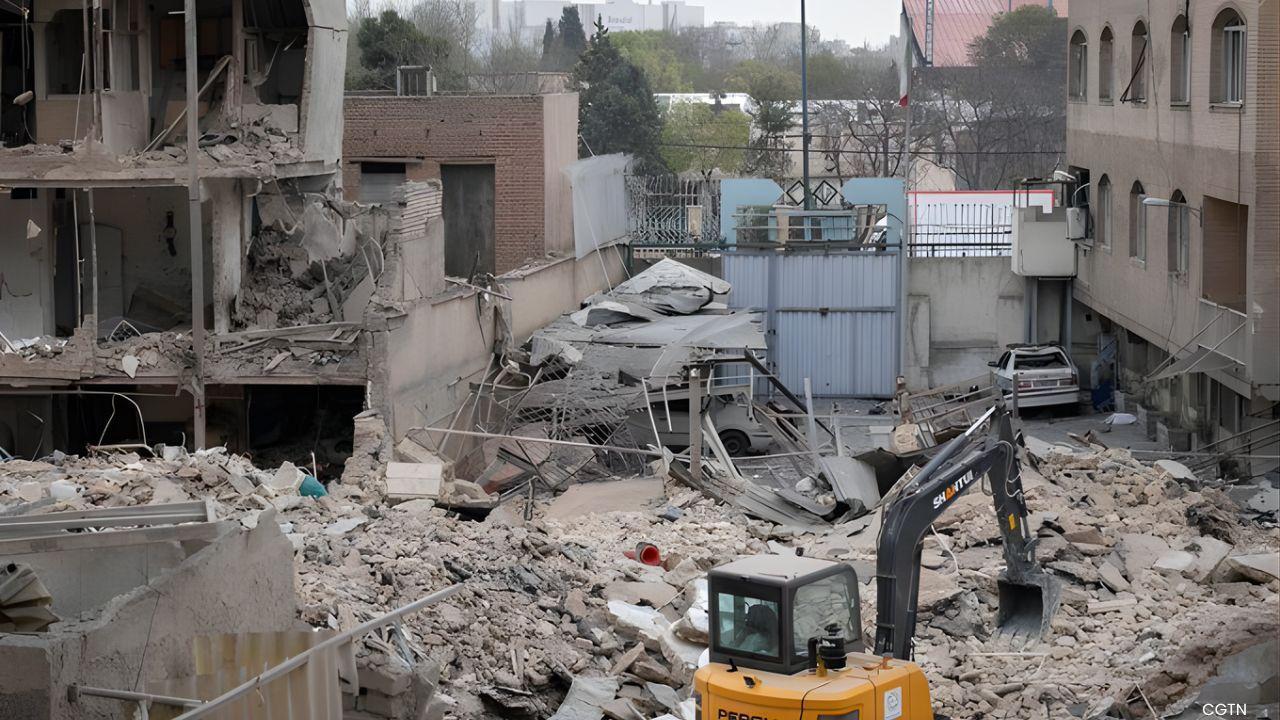
Photo : X / CGTN
The escalating Middle East conflict is casting a long shadow over global aviation, with business aviation feeling the pressure more sharply than most. As geopolitical tensions intensify, private jet operators are being forced to rethink routes, schedules, and operational strategies almost overnight. One of the most immediate consequences has been the tightening of airspace across critical parts of the Middle East. Several routes that serve as vital connectors between Europe, Asia, and Africa are now either restricted or considered high-risk. This has forced operators to divert flights along longer, less efficient paths, increasing both flight time and fuel consumption.
Business aviation thrives on flexibility and speed, but the current environment is testing those very strengths. Operators are dealing with sudden route changes, limited access to preferred airspace, and heightened risk assessments. For a sector built around convenience and precision timing, these disruptions are proving particularly challenging. The impact is already visible in declining activity levels across major Middle Eastern hubs. Private jet movements have slowed as operators avoid volatile zones, while clients reconsider travel plans amid uncertainty. The reduction in traffic reflects not just operational constraints but also a cautious shift in demand.
The disruption is not confined to the region alone. Given the Middle East’s central role in global aviation networks, changes in airspace availability are creating ripple effects worldwide. Flights are being rerouted across longer distances, affecting scheduling, fleet utilization, and overall efficiency for operators across continents. Despite the operational and financial challenges, safety remains the top priority. Aviation stakeholders are prioritizing risk avoidance, even if it comes at the cost of efficiency and profitability. In a volatile geopolitical environment, precautionary measures are essential to ensure passenger and crew safety. As tensions continue with no immediate resolution in sight, business aviation faces an extended period of uncertainty. The current situation highlights how deeply aviation is intertwined with global stability. For now, operators must navigate a complex landscape where every route decision carries both operational and strategic weight.
Middle East conflict aviation, business aviation disruption, airspace restrictions, private jet operations, flight rerouting, aviation safety risk, Gulf airspace, bizav activity







Advances in Aerospace Technology and Commercial Aviation Recovery
Insights into breakthrough aerospace technologies and commercial aviation’s recovery amid 2025 chall

Defense Modernization and Strategic Spending Trends
Explore key trends in global defense modernization and strategic military spending shaping 2025 secu

Tens of Thousands Protest in Serbia on Anniversary of Deadly Roof Collapse
Tens of thousands in Novi Sad mark a year since a deadly station roof collapse that killed 16, prote

Canada PM Carney Apologizes to Trump Over Controversial Reagan Anti-Tariff Ad
Canadian PM Mark Carney apologized to President Trump over an Ontario anti-tariff ad quoting Reagan,

The ad that stirred a hornets nest, and made Canadian PM Carney say sorry to Trump
Canadian PM Mark Carney apologizes to US President Trump after a tariff-related ad causes diplomatic

Bengaluru-Mumbai Superfast Train Approved After 30-Year Wait
Railways approves new superfast train connecting Bengaluru and Mumbai, ending a 30-year demand, easi



