Post by : Saif
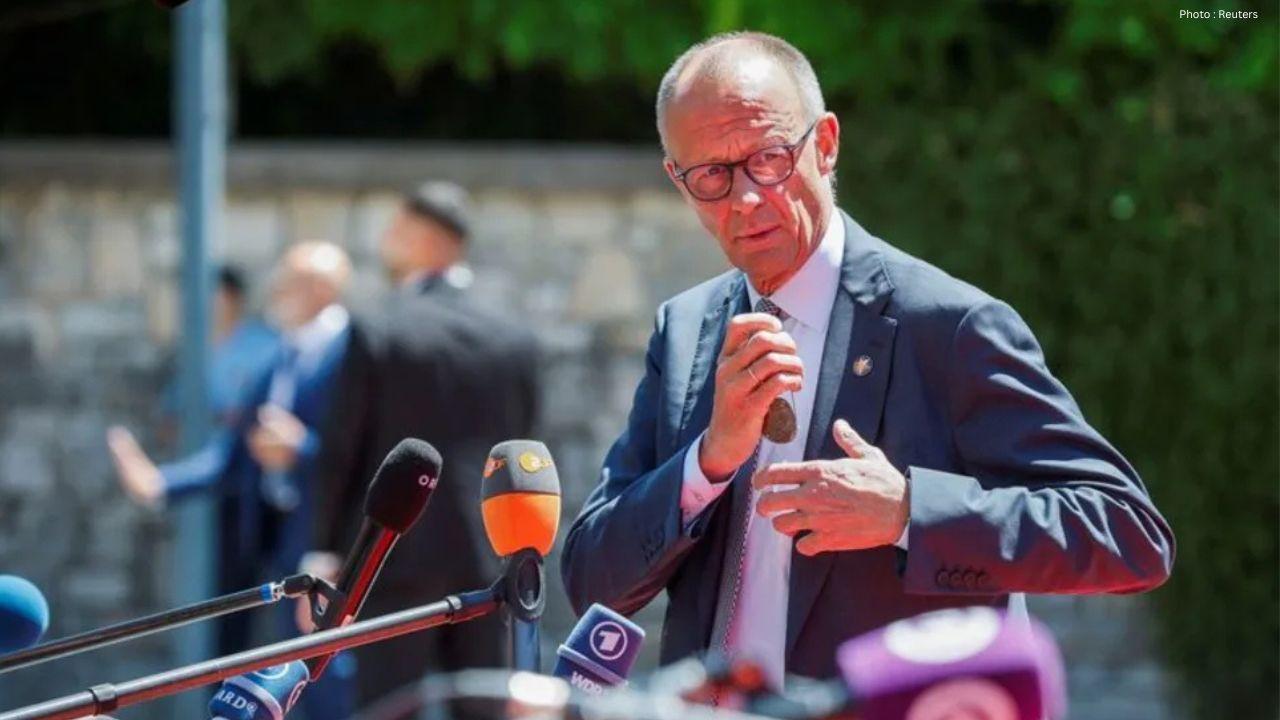
German Chancellor Friedrich Merz has called on the European Union to be ready and capable of expanding as leaders from the Western Balkans continue their efforts to move closer to membership. His remarks came during a summit with regional representatives, highlighting the growing importance of enlargement in the bloc's long-term strategy.
The statement reflects renewed discussions about the future of Europe and the role that Balkan countries could play within the union. As geopolitical challenges continue to shape the continent, many European leaders believe that deeper integration can strengthen stability, security, and economic cooperation across the region.
The summit brought together officials from several Western Balkan nations that have long sought closer ties with Brussels. These countries view membership as a pathway to economic development, stronger institutions, increased investment, and greater political stability.
For years, the accession process has moved slowly due to a combination of political reforms, governance requirements, economic conditions, and concerns among existing member states. Despite these challenges, many governments in Southeast Europe continue to see joining the bloc as a major national objective.
Merz's comments suggest that Europe must not only evaluate candidate countries but also prepare itself institutionally for future growth. Expansion involves significant planning because new members become part of a political and economic system that requires coordination across many areas, including trade, security, migration, and policymaking.
The issue has gained greater attention in recent years due to changing global conditions. Conflicts, economic uncertainty, energy concerns, and geopolitical competition have encouraged policymakers to reconsider how the continent can strengthen unity and resilience. Bringing neighboring nations closer to European institutions is increasingly viewed as part of that strategy.
Supporters of enlargement argue that welcoming qualified candidates can promote peace and stability in a region that has experienced political tensions and economic challenges in the past. They believe stronger integration encourages reforms, improves governance, and creates opportunities for sustainable development.
Economic benefits are another major factor in the discussion. Candidate countries could gain wider access to markets, increased foreign investment, and additional development funding. Existing members may also benefit from stronger regional trade networks and expanded economic partnerships.
Infrastructure development is often highlighted as an important advantage of closer cooperation. Improved transportation links, energy networks, and digital connectivity can help strengthen economic ties between member states and neighboring countries. Such projects support business growth and improve living standards.
At the same time, some governments within the union remain cautious about enlargement. Concerns often focus on the readiness of applicants to meet required standards related to governance, judicial independence, anti-corruption efforts, and economic reforms. These requirements are considered essential for maintaining the effectiveness of the European project.
Another challenge involves the union's own decision-making structure. As the number of members increases, reaching agreement on major policies can become more complex. This is one reason why leaders such as Merz emphasize the need for institutional readiness alongside candidate preparation.
The Western Balkans remain strategically important for Europe. The region sits at a key geographic crossroads and plays an important role in trade routes, energy connections, migration management, and regional security. Stronger cooperation can help address common challenges while supporting long-term stability.
Public opinion also plays a role in the enlargement debate. Citizens in candidate countries often view membership as an opportunity for economic progress and improved living standards. Meanwhile, voters within existing member states may have differing views about the pace and scope of future expansion.
The summit underscored the importance of continued dialogue between Brussels and regional leaders. Regular discussions help maintain momentum in the accession process while providing opportunities to address concerns and track progress on reforms.
From a broader perspective, enlargement is not simply about adding new members. It is also about shaping the future direction of Europe. Decisions made today could influence the continent's political landscape, economic strength, and strategic position for decades to come.
The remarks by Friedrich Merz send a clear message that the conversation about expansion remains active and relevant. While challenges remain on both sides, there is growing recognition that the future of the Western Balkans and the future of Europe are closely connected.
As discussions continue, both the European Union and aspiring member states will need to balance ambition with preparation. Successful enlargement requires commitment, reforms, and cooperation from all parties involved. If these conditions are met, future expansion could become a significant step toward a more connected, stable, and prosperous Europe.
#trending #latest #EuropeanUnion #EUExpansion #WesternBalkans #FriedrichMerz #EuropeNews #EUPolitics #BalkanCountries #EUMembership #EuropeanCommission #EuropeanParliament #InternationalRelations






Advances in Aerospace Technology and Commercial Aviation Recovery
Insights into breakthrough aerospace technologies and commercial aviation’s recovery amid 2025 chall

Defense Modernization and Strategic Spending Trends
Explore key trends in global defense modernization and strategic military spending shaping 2025 secu

Tens of Thousands Protest in Serbia on Anniversary of Deadly Roof Collapse
Tens of thousands in Novi Sad mark a year since a deadly station roof collapse that killed 16, prote

Canada PM Carney Apologizes to Trump Over Controversial Reagan Anti-Tariff Ad
Canadian PM Mark Carney apologized to President Trump over an Ontario anti-tariff ad quoting Reagan,

The ad that stirred a hornets nest, and made Canadian PM Carney say sorry to Trump
Canadian PM Mark Carney apologizes to US President Trump after a tariff-related ad causes diplomatic

Bengaluru-Mumbai Superfast Train Approved After 30-Year Wait
Railways approves new superfast train connecting Bengaluru and Mumbai, ending a 30-year demand, easi



