
Post by : Amit
Photo : X / Fisheries & Aquaculture
A Turning Tide for the Maritime Industry
The maritime industry stands at a critical juncture. Long the backbone of global trade and coastal economies, it is now under increasing pressure to redefine its role in fostering a sustainable “blue economy.” The term, once dismissed as an aspirational slogan, has become an urgent framework guiding how nations and industries manage ocean resources. But experts warn that progress remains slow, fragmented, and insufficient to address the scale of the environmental and social challenges at hand.
The debate is no longer about whether sustainability matters in maritime. Instead, it is about how quickly the industry can mobilize change, whether through emissions reduction, cleaner technologies, or equitable governance of marine resources. The call to act is ringing louder than ever, and the window for meaningful transformation is narrowing.
What the Blue Economy Really Means
At its core, the blue economy is about harnessing the ocean’s wealth while ensuring long-term ecological health and social equity. It encompasses everything from shipping and port operations to fisheries, offshore energy, and coastal tourism. The guiding principle is balance: economic prosperity cannot come at the expense of ocean ecosystems or the livelihoods of communities that depend on them.
For the maritime sector, this means reducing its carbon footprint, cutting pollution, and investing in innovation to make vessels, supply chains, and port operations more sustainable. But the blue economy is not just about environmental goals. It also seeks to address issues of fairness—ensuring small island nations, developing coastal economies, and vulnerable communities are not left behind in the transition.
Shipping’s Heavy Footprint
The shipping industry, which carries nearly 90 percent of global trade, remains both an enabler of economic growth and a significant source of environmental stress. Its carbon emissions account for about three percent of global greenhouse gases, a figure projected to rise if urgent action is not taken. Beyond emissions, shipping contributes to ocean noise pollution, ballast water contamination, and risks from oil spills and hazardous cargo.
Despite these challenges, shipping has begun taking steps toward decarbonization. The International Maritime Organization (IMO) has outlined ambitious targets, including a commitment to net-zero emissions by 2050. Yet, the pace of transition remains slow. Industry leaders acknowledge that current measures—such as energy efficiency improvements and alternative fuels like LNG—are transitional at best. Scaling up green hydrogen, ammonia, and advanced biofuels requires both massive investment and global regulatory alignment.
Ports as Gateways of Change
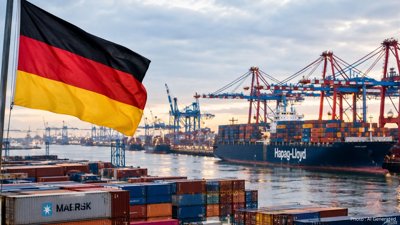
Ports, too, are central to the blue economy equation. As critical nodes in global supply chains, they not only facilitate trade but also shape energy and emissions profiles. Many leading ports are investing in green infrastructure, such as shore power systems that allow vessels to plug into renewable energy grids instead of burning fossil fuels while docked.
Yet, progress is uneven. Wealthier nations and advanced ports in Europe and East Asia are moving ahead, while smaller ports in Africa, South Asia, and island states struggle to secure funding. This imbalance risks creating a two-tier system where only certain regions can fully participate in a sustainable blue economy. Advocates argue that international financial institutions and industry consortia must close this gap, channeling resources where they are needed most.
Financing the Transition
Achieving a sustainable blue economy requires more than goodwill; it requires financing on an unprecedented scale. Experts estimate that trillions of dollars will be needed globally to support infrastructure, research, and the adoption of low-carbon technologies in shipping and ports.
Private investors are increasingly exploring “blue bonds” and sustainable finance instruments that tie returns to measurable environmental and social outcomes. However, critics caution against “blue-washing”—where companies make vague sustainability claims without meaningful accountability. For the maritime sector, transparency will be key. Investors, regulators, and civil society will expect clear metrics and robust reporting to ensure funds truly drive systemic change.
Innovation on the Horizon
Technology and innovation remain powerful levers for transformation. From wind-assisted propulsion systems and AI-driven route optimization to hull-cleaning drones and carbon capture onboard ships, the industry is experimenting with solutions once deemed futuristic.
Digitalization also promises to make shipping more efficient. Smart port systems, blockchain-enabled supply chains, and predictive maintenance platforms are already reducing waste and optimizing operations. Yet, the challenge lies in scaling these innovations across a fragmented and cost-sensitive industry. Smaller operators, which make up the bulk of the global fleet, often lack the resources to adopt cutting-edge technology. Bridging this divide will be critical if the blue economy vision is to be realized.
Governance and Global Cooperation
Beyond technology, the blue economy requires governance frameworks that ensure fairness and enforce accountability. The oceans, by nature, are a shared resource, and their stewardship demands international cooperation. While the IMO provides a platform for regulation, progress often stalls due to competing national interests.
Regional initiatives have shown promise. For instance, the European Union’s Fit for 55 package and its Emissions Trading System are beginning to influence global shipping standards. Likewise, partnerships in Southeast Asia and the Pacific Islands are exploring collective approaches to ocean management. Still, experts argue that without stronger global consensus, piecemeal efforts will fall short of what is needed.
The Role of Coastal Communities
At the human level, the blue economy is deeply tied to the fates of coastal communities. Small island states and low-lying nations are on the frontlines of climate change, facing rising sea levels, stronger storms, and dwindling fisheries. For them, the maritime industry’s transition is not just a business challenge—it is a matter of survival.
Ensuring these communities benefit from, rather than suffer under, maritime transformation is essential. This means inclusive policymaking, capacity building, and equitable access to new opportunities in green shipping, renewable ocean energy, and sustainable aquaculture. Without this human-centered approach, the blue economy risks becoming another driver of inequality.
Industry Voices and Calls to Action
Leaders across the maritime spectrum are increasingly vocal about the need for decisive action. Shipping executives, port authorities, and sustainability advocates have warned that delay will only increase the costs of transition. “The oceans cannot wait for incremental progress,” one industry expert recently remarked, underscoring the urgency of systemic change.
Trade associations and think tanks are calling for mandatory emissions reporting, stricter enforcement of pollution controls, and incentives for investment in green fuels. At the same time, maritime workers and unions are demanding training and reskilling initiatives to ensure they are not left behind in the shift toward automation and cleaner technologies.
Risks of Inaction
The risks of inaction are stark. Continued reliance on fossil fuels in shipping could derail global climate goals, while unchecked pollution and habitat destruction could erode the very ecosystems the industry depends on. Economically, failing to transition could isolate laggard companies and nations from emerging trade regimes that favor sustainable practices.
In humanitarian terms, millions of people in vulnerable coastal regions could face displacement and economic collapse if the maritime sector fails to align with the blue economy vision. The stakes are as high as they come: the health of the oceans, the resilience of communities, and the credibility of an industry central to global trade.
A Defining Decade Ahead
The coming decade will likely determine whether the maritime sector can genuinely embrace the blue economy or merely pay it lip service. The technological tools exist, the financial models are emerging, and the urgency is clear. What remains uncertain is whether the industry can muster the political will, global coordination, and equitable strategies required to succeed.
For an industry that has long thrived on navigating storms, the challenge of achieving a sustainable blue economy may be its most defining voyage yet. Failure is not an option, for the consequences would extend far beyond the docks and shipyards—reshaping economies, societies, and ecosystems across the planet.
Navigating Toward Responsibility
The maritime industry’s pursuit of a sustainable blue economy is no longer optional; it is a responsibility to future generations. The oceans sustain life, commerce, and climate balance, and their stewardship demands bold choices. The industry must act swiftly to cut emissions, invest in innovation, and ensure inclusivity in its transition.
The question is not whether the blue economy will shape the maritime sector—it already is. The real test lies in whether the industry can rise to the moment, charting a course that honors both economic necessity and ecological responsibility. The world is watching, and the time for action is now.
Blue Economy, Marintime









Advances in Aerospace Technology and Commercial Aviation Recovery
Insights into breakthrough aerospace technologies and commercial aviation’s recovery amid 2025 chall

Defense Modernization and Strategic Spending Trends
Explore key trends in global defense modernization and strategic military spending shaping 2025 secu

Tens of Thousands Protest in Serbia on Anniversary of Deadly Roof Collapse
Tens of thousands in Novi Sad mark a year since a deadly station roof collapse that killed 16, prote

Canada PM Carney Apologizes to Trump Over Controversial Reagan Anti-Tariff Ad
Canadian PM Mark Carney apologized to President Trump over an Ontario anti-tariff ad quoting Reagan,

The ad that stirred a hornets nest, and made Canadian PM Carney say sorry to Trump
Canadian PM Mark Carney apologizes to US President Trump after a tariff-related ad causes diplomatic

Bengaluru-Mumbai Superfast Train Approved After 30-Year Wait
Railways approves new superfast train connecting Bengaluru and Mumbai, ending a 30-year demand, easi



