Post by : Saif
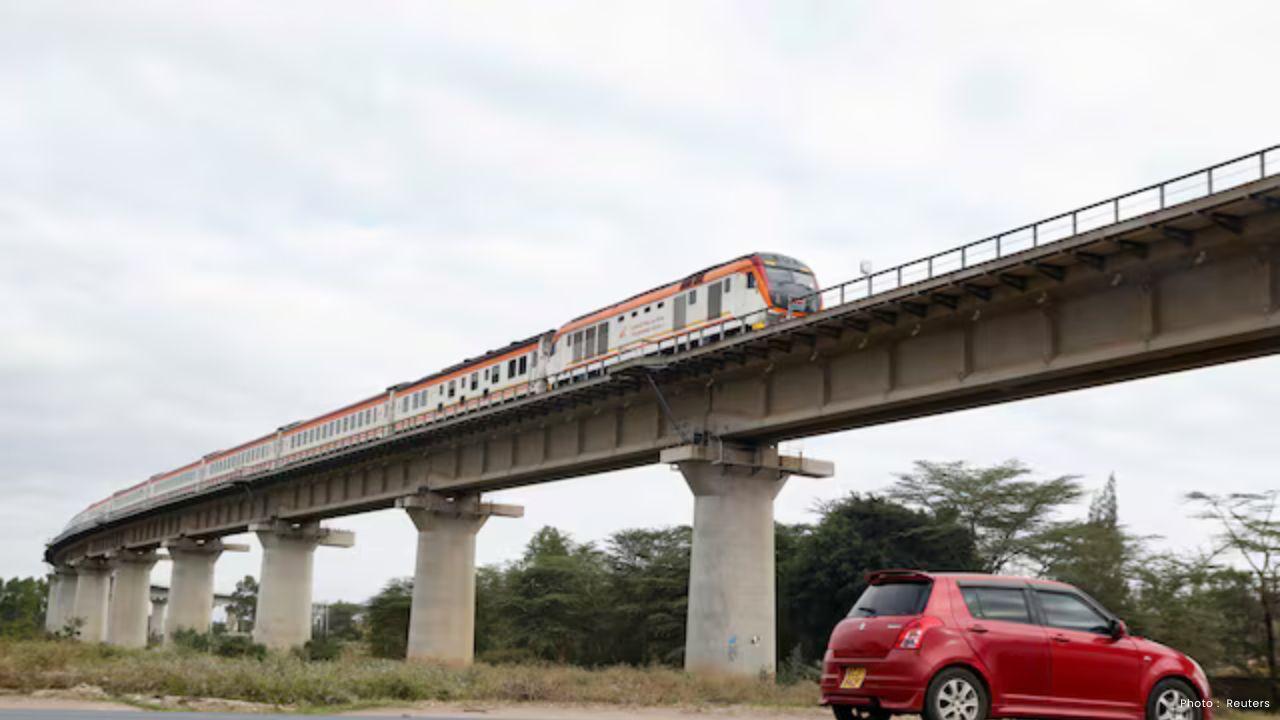
Kenya has decided to restart a major railway extension project after it remained stalled for more than six years. The project had slowed down earlier due to a sharp reduction in funding from China, which had been the main financial partner. Now, the country is trying a new way to fund the railway, showing a shift in how large infrastructure projects are managed.
The railway is part of the Standard Gauge Railway, a key transport project designed to connect the port city of Mombasa to inland areas and eventually link Kenya with neighboring countries like Uganda. The first phase of the railway, connecting Mombasa to Nairobi, was completed in 2017. However, the extension of the line stopped near the town of Naivasha, far from its planned final destination at the Ugandan border.
The delay happened after China reduced its lending for large infrastructure projects across Africa. For many years, China had funded such projects under its Belt and Road Initiative. But concerns about rising debt levels in African countries led to a change in approach, and several projects, including this railway, were affected.
Now, Kenya is moving forward again, but with a different funding model. Instead of depending heavily on foreign loans, the government is using a system called revenue securitisation. This means it is using future income from a railway development levy to raise money for construction. Reports suggest this levy generates about 35 billion Kenyan shillings, which is being used as initial funding for the project.
Even though China has reduced direct lending, it is still involved in the project. A Chinese company, China Road and Bridge Corporation, will continue to work as a contractor. This shows that while financial support may have changed, cooperation between Kenya and China is still ongoing.
The revival of the railway also reflects a broader shift in China-Africa relations. At a major meeting in Beijing in 2024, both sides agreed to focus more on investments rather than large loans. China also pledged new funding support, but with a different structure that aims to reduce debt risks.
For Kenya, this change is important because the country is facing high levels of debt. The government has limited ability to borrow more money, and past attempts to increase taxes have led to public protests. Because of this, officials are now exploring creative ways to fund development without adding too much financial pressure.
The railway itself is seen as a key project for the country’s future. Once completed, it is expected to improve transport, reduce costs for businesses, and increase trade across East Africa. It could also connect Kenya to a wider regional network, linking countries like Uganda, Rwanda, and South Sudan.
However, the project has also faced criticism. Some experts and critics have raised concerns about the cost of the railway and the heavy loans taken earlier to build it. In the past, the project was even described as an example of “debt trap diplomacy,” a claim that China has strongly denied.
From an editorial point of view, Kenya’s decision to restart the railway shows both determination and caution. The country clearly understands the importance of infrastructure for economic growth, but it is also trying to avoid the financial mistakes of the past. By using new funding methods, Kenya is attempting to strike a balance between development and financial stability.
This move could also serve as an example for other countries facing similar challenges. It shows that while foreign investment is useful, relying too heavily on external loans can create long-term risks. Finding local or mixed funding solutions may offer a more sustainable path.
At the same time, the success of this project will depend on careful planning and execution. If managed well, the railway could bring major benefits to Kenya and the wider region. If not, it could add to the country’s financial burden.
For now, the restart of construction brings renewed hope. It signals that despite past setbacks, Kenya is still moving forward with its vision of better connectivity and stronger economic growth. The world will be watching closely to see how this new chapter unfolds.
#trending #latest #armustnews #Kenya #RailwayProject #AfricaDevelopment #ChinaAfrica #Infrastructure #GlobalEconomy #TradeGrowth #BreakingNews


Advances in Aerospace Technology and Commercial Aviation Recovery
Insights into breakthrough aerospace technologies and commercial aviation’s recovery amid 2025 chall

Defense Modernization and Strategic Spending Trends
Explore key trends in global defense modernization and strategic military spending shaping 2025 secu

Tens of Thousands Protest in Serbia on Anniversary of Deadly Roof Collapse
Tens of thousands in Novi Sad mark a year since a deadly station roof collapse that killed 16, prote

Canada PM Carney Apologizes to Trump Over Controversial Reagan Anti-Tariff Ad
Canadian PM Mark Carney apologized to President Trump over an Ontario anti-tariff ad quoting Reagan,

The ad that stirred a hornets nest, and made Canadian PM Carney say sorry to Trump
Canadian PM Mark Carney apologizes to US President Trump after a tariff-related ad causes diplomatic

Bengaluru-Mumbai Superfast Train Approved After 30-Year Wait
Railways approves new superfast train connecting Bengaluru and Mumbai, ending a 30-year demand, easi



