Post by : Avinab Raana
Photo : X / Economic Times
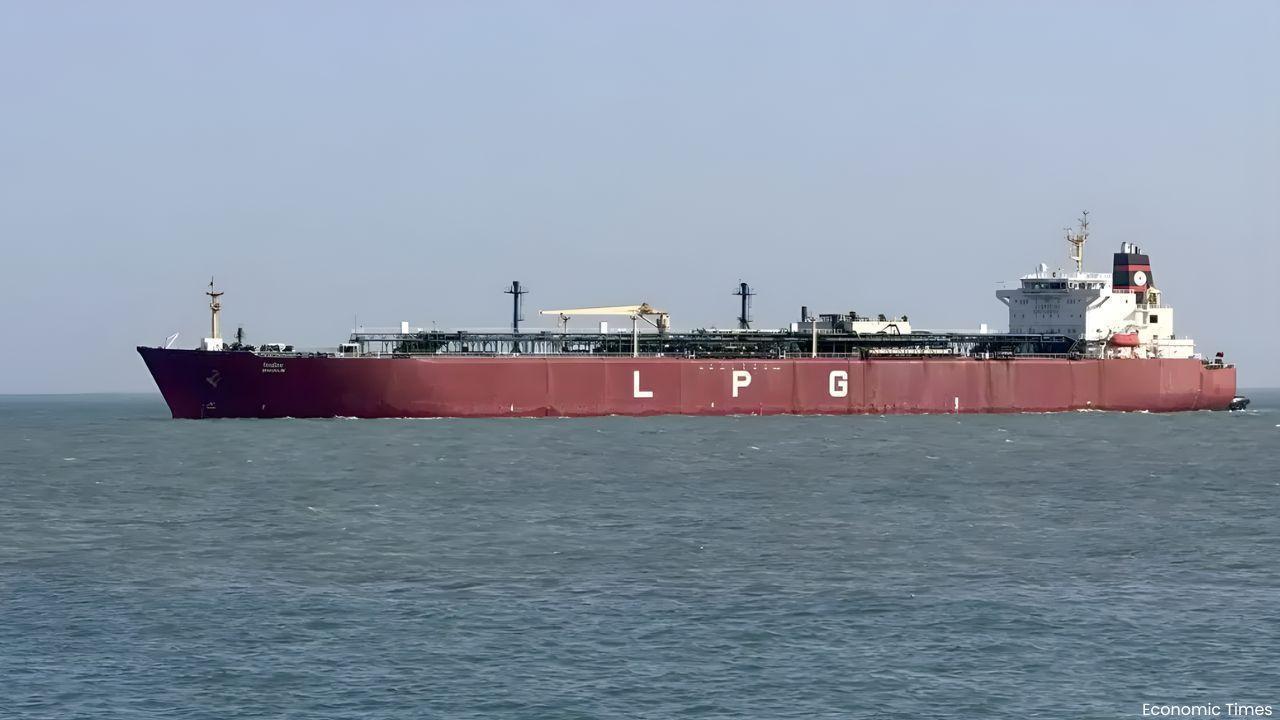
In a significant development for global energy logistics, Iran has granted safe passage to Indian LPG carriers navigating the highly volatile Strait of Hormuz. At a time when geopolitical tensions involving the US and Israel have severely disrupted maritime traffic in the region, this decision marks a rare moment of operational continuity in an otherwise uncertain environment. For India, one of the world’s largest LPG importers, this move provides a crucial lifeline, ensuring that essential fuel supplies continue to reach its ports despite escalating risks in the Gulf.
The Strait of Hormuz, a critical chokepoint for global energy trade, has been under intense scrutiny since the outbreak of conflict, with shipping activity dropping sharply due to safety concerns and military threats. Iran’s decision to allow Indian vessels to pass reflects what analysts describe as a “selective access strategy,” where only certain nations and vessels are permitted transit under strict coordination.This approach highlights Tehran’s growing control over one of the world’s most important shipping routes, where nearly a fifth of global oil and gas supplies typically flow.
For India, the safe movement of LPG carriers is not just a logistical success, it is a strategic necessity. The country relies heavily on imports to meet its rapidly growing domestic demand for cooking gas, with consumption rising steadily each year.The successful transit of multiple Indian-flagged vessels carrying tens of thousands of tonnes of LPG ensures that supply disruptions remain contained, preventing a deeper energy crunch that could have affected households, industries, and commercial operations across the country.
The passage of these vessels through one of the world’s most dangerous maritime zones has required careful coordination and heightened security measures. Ships have been navigating closer to the Iranian coastline, often under guided routes or escort protocols, to minimize exposure to potential threats.This shift from conventional shipping routes underscores how operational strategies are being rapidly adapted in response to evolving risks, with safety now taking precedence over efficiency.
While the safe passage offers relief, it comes at a significant cost. War risk insurance premiums for vessels transiting the Strait of Hormuz have surged dramatically, adding millions of dollars per voyage.These rising costs are being absorbed by energy companies and ultimately passed down the supply chain, contributing to higher fuel prices and increased operational expenses. The financial impact highlights how geopolitical instability directly influences the economics of global shipping.
The decision to allow Indian ships through also reflects broader geopolitical calculations. As tensions escalate, countries are increasingly negotiating bilateral arrangements to secure energy supplies, bypassing broader restrictions.This evolving dynamic is reshaping traditional trade routes and alliances, with energy security becoming a key driver of diplomatic engagement. India’s ability to secure safe passage demonstrates its strategic positioning in a rapidly changing global order.
The situation in the Strait of Hormuz is a stark reminder of how vulnerable global supply chains remain to geopolitical shocks. With shipping volumes drastically reduced and only selected vessels allowed passage, the risk of further disruptions continues to loom large.For the maritime industry, this marks a turning point—where flexibility, risk management, and geopolitical awareness are becoming as important as operational efficiency.
Iran’s decision to permit Indian LPG ships highlights both the fragility and resilience of global energy logistics. While tensions continue to threaten one of the world’s most critical trade routes, targeted cooperation is enabling essential supplies to keep moving.As the conflict unfolds, the ability of nations to secure safe passage and maintain supply continuity will define the future of global trade. For now, this development offers a crucial window of stability but the broader uncertainty surrounding the region ensures that the story is far from over.
#trending #latest,#IranIndiaShipping #LPGSupplyIndia #StraitOfHormuz #EnergySecurity #MaritimeTrade




Advances in Aerospace Technology and Commercial Aviation Recovery
Insights into breakthrough aerospace technologies and commercial aviation’s recovery amid 2025 chall

Defense Modernization and Strategic Spending Trends
Explore key trends in global defense modernization and strategic military spending shaping 2025 secu

Tens of Thousands Protest in Serbia on Anniversary of Deadly Roof Collapse
Tens of thousands in Novi Sad mark a year since a deadly station roof collapse that killed 16, prote

Canada PM Carney Apologizes to Trump Over Controversial Reagan Anti-Tariff Ad
Canadian PM Mark Carney apologized to President Trump over an Ontario anti-tariff ad quoting Reagan,

The ad that stirred a hornets nest, and made Canadian PM Carney say sorry to Trump
Canadian PM Mark Carney apologizes to US President Trump after a tariff-related ad causes diplomatic

Bengaluru-Mumbai Superfast Train Approved After 30-Year Wait
Railways approves new superfast train connecting Bengaluru and Mumbai, ending a 30-year demand, easi



