Post by : Saif
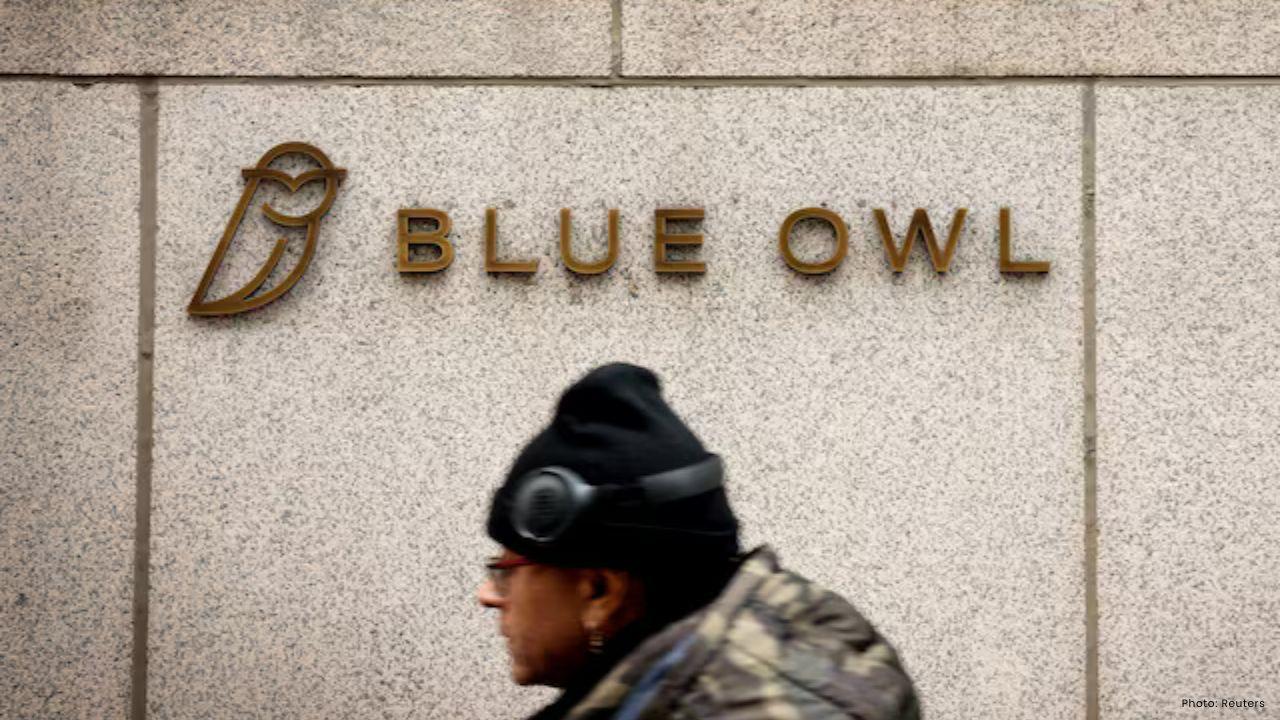
Concerns are growing in the global financial world after an investment firm raised questions about how some loans are valued in a major private credit portfolio managed by Blue Owl Capital. The issue has attracted attention because it may reflect broader problems in the fast-growing private credit industry.
A report said that Glendon Capital Management, an investment firm, has questioned the valuation methods used in parts of Blue Owl’s private credit portfolio. The firm believes some private lenders may not be fully showing the real level of losses in their loan portfolios.
Private credit refers to loans that are provided directly by investment funds or asset managers to companies instead of traditional banks. Over the past decade, this type of lending has grown quickly as banks reduced certain types of corporate lending after the global financial crisis.
Today, the private credit market is estimated to be worth about $2 trillion, making it one of the fastest-growing areas of global finance.
Supporters say private credit plays an important role by providing funding to companies that may struggle to obtain bank loans. However, critics say the industry lacks transparency because many of the loans are not traded on public markets. This makes it harder for investors to clearly see how much the loans are truly worth.
The latest concerns center on how firms calculate the value of loans in their portfolios. Investment funds often estimate the value of these loans using internal models rather than market prices. When economic conditions become uncertain, these estimates can be questioned.
According to the report, Glendon Capital believes that some private credit lenders may be underestimating potential losses. If borrowers struggle to repay loans, the real value of those loans could be lower than what is currently reported.
These concerns are emerging at a time when the financial environment has become more challenging. Higher interest rates are putting pressure on many companies that borrowed heavily in recent years. Businesses with large debt payments may find it harder to meet their obligations when borrowing costs rise.
If borrowers begin to default on their loans, private credit funds could face significant losses. Investors want to be sure that these risks are being accurately reflected in portfolio valuations.
The issue is not limited to a single company. Across the private credit sector, several developments have increased investor anxiety. Some large financial institutions have already started adjusting the value of certain loans in their portfolios.
For example, JPMorgan recently reduced the value of some loans connected to private credit funds after reviewing the risks in the market.
At the same time, several investment funds have faced rising requests from investors who want to withdraw their money. Some firms have even limited withdrawals to prevent sudden selling of assets, which could destabilize their portfolios.
These developments highlight a key challenge in the private credit industry. Many of these funds invest in loans that cannot easily be sold in public markets. This means investors cannot quickly convert their investments into cash if they want to exit.
Such funds often place limits on withdrawals to protect the stability of their investments. While these limits are common in the industry, they can raise concerns among during periods of market uncertainty.
Another factor adding pressure to the market is the growing exposure to technology companies, especially in the software sector. Some analysts believe that rapid changes in technology, including the rise of artificial intelligence, could disrupt certain software businesses that have borrowed heavily from private credit lenders.
If those companies face financial trouble, the lenders that financed them could also experience losses.
Despite these concerns, many experts say the private credit market remains strong overall. The sector continues to attract large investments from pension funds, insurance companies and wealthy individuals seeking higher returns than traditional bonds.
However, the recent questions about valuations show that investors are becoming more cautious. They want greater transparency about how loans are valued and how risks are managed.
For regulators and policymakers, the rapid growth of private credit has also raised new questions. Because the sector operates largely outside traditional banking regulations, authorities are watching closely to ensure that risks do not spread across the broader financial system.
Some analysts believe the industry may face a period of adjustment as investors demand clearer reporting and stricter risk management.
Blue Owl Capital has not publicly responded to the latest concerns reported about its portfolio valuations.
Still, the debate highlights a larger issue within modern finance. As alternative lending markets expand, maintaining trust between investors, fund managers and borrowers becomes increasingly important.
The coming months may reveal whether these valuation concerns are isolated cases or signs of deeper problems in the private credit sector. For now, investors and regulators are watching closely as the industry faces one of its most serious tests since its rapid rise over the past decade.
#trending #latest #PrivateCredit #BlueOwl #InvestmentNews #FinanceIndustry #GlobalFinance #CreditMarkets #WallStreet #FinancialMarkets #InvestmentRisk #armustnews










Advances in Aerospace Technology and Commercial Aviation Recovery
Insights into breakthrough aerospace technologies and commercial aviation’s recovery amid 2025 chall

Defense Modernization and Strategic Spending Trends
Explore key trends in global defense modernization and strategic military spending shaping 2025 secu

Tens of Thousands Protest in Serbia on Anniversary of Deadly Roof Collapse
Tens of thousands in Novi Sad mark a year since a deadly station roof collapse that killed 16, prote

Canada PM Carney Apologizes to Trump Over Controversial Reagan Anti-Tariff Ad
Canadian PM Mark Carney apologized to President Trump over an Ontario anti-tariff ad quoting Reagan,

The ad that stirred a hornets nest, and made Canadian PM Carney say sorry to Trump
Canadian PM Mark Carney apologizes to US President Trump after a tariff-related ad causes diplomatic

Bengaluru-Mumbai Superfast Train Approved After 30-Year Wait
Railways approves new superfast train connecting Bengaluru and Mumbai, ending a 30-year demand, easi



