Post by : Avinab Raana
Photo : X / @Seemahkachru
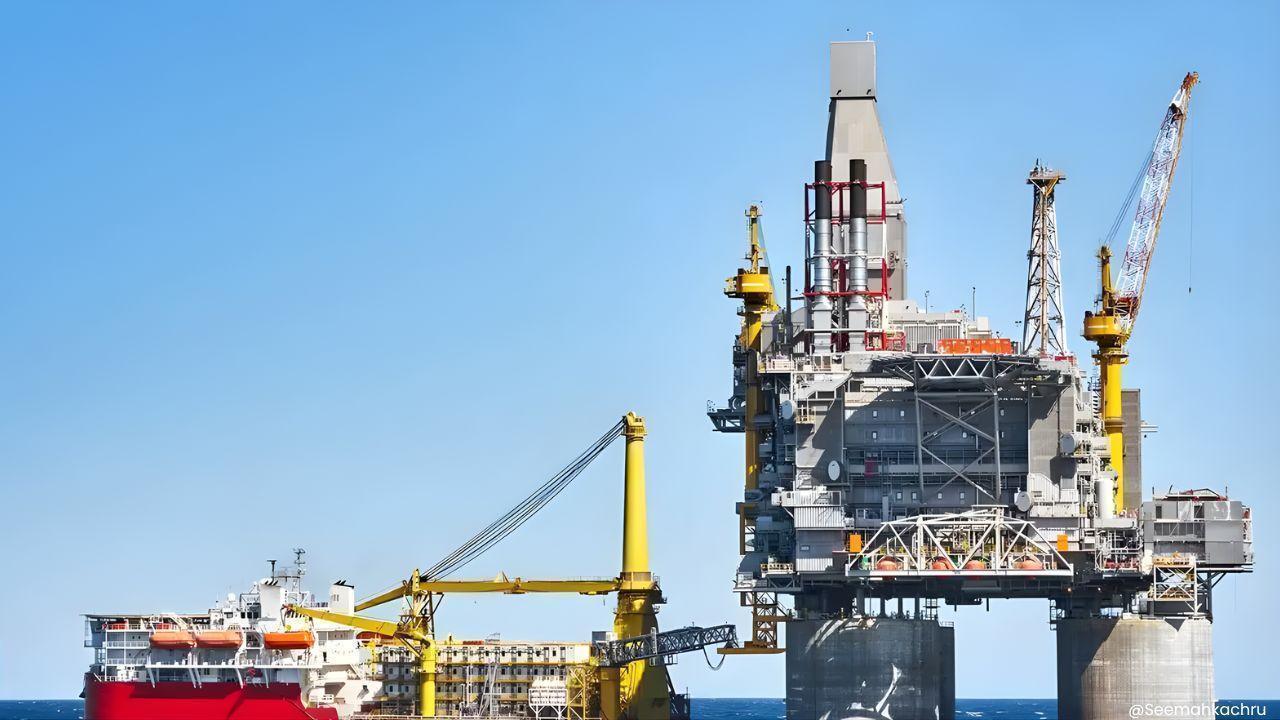
India is making a powerful push to redefine its energy future, unveiling an ambitious plan to attract $100 billion in investments while significantly expanding its exploration footprint. The move signals a strategic shift aimed at strengthening domestic energy production, reducing import dependency, and positioning the country as a global hotspot for upstream investments. At a time when global energy markets are facing volatility and geopolitical uncertainties, India’s proactive stance reflects both urgency and opportunity. The country is not only preparing to meet its growing energy demand but also aiming to become a competitive destination for international investors seeking stable and high-growth markets.
A central pillar of this strategy is the expansion of exploration acreage to nearly one million square kilometers by 2030, a move designed to unlock vast untapped hydrocarbon reserves. This expansion represents one of the most aggressive exploration drives in India’s history, opening new opportunities across offshore, deepwater, and ultra-deepwater basins.The initiative reflects a clear understanding that future energy security will depend heavily on domestic resource development. By increasing exploration coverage, India is aiming to bridge the gap between demand and supply while creating new avenues for technological innovation and investment.
To support this ambitious roadmap, India is rolling out a series of policy reforms designed to make the investment environment more attractive and transparent. These include improved data accessibility through advanced geological repositories, simplified licensing frameworks, and enhanced operational flexibility for companies participating in exploration activities. Such reforms are crucial in reducing entry barriers for global energy players, allowing them to make informed investment decisions with greater confidence. By aligning regulatory frameworks with international standards, India is positioning itself as a stable and predictable investment destination in an otherwise uncertain global energy landscape.
India’s energy consumption is expected to surge in the coming decades, driven by rapid urbanization, industrial growth, and increasing digital infrastructure demands. Current production levels, estimated at around 29 million tonnes of oil and over 36 billion cubic meters of gas annually, are insufficient to meet future requirements.The government’s focus is therefore on enhancing reservoir management, improving recovery rates, and accelerating exploration in high-potential regions. By boosting domestic production, India aims to reduce reliance on imports, stabilize energy prices, and strengthen its overall economic resilience.
India’s investment push is also closely tied to its efforts to build stronger international partnerships, particularly with technologically advanced nations. By encouraging collaboration between global energy companies and domestic stakeholders, the country is aiming to bring in cutting-edge technologies that can enhance exploration efficiency and productivity.This approach not only accelerates project timelines but also ensures that India remains competitive in a rapidly evolving energy sector. The integration of advanced seismic analysis, digital mapping, and data-driven exploration tools is expected to play a key role in unlocking new reserves and maximizing output.
India’s $100 billion investment target represents more than just a financial milestone, it marks a turning point in how the country approaches energy security and supply chain resilience. As global energy systems undergo significant transformation, India is positioning itself at the forefront of this shift, balancing economic growth with strategic resource management.The success of this initiative could redefine India’s role in the global energy ecosystem, transforming it from a major importer into a more self-reliant and influential player. As exploration expands and investments flow in, the ripple effects will extend across industries, strengthening supply chains and driving long-term economic growth.
India energy investment, oil gas exploration India, $100 billion investment India, hydrocarbon exploration acreage









Advances in Aerospace Technology and Commercial Aviation Recovery
Insights into breakthrough aerospace technologies and commercial aviation’s recovery amid 2025 chall

Defense Modernization and Strategic Spending Trends
Explore key trends in global defense modernization and strategic military spending shaping 2025 secu

Tens of Thousands Protest in Serbia on Anniversary of Deadly Roof Collapse
Tens of thousands in Novi Sad mark a year since a deadly station roof collapse that killed 16, prote

Canada PM Carney Apologizes to Trump Over Controversial Reagan Anti-Tariff Ad
Canadian PM Mark Carney apologized to President Trump over an Ontario anti-tariff ad quoting Reagan,

The ad that stirred a hornets nest, and made Canadian PM Carney say sorry to Trump
Canadian PM Mark Carney apologizes to US President Trump after a tariff-related ad causes diplomatic

Bengaluru-Mumbai Superfast Train Approved After 30-Year Wait
Railways approves new superfast train connecting Bengaluru and Mumbai, ending a 30-year demand, easi



