Post by : Avinab Raana
Photo : X / Electrek.co
In a move that signals a bold evolution in electrified mobility, Hyundai’s first-ever extended-range electric vehicle (EREV) has been spotted undergoing testing—offering an early glimpse into what could become a defining shift in the global automotive strategy. This is not just another electric SUV entering an already crowded EV market; it represents a carefully calculated response to one of the industry’s biggest challenges range anxiety and infrastructure limitations. As the world transitions toward cleaner mobility, Hyundai appears to be crafting a bridge between traditional internal combustion engines and full battery-electric vehicles, combining the best of both worlds. The sighting of this prototype ahead of its official debut has already sparked industry-wide attention, as it hints at a future where flexibility, efficiency, and performance coexist seamlessly in next-generation vehicles.
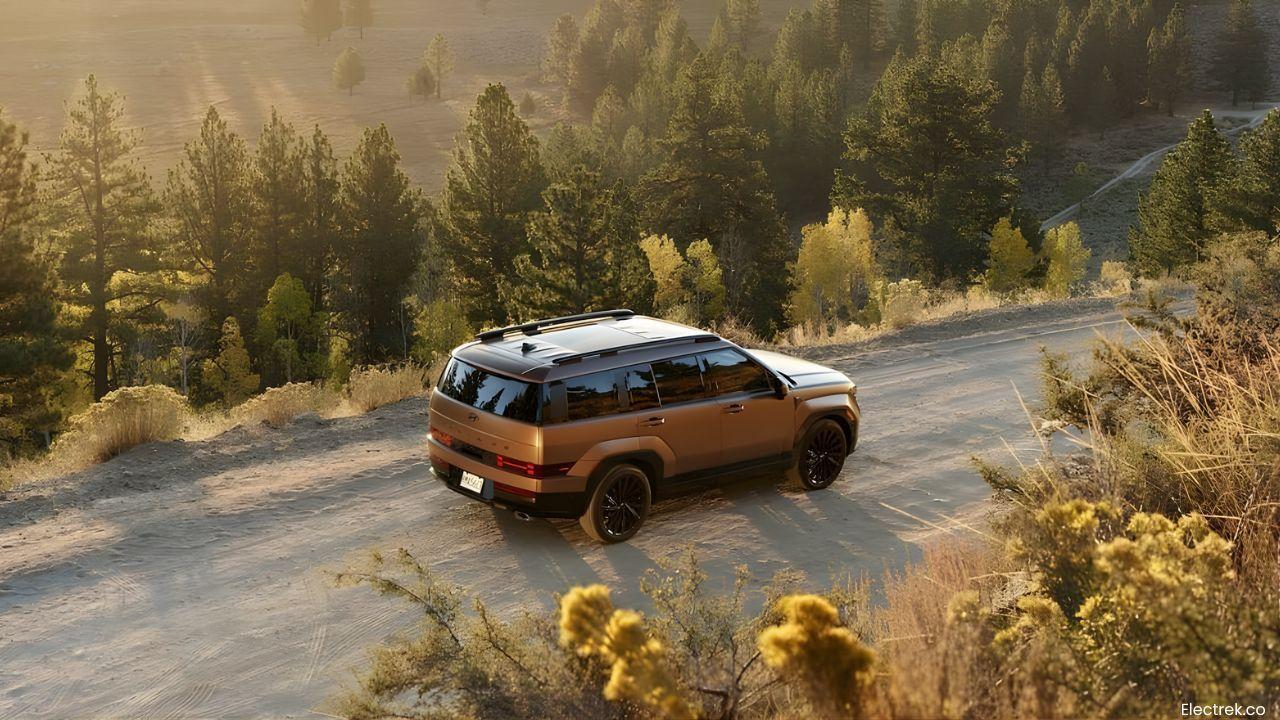
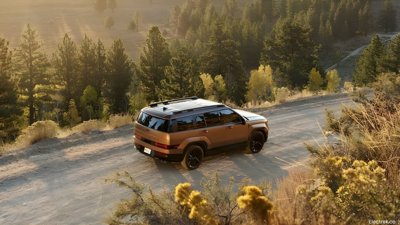
The test vehicle, believed to be based on the popular Santa Fe platform, carries a distinctive design that blends Hyundai’s current SUV styling with subtle yet significant changes tailored for its new powertrain. The camouflaged prototype retains the bold, boxy silhouette of the latest Santa Fe, but closer inspection reveals unique elements such as dual ports one for charging and another for fuel indicating its hybrid-electric nature.This dual-access configuration is a defining characteristic of EREV technology, visually setting it apart from both traditional hybrids and fully electric vehicles. The design reflects Hyundai’s intent to maintain familiarity while introducing innovation, ensuring that the transition to new technology feels seamless for consumers.
At the core of Hyundai’s EREV strategy lies a fundamentally different approach to electrification. Unlike conventional hybrids where the engine and electric motor both drive the wheels, the EREV system relies primarily on electric propulsion, with a gasoline engine functioning solely as a generator to recharge the battery.This setup allows the vehicle to deliver an EV-like driving experience while significantly extending range potentially exceeding 600 miles (approximately 960 km). By combining electric performance with long-distance capability, Hyundai is addressing one of the most persistent barriers to EV adoption, particularly in regions where charging infrastructure remains inconsistent or underdeveloped.
Hyundai’s upcoming EREV models are expected to incorporate self-developed battery systems that deliver full electric performance with significantly reduced battery size. This approach not only lowers production costs but also improves vehicle efficiency by reducing overall weight. The strategy highlights a broader industry shift toward smarter energy management rather than simply increasing battery capacity. By optimizing how energy is generated, stored, and used, Hyundai is positioning itself as a leader in practical, scalable electrification solutions that cater to real-world driving conditions.
Beyond the powertrain, early sightings of the prototype suggest that Hyundai is also rethinking interior technology and user experience. The vehicle is expected to feature the brand’s next-generation infotainment system, offering a more integrated and connected driving environment.This aligns with Hyundai’s broader push toward digital transformation, where vehicles are no longer just modes of transport but intelligent platforms that enhance convenience, connectivity, and personalization. The EREV is likely to play a key role in this transition, serving as a testbed for future innovations across the brand’s lineup.
Hyundai’s decision to introduce an EREV comes at a time when the global EV market is entering a more complex phase. While demand for electric vehicles continues to grow, challenges such as charging infrastructure, battery costs, and consumer hesitancy remain significant.By offering an alternative that combines electric driving with extended range capability, Hyundai is effectively broadening its electrification strategy. The company has already indicated plans to expand EREV technology across its brands, including Genesis and Kia, signaling a long-term commitment to diversified mobility solutions.This approach not only strengthens Hyundai’s competitive position but also provides consumers with more options, ensuring that electrification is accessible to a wider audience.
The emergence of EREV technology reflects a growing recognition that the path to full electrification will not be linear. While battery-electric vehicles remain the ultimate goal, transitional technologies like EREV are gaining traction as practical solutions for today’s infrastructure realities.Automakers are increasingly exploring hybrid-electric architectures that offer flexibility without compromising on sustainability. Hyundai’s entry into this space indicates that the industry is moving toward a more nuanced understanding of electrification, one that prioritizes adaptability and user-centric design.
Hyundai’s first EREV is more than just a new model, it is a strategic statement about the future of mobility. By addressing the limitations of current EV technology while preserving its core benefits, the company is redefining what electrification can look like in the real world.As the automotive industry navigates the complexities of transitioning to cleaner energy, solutions like the EREV could play a crucial role in accelerating adoption without forcing compromise. The upcoming debut of Hyundai’s first extended-range electric vehicle will not only shape the brand’s future but could also influence how the entire industry approaches the next phase of sustainable mobility. In a landscape driven by innovation and practicality, Hyundai’s latest move suggests that the future of electric driving may not be about choosing between technologies—but about intelligently combining them.
#trending #latest#HyundaiEREV #ElectricSUV #FutureMobility #HybridInnovation #AutoIndustry



Advances in Aerospace Technology and Commercial Aviation Recovery
Insights into breakthrough aerospace technologies and commercial aviation’s recovery amid 2025 chall

Defense Modernization and Strategic Spending Trends
Explore key trends in global defense modernization and strategic military spending shaping 2025 secu

Tens of Thousands Protest in Serbia on Anniversary of Deadly Roof Collapse
Tens of thousands in Novi Sad mark a year since a deadly station roof collapse that killed 16, prote

Canada PM Carney Apologizes to Trump Over Controversial Reagan Anti-Tariff Ad
Canadian PM Mark Carney apologized to President Trump over an Ontario anti-tariff ad quoting Reagan,

The ad that stirred a hornets nest, and made Canadian PM Carney say sorry to Trump
Canadian PM Mark Carney apologizes to US President Trump after a tariff-related ad causes diplomatic

Bengaluru-Mumbai Superfast Train Approved After 30-Year Wait
Railways approves new superfast train connecting Bengaluru and Mumbai, ending a 30-year demand, easi



