Post by : Avinab Raana
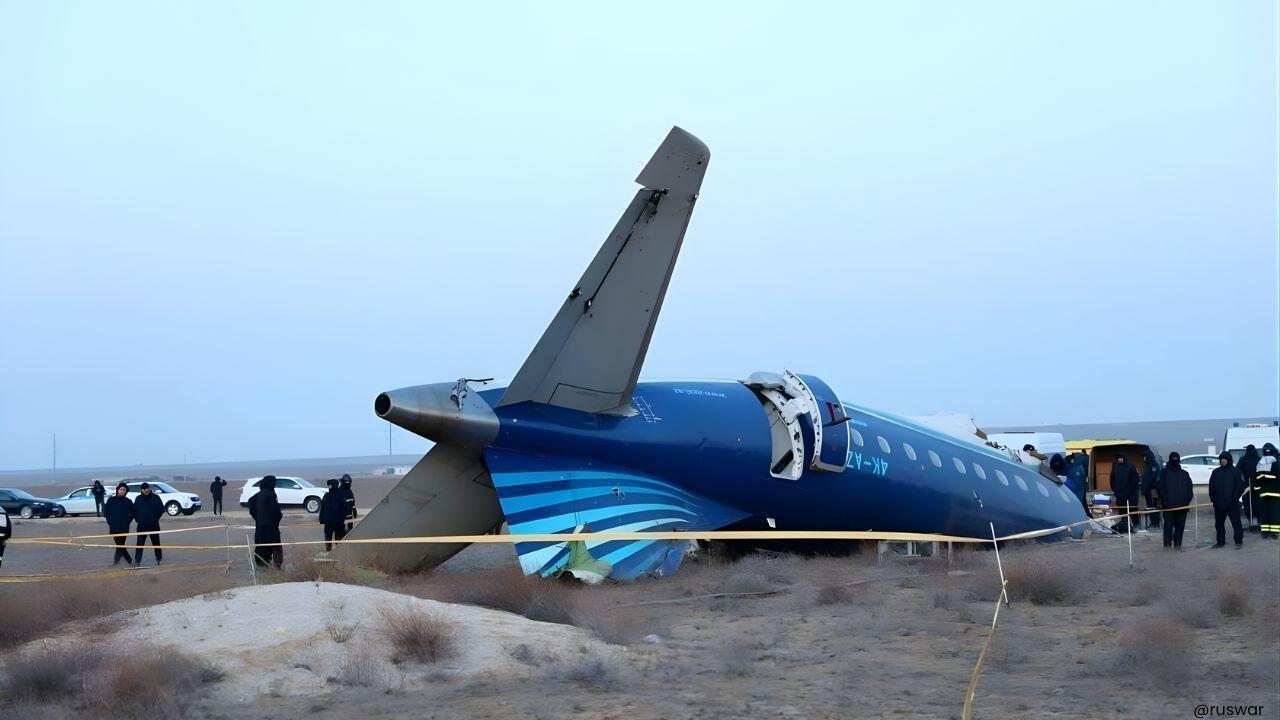
Photo : X / @ruswar
In a development that could reshape aviation accountability and geopolitical diplomacy, Azerbaijan and Russia are reportedly moving closer to a settlement over the downing of an Azerbaijan Airlines (AZAL) flight, an incident that has lingered as both a humanitarian tragedy and a complex international dispute. The progress toward resolution comes at a time when the global aviation industry is under increasing pressure to ensure transparency, accountability, and safety across increasingly contested airspaces. As negotiations advance, the case is no longer just about compensation, it has become a benchmark for how nations address responsibility in aviation crises that intersect with geopolitical tensions and international law.
The downing of the AZAL aircraft sent shockwaves through the aviation community, raising urgent questions about airspace safety, military engagement protocols, and the vulnerability of civilian aircraft in sensitive regions. The incident quickly escalated beyond a bilateral issue, drawing international attention and intensifying calls for a thorough, transparent investigation.
For Azerbaijan, the tragedy represented both a national loss and a test of diplomatic resilience, while for Russia, it introduced complex challenges tied to accountability and international perception. The prolonged nature of the dispute has underscored the difficulties in resolving aviation incidents that occur in geopolitically sensitive environments, where facts, narratives, and responsibilities often become contested.
Recent developments suggest that both nations are now actively working toward a negotiated settlement, signaling a shift from confrontation to resolution. This progress reflects a broader recognition that prolonged disputes not only strain diplomatic relations but also undermine confidence in aviation safety frameworks.
A potential settlement is expected to address key elements such as compensation for victims’ families, acknowledgment of responsibility, and mechanisms to prevent similar incidents in the future. While the specifics remain under discussion, the willingness of both sides to engage constructively marks a critical step toward closure.
Beyond the immediate diplomatic context, the AZAL case carries significant implications for global aviation safety. Incidents involving civilian aircraft in conflict-prone or militarized airspace highlight the urgent need for clearer communication channels, stricter airspace management, and enhanced coordination between civil aviation authorities and military entities.
The evolving situation serves as a reminder that aviation safety is deeply interconnected with geopolitical stability. As airlines continue to operate across complex global networks, ensuring the protection of civilian flights requires not only technological advancements but also robust international cooperation and adherence to established protocols.
For the aviation industry, the move toward settlement reinforces a growing emphasis on accountability and risk management. Airlines, regulators, and international organizations are increasingly focused on mitigating risks associated with geopolitical tensions, including route planning, airspace assessments, and crisis response strategies.
The AZAL incident has also highlighted the importance of transparent investigations and timely communication in maintaining public trust. In an era where information flows rapidly and scrutiny is intense, the ability to address such crises effectively can significantly influence an airline’s reputation and the broader perception of the aviation ecosystem.
The intersection of aviation and geopolitics is becoming increasingly pronounced, with incidents like this illustrating how quickly technical issues can evolve into diplomatic challenges. The Azerbaijan-Russia negotiations demonstrate that resolving such disputes requires not only legal and technical expertise but also diplomatic agility and mutual willingness to find common ground.
As global air traffic continues to grow, the need for cooperative frameworks that transcend political differences becomes more critical. The resolution of this case could set a precedent for how future incidents are managed, particularly in regions where geopolitical tensions remain high.
The nearing resolution of the AZAL flight dispute represents more than the end of a prolonged negotiation, it stands as a defining moment for how the global aviation community approaches accountability in an increasingly complex world. As nations navigate the delicate balance between sovereignty, security, and safety, this case underscores the importance of prioritizing human lives above all else.
For the industry, the lessons are clear: stronger safeguards, deeper cooperation, and unwavering commitment to transparency are essential to preventing similar tragedies. As Azerbaijan and Russia move closer to closure, the outcome will not only shape bilateral relations but also influence the future standards of aviation safety and international responsibility reminding the world that every flight carries not just passengers, but trust.
#trending #latest#AZALFlight #AviationSafety #RussiaAzerbaijan #AirCrashInvestigation #AviationRegulation










Advances in Aerospace Technology and Commercial Aviation Recovery
Insights into breakthrough aerospace technologies and commercial aviation’s recovery amid 2025 chall

Defense Modernization and Strategic Spending Trends
Explore key trends in global defense modernization and strategic military spending shaping 2025 secu

Tens of Thousands Protest in Serbia on Anniversary of Deadly Roof Collapse
Tens of thousands in Novi Sad mark a year since a deadly station roof collapse that killed 16, prote

Canada PM Carney Apologizes to Trump Over Controversial Reagan Anti-Tariff Ad
Canadian PM Mark Carney apologized to President Trump over an Ontario anti-tariff ad quoting Reagan,

The ad that stirred a hornets nest, and made Canadian PM Carney say sorry to Trump
Canadian PM Mark Carney apologizes to US President Trump after a tariff-related ad causes diplomatic

Bengaluru-Mumbai Superfast Train Approved After 30-Year Wait
Railways approves new superfast train connecting Bengaluru and Mumbai, ending a 30-year demand, easi



