Post by : Avinab Raana
Hyundai is preparing to reimagine how drivers interact with their cars. The automaker revealed its ambitious Pleos Connect system at its annual CEO Investor Day, positioning itself to deliver a software experience that could rival Tesla, Rivian, and top Chinese OEMs. This isn’t just about polish, it’s about overhaul.
Launching in the second quarter of 2026, Pleos Connect will span electric, hybrid, and gas-powered Hyundai vehicles. The new system promises features long requested: true driver profiles, allowing personalized settings per user; multitasking support with up to three active windows on screen; a marketplace for third-party apps; and AI-driven customization. Infotainment, map integration, charging/range info. All expected to be smoother, smarter, and more intuitive.
While Hyundai has won praise for range, fast charging, and performance, critics and customers have noted its software has lagged. Existing infotainment systems often feel limited and templated; Android Automotive-based features have been sparse. Over-the-air updates, app availability, and personalization have trailed the industry’s best. With consumer expectations rising, Hyundai sees software as the new frontier of competition.
At its core, Pleos Connect will be built atop the Android Automotive OS. That gives Hyundai several advantages: proven voice recognition, reliable map services, broad app compatibility. Hyundai’s move to adopt this system suggests it wants a foundation with strong user familiarity and capability. Drivers who enjoy integrated features—music, navigation, voice assistants should see immediate benefits.
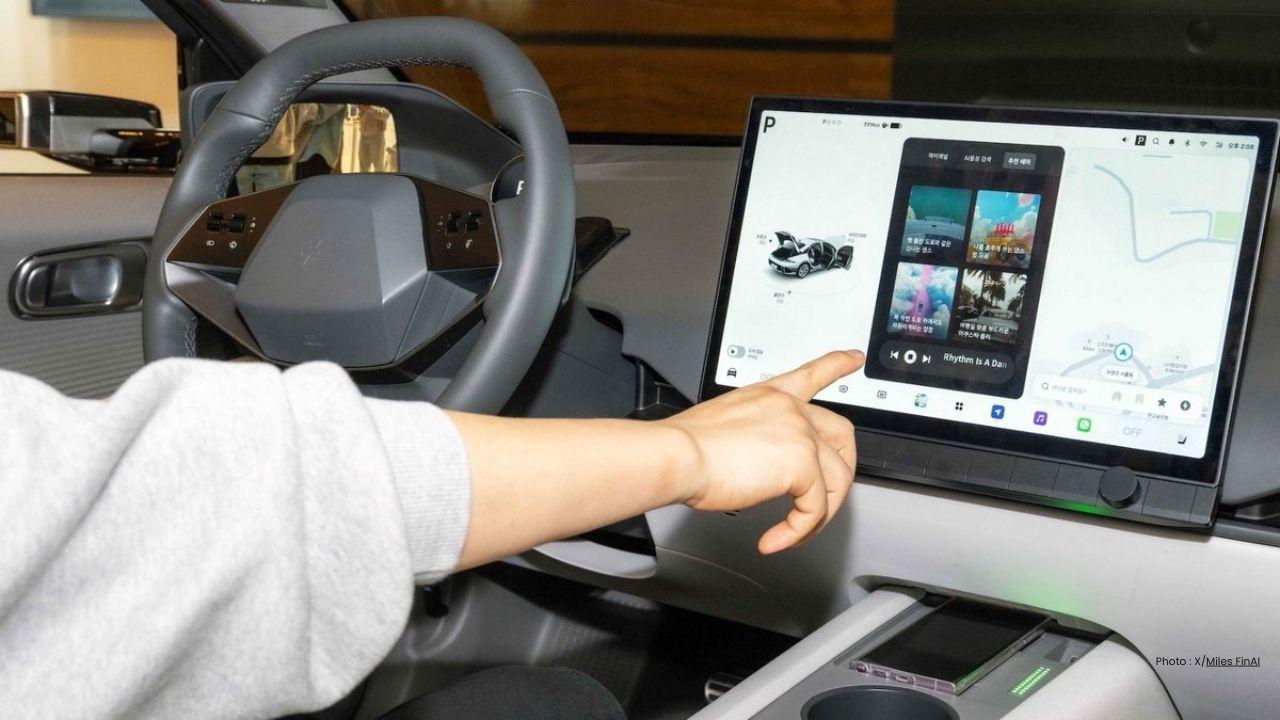
Early previews show Pleos Connect resembling modern Tesla-style layouts: large maps dominating screens, status indicators (range, charging) in corners, and a bottom bar for quick-access apps. The design hints at growing convergence across EV user interfaces—clean, minimal, and focused on function. The similarity to Chinese OEMs’ and Tesla’s systems also suggests global design norms are shaping up around what drivers want: clarity, responsiveness, and consistency.
Perhaps most interesting: Hyundai is clearly leaning into software as not just a feature, but a business model. The automaker has floated figures suggesting it hopes software-based offerings could someday make up to 30% of its revenue. Features may be free, paid, subscription-based, or available via in-app purchases. As cars become more connected, “digital features” may become as important as physical ones.
Drivers should expect better personalization: driver profiles that remember settings, preferences, seat/wheel/infotainment layouts. Multitasking windows might show navigation, music, and charging status at once. There should be greater access to third-party apps, possibly from day one of launch. Over time, more AI-driven features smart suggestions, predictive maintenance alerts, perhaps route-based automation may follow.
Rolling out a system this ambitious isn’t without challenges. Ensuring performance, responsiveness, and system stability will be critical lag, bugs, or crashes could quickly erode trust. Security and data privacy are another concern: with more connected features and third-party apps, attack surface grows. Subscription models risk frustrating customers if free-vs-paid divides feel unfair. And ensuring consistency across global markets, with varying regulations and infrastructure, is always a stretch.
With Pleos Connect, Hyundai joins a growing club of automakers treating software as central—not just added value. Tesla has long leaned heavily that way; many Chinese brands do it too. Competition will escalate over interface responsiveness, app ecosystems, AI capabilities, and driver personalization. Other OEMs will be watching closely to see what Pleos Connect gets right—and where it struggles.
Mid-2026 is the projected start, which gives Hyundai a runway to finalize design, test extensively, and iron out issues. Initially, rollout won’t cover all models simultaneously expect leading vehicles (likely EVs or higher trims) to get Pleos Connect first. As hardware standardization improves, more models will follow. The future updates, app marketplace, and new AI features may arrive in phases beyond initial launch.
The shift Hyundai is undertaking here could reshape what customers expect from “infotainment.” If Pleos Connect delivers reliably smooth UI, meaningful personalization, regular updates, solid app support. It may become a major differentiator in purchase decisions. Moreover, recurring revenue from software features can offset costs, drive loyalty, and shift product lifecycle economics.
Pleos Connect shows Hyundai recognizing that hardware wins hearts, but software secures allegiance. For drivers, 2026 may bring a more connected, more personal, and more intelligent vehicle experience from Hyundai. The success will depend on execution: performance, usability, trust, and value. But the promise is clear. As cars continue evolving into platforms more than machines, Hyundai is aiming to shape that future, not just adapt to it.
#trending #latest,#HyundaiPleosConnect #CarSoftware #InCarTech #SmartMobility #AndroidAutomotive #EVExperience #DigitalDashboard #AutoInnovation





Advances in Aerospace Technology and Commercial Aviation Recovery
Insights into breakthrough aerospace technologies and commercial aviation’s recovery amid 2025 chall

Defense Modernization and Strategic Spending Trends
Explore key trends in global defense modernization and strategic military spending shaping 2025 secu

Tens of Thousands Protest in Serbia on Anniversary of Deadly Roof Collapse
Tens of thousands in Novi Sad mark a year since a deadly station roof collapse that killed 16, prote

Canada PM Carney Apologizes to Trump Over Controversial Reagan Anti-Tariff Ad
Canadian PM Mark Carney apologized to President Trump over an Ontario anti-tariff ad quoting Reagan,

The ad that stirred a hornets nest, and made Canadian PM Carney say sorry to Trump
Canadian PM Mark Carney apologizes to US President Trump after a tariff-related ad causes diplomatic

Bengaluru-Mumbai Superfast Train Approved After 30-Year Wait
Railways approves new superfast train connecting Bengaluru and Mumbai, ending a 30-year demand, easi



