Post by : Avinab Raana
Photo : X / @JonathanLanday
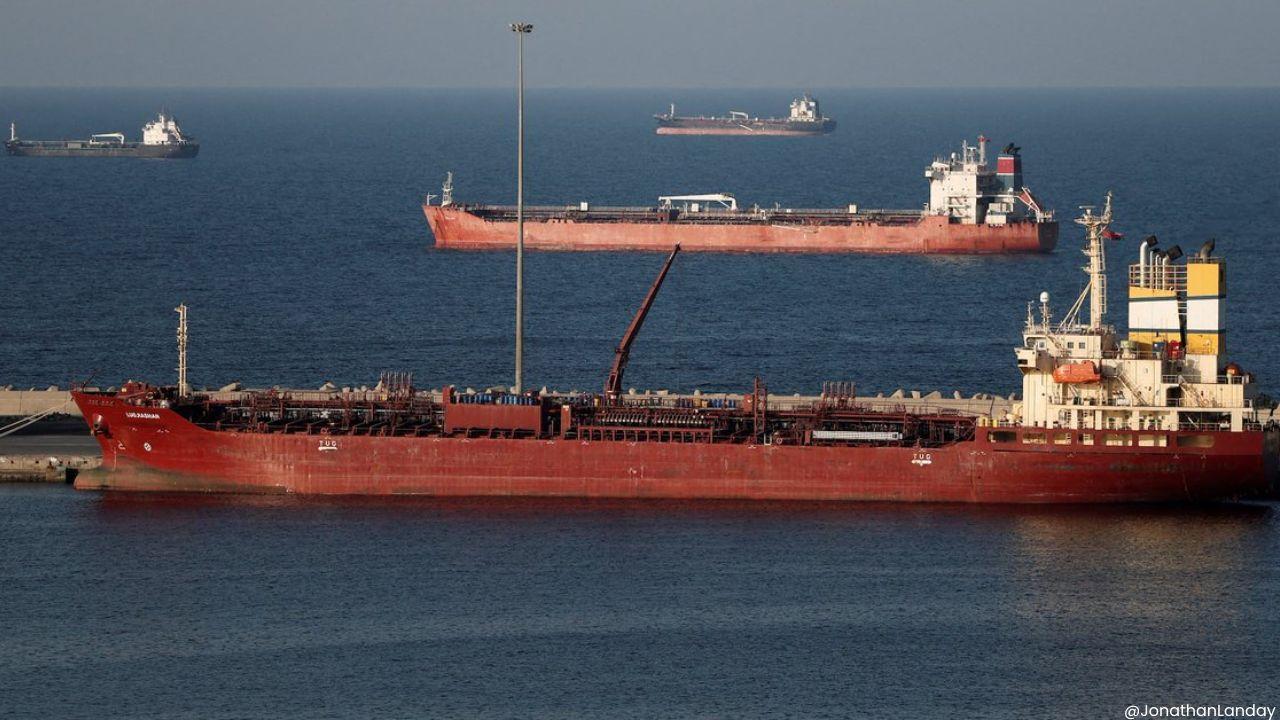
Global efforts to secure the Strait of Hormuz are running into serious challenges, as policymakers and military planners confront a difficult truth, the Red Sea experience offers a cautionary tale rather than a success blueprint. As tensions escalate in one of the world’s most critical shipping corridors, attempts to ensure safe passage for commercial vessels are being shaped by past failures, where even massive international efforts struggled to fully restore confidence in maritime routes. The stakes in Hormuz, however, are significantly higher, amplifying both urgency and complexity.
The earlier security push in the Red Sea, launched to counter persistent attacks on commercial vessels, demonstrated the limits of military intervention in safeguarding trade routes. Despite extensive deployment of naval assets, drones, and coordinated international efforts, shipping disruptions continued, and many operators chose to reroute vessels rather than risk transit. This outcome has become a critical reference point, highlighting that even well-funded operations may fail to guarantee uninterrupted shipping in high-risk zones.
Compared to the Red Sea, the Strait of Hormuz presents a far more complex and volatile operational environment. The waterway is narrower, more strategically sensitive, and sits at the center of an active geopolitical conflict involving advanced military capabilities. Iran’s control over the region, combined with its ability to deploy drones, missiles, and naval tactics, creates a layered threat environment that is significantly harder to manage. Experts warn that securing Hormuz would require a far larger and more coordinated effort, with no guarantee of immediate success.
The importance of Hormuz cannot be overstated, it serves as a critical artery for global energy flows, carrying a substantial share of the world’s oil and liquefied natural gas shipments. Disruptions in this corridor are already sending shockwaves through global markets, with shipping traffic declining sharply and energy prices rising. The potential for prolonged instability is forcing countries and companies to reassess supply chains, highlighting the vulnerability of global trade to geopolitical chokepoints.
Efforts to secure the strait through naval escorts and coordinated patrols face significant logistical and tactical challenges. Protecting vessels in such a constrained environment requires not only warships but also air support, surveillance systems, and mine-clearing capabilities. Even then, the nature of modern threats—ranging from small attack boats to advanced missile systems makes comprehensive protection extremely difficult. The experience in the Red Sea has already shown that security operations can reduce risk, but not eliminate it entirely.
Faced with these uncertainties, many shipping companies are opting for caution, rerouting vessels away from high-risk zones or delaying transit altogether. This shift is reshaping global trade patterns, with longer routes, higher costs, and extended delivery timelines becoming the new norm. The reluctance of the industry to fully rely on security assurances underscores a deeper issue confidence in safe passage is just as important as the physical presence of naval forces.
The struggle to secure the Strait of Hormuz is emerging as a defining test for global maritime security frameworks. The lessons from the Red Sea highlight that military power alone may not be sufficient to guarantee safe and reliable shipping. As the situation evolves, the focus is likely to shift toward a combination of diplomacy, coordination, and adaptive logistics strategies. In a world where critical trade routes are increasingly contested, the ability to balance security with continuity will determine the future of global shipping.
Hormuz security crisis, Red Sea shipping disruption, maritime security operations, global trade chokepoints, naval escort challenges, shipping risk zones, maritime logistics crisis







Advances in Aerospace Technology and Commercial Aviation Recovery
Insights into breakthrough aerospace technologies and commercial aviation’s recovery amid 2025 chall

Defense Modernization and Strategic Spending Trends
Explore key trends in global defense modernization and strategic military spending shaping 2025 secu

Tens of Thousands Protest in Serbia on Anniversary of Deadly Roof Collapse
Tens of thousands in Novi Sad mark a year since a deadly station roof collapse that killed 16, prote

Canada PM Carney Apologizes to Trump Over Controversial Reagan Anti-Tariff Ad
Canadian PM Mark Carney apologized to President Trump over an Ontario anti-tariff ad quoting Reagan,

The ad that stirred a hornets nest, and made Canadian PM Carney say sorry to Trump
Canadian PM Mark Carney apologizes to US President Trump after a tariff-related ad causes diplomatic

Bengaluru-Mumbai Superfast Train Approved After 30-Year Wait
Railways approves new superfast train connecting Bengaluru and Mumbai, ending a 30-year demand, easi



