Post by : Avinab Raana
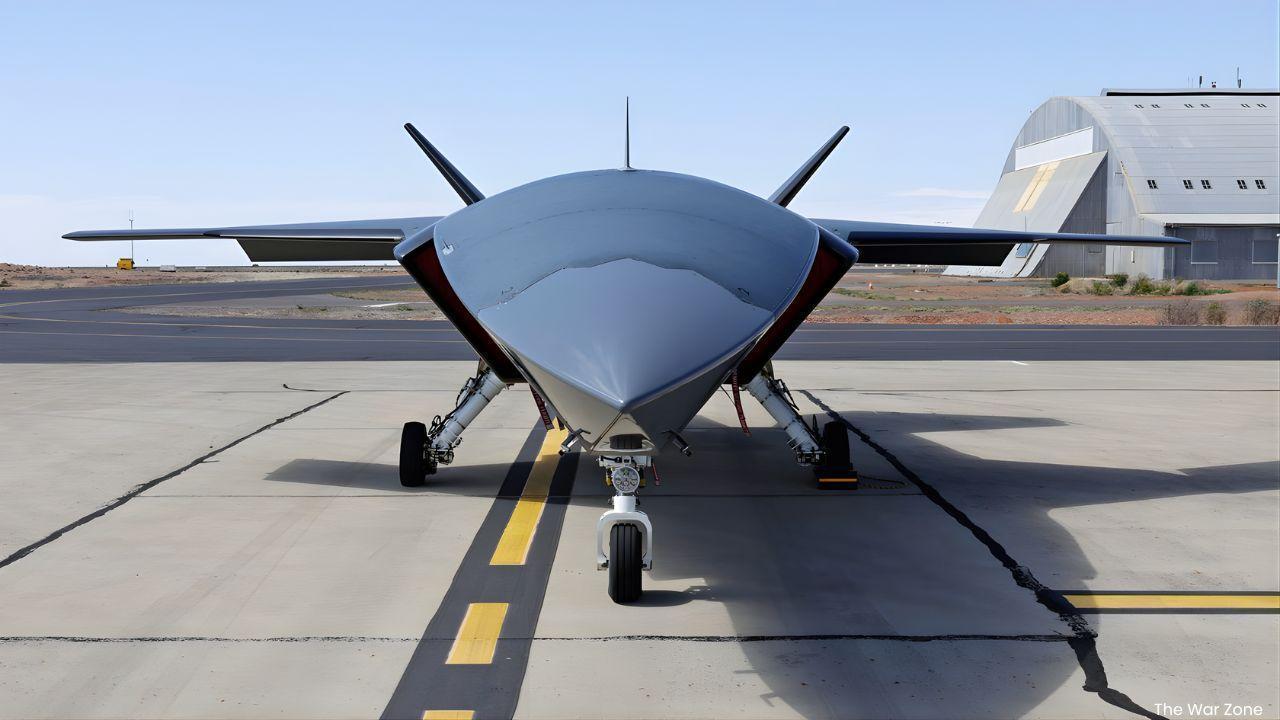
Photo : X / The War Zone
Germany is stepping into the future of aerial warfare with plans to explore the deployment of Boeing’s MQ-28 Ghost Bat, a cutting-edge collaborative combat aircraft designed to operate alongside manned fighter jets. In partnership with defense giant Rheinmetall, the initiative marks a strategic push to strengthen Europe’s air combat capabilities through advanced unmanned systems. This move signals a broader shift in military aviation, where artificial intelligence, autonomy, and networked operations are rapidly redefining how air power is projected on the battlefield.
At the heart of this development is the MQ-28 Ghost Bat, an advanced unmanned aircraft built to function as a “loyal wingman” to traditional fighter jets. Unlike conventional drones, the Ghost Bat is designed to operate collaboratively flying alongside piloted aircraft, sharing data in real time, and executing missions such as surveillance, electronic warfare, and precision targeting.
Its modular design allows it to be configured for different mission profiles, making it a versatile asset in modern combat scenarios. The aircraft’s ability to extend the reach of manned fighters while reducing risk to pilots represents a major leap forward in defense technology, particularly in contested airspaces where survivability is critical.
The collaboration between Rheinmetall and Boeing reflects a growing trend of international partnerships in defense innovation. By combining Rheinmetall’s deep expertise in European defense systems with Boeing’s advanced aerospace capabilities, the initiative aims to create a localized and scalable solution tailored to Germany’s operational needs.
This partnership is not just about procurement, it is about building an ecosystem. The potential integration of the MQ-28 into Germany’s defense framework could involve local production, technology transfer, and long-term industrial collaboration, strengthening Europe’s defense autonomy while maintaining interoperability with NATO allies.
The growing interest in collaborative combat aircraft (CCA) across Europe is driven by the need to counter increasingly sophisticated threats while managing operational costs. Traditional fighter jets are expensive to build and maintain, and deploying unmanned systems alongside them offers a cost-effective way to enhance capability without proportionally increasing risk or expenditure.
CCAs like the MQ-28 can perform high-risk missions such as reconnaissance in contested zones, electronic jamming, and even acting as decoys—allowing manned aircraft to operate more safely and efficiently. This layered approach to air combat is becoming a cornerstone of modern military strategy, particularly as adversaries invest heavily in advanced air defense systems.
Beyond its immediate tactical advantages, the MQ-28 represents a deeper transformation in military operations—the integration of artificial intelligence into combat systems. These aircraft are designed to process vast amounts of data, make real-time decisions, and adapt to dynamic mission environments, reducing the cognitive load on human pilots while enhancing overall mission effectiveness.
For Germany, adopting such technology is not just about staying competitive, it is about future-proofing its defense capabilities in an era where speed, intelligence, and connectivity define success. The move aligns with broader NATO objectives of integrating advanced technologies into defense frameworks to maintain strategic superiority.
The potential deployment of the MQ-28 Ghost Bat in Germany underscores a global shift toward hybrid air forces, where manned and unmanned systems operate seamlessly together. This evolution is set to redefine not only how wars are fought but also how defense industries collaborate, innovate, and scale.
As Europe accelerates its adoption of next-generation combat technologies, initiatives like this highlight the importance of strategic partnerships and technological agility. The MQ-28 is more than just a drone. It is a glimpse into the future of air combat, where autonomy, collaboration, and precision converge to shape the next era of military aviation.
#trending #latest,#MQ28GhostBat #BoeingDefense #Rheinmetall #CombatDrones #MilitaryAviation








Advances in Aerospace Technology and Commercial Aviation Recovery
Insights into breakthrough aerospace technologies and commercial aviation’s recovery amid 2025 chall

Defense Modernization and Strategic Spending Trends
Explore key trends in global defense modernization and strategic military spending shaping 2025 secu

Tens of Thousands Protest in Serbia on Anniversary of Deadly Roof Collapse
Tens of thousands in Novi Sad mark a year since a deadly station roof collapse that killed 16, prote

Canada PM Carney Apologizes to Trump Over Controversial Reagan Anti-Tariff Ad
Canadian PM Mark Carney apologized to President Trump over an Ontario anti-tariff ad quoting Reagan,

The ad that stirred a hornets nest, and made Canadian PM Carney say sorry to Trump
Canadian PM Mark Carney apologizes to US President Trump after a tariff-related ad causes diplomatic

Bengaluru-Mumbai Superfast Train Approved After 30-Year Wait
Railways approves new superfast train connecting Bengaluru and Mumbai, ending a 30-year demand, easi



