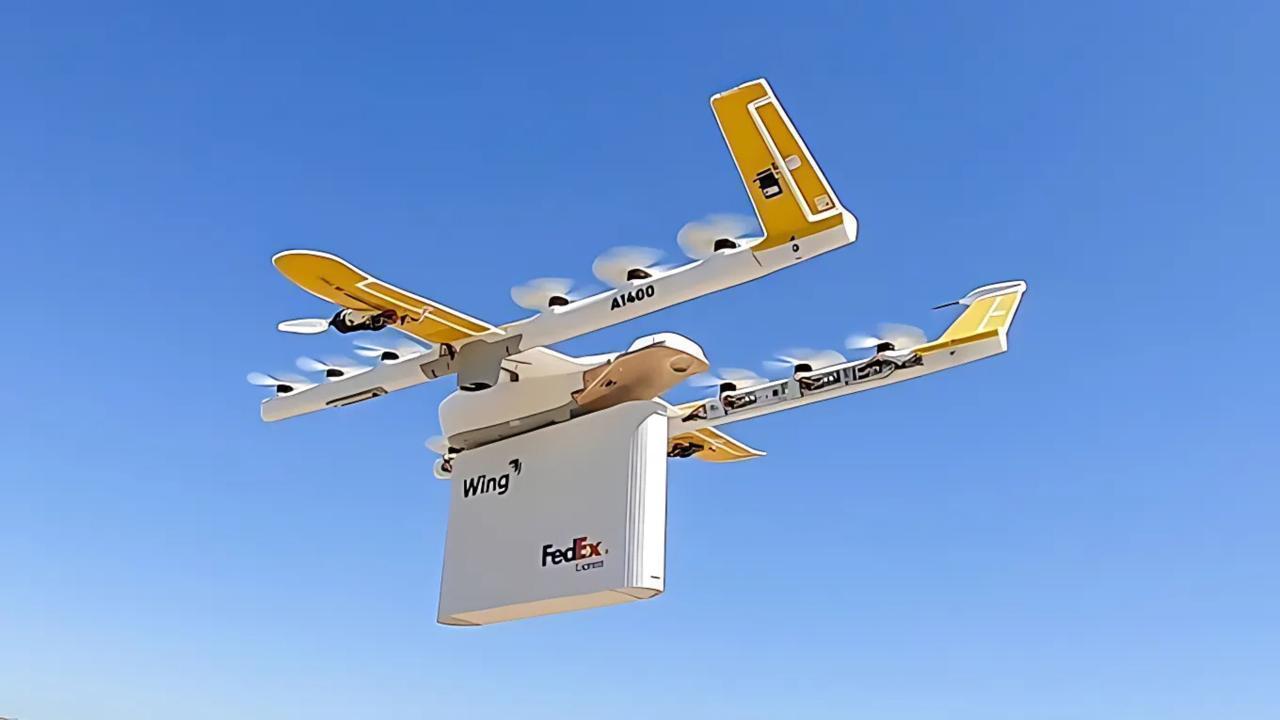
Post by : Amit
Photo : X / Mike Alderson FRSA
FAA Takes a Major Step Toward Expanding Drone Operations
The U.S. Federal Aviation Administration (FAA) has released its long‑anticipated draft rule governing beyond‑visual‑line‑of‑sight (BVLOS) drone operations, a move widely seen as a turning point for commercial and industrial drone applications. The proposal lays out the framework for how drones will be certified, how operators must comply with safety standards, and how regulators intend to integrate autonomous flight into U.S. airspace.
The new rule, published this week, is designed to unlock the full potential of unmanned aircraft systems (UAS) by allowing drones to fly beyond the operator’s line of sight without requiring individual waivers. Currently, BVLOS flights are restricted to experimental or case‑by‑case approvals, slowing the adoption of drone technology for applications such as infrastructure inspection, cargo delivery, agriculture, and emergency response.
FAA Administrator Mike Whitaker called the draft “a milestone toward routine, scalable drone operations,” adding that the rule “balances innovation with the FAA’s top priority — aviation safety.”
What the Draft Rule Proposes
The draft regulation sets standards for drone airworthiness, pilot qualifications, operational limits, and how UAS must detect and avoid other air traffic. Key elements include a new certification process for drones designed to fly autonomously or under minimal human oversight, along with requirements for remote pilots to undergo advanced training specific to BVLOS missions.
The FAA is also proposing a set of performance‑based requirements rather than rigid prescriptive rules, allowing manufacturers and operators flexibility in meeting safety objectives. This approach reflects how regulators handled the early days of commercial aviation, where innovation outpaced existing regulations.
The rule would create defined corridors or operating areas for BVLOS flights, helping ensure that drones can safely share airspace with manned aircraft. It also addresses equipage standards, mandating that drones used in BVLOS operations incorporate detect‑and‑avoid systems or rely on ground‑based surveillance infrastructure.
Industry Welcomes the Long‑Awaited Framework
For years, drone developers and operators have urged the FAA to move beyond the waiver system that has constrained BVLOS operations. The lack of clear rules has made it difficult for companies to plan large‑scale investments in drone services.
“This is the breakthrough we’ve been waiting for,” said Lisa Ellman, executive director of the Commercial Drone Alliance. “A predictable, scalable regulatory framework is essential to building a robust drone economy.”
Companies such as Zipline, Wing, and Skydio — which have been testing BVLOS deliveries and inspections under special exemptions — say the rule will allow them to expand operations nationwide. Energy companies, railroads, and agricultural operators are also expected to benefit from being able to fly longer routes without deploying human observers along the way.
Safety and Airspace Integration Challenges
Despite industry enthusiasm, the FAA faces a difficult task in ensuring drones can operate safely alongside traditional aircraft. While manned aviation relies on see‑and‑avoid principles, drones must depend on sensors, automation, or ground support systems to achieve an equivalent level of safety.
The draft rule calls for drones to demonstrate reliable detect‑and‑avoid capabilities, either onboard or through networked surveillance services. Operators will also have to meet standards for communication, navigation, and contingency planning if a drone loses link with its control station.
“This is about ensuring that drones don’t become a hazard to other aircraft,” said Earl Lawrence, executive director of the FAA’s UAS Integration Office. “We are requiring the same level of rigor that we expect from any other aviation system.”
Balancing Innovation with Regulation
The FAA’s decision to pursue performance‑based rules reflects an effort to keep pace with rapid technological change. Rather than dictating a single technical solution, the agency is setting safety outcomes that industry must achieve — for example, requiring drones to avoid collisions but allowing manufacturers to choose how to accomplish that task.
Industry experts say this approach encourages innovation while providing a clear pathway to certification. However, it also places responsibility on companies to prove that their systems are safe and reliable through testing and data sharing.
“This is not a shortcut,” said Brendan Groves, head of regulatory strategy at Skydio. “It’s an opportunity to demonstrate that autonomous flight can meet or exceed the safety standards of manned aviation.”
Economic Impact of BVLOS Operations
Allowing drones to routinely fly BVLOS is expected to unlock billions of dollars in economic value. Drone‑based infrastructure inspection could reduce costs and improve safety by eliminating the need for workers to physically access dangerous sites such as power lines, pipelines, and bridges.
Cargo and medical delivery services stand to expand rapidly as well. Companies such as Zipline and Wing have demonstrated the ability to deliver packages, medical supplies, and vaccines with near‑autonomous drones, but scaling up has been limited by regulatory hurdles.
According to the Association for Uncrewed Vehicle Systems International (AUVSI), full BVLOS integration could generate tens of thousands of jobs in drone operations, manufacturing, and data analytics, while boosting U.S. competitiveness against Europe and Asia, where regulators have moved faster to approve routine BVLOS flights.
The Road to Final Rulemaking
The FAA’s draft rule will undergo a public comment period, allowing industry stakeholders, local governments, and the public to weigh in on the proposed requirements. After reviewing feedback, the FAA will issue a final rule, likely within 12 to 18 months.
In the meantime, the agency plans to continue granting waivers and conducting pilot programs under its BEYOND initiative to test BVLOS concepts in real‑world environments. These trials are expected to help refine standards for detect‑and‑avoid technology and airspace management.
“We’re building this framework collaboratively,” Whitaker said. “The final rule will reflect both our safety mandate and the practical realities of deploying these systems at scale.”
Implications for Autonomous Flight
While the rule is focused on drones, it could have wider implications for advanced air mobility (AAM) vehicles such as electric vertical takeoff and landing (eVTOL) aircraft. Many of these platforms will rely on high levels of automation and remote monitoring, and lessons from BVLOS drone integration could inform how regulators certify larger passenger‑carrying aircraft.
“This is an important step toward a future where autonomy plays a bigger role across aviation,” said Dan Elwell, former FAA acting administrator. “What we learn from BVLOS drones will feed directly into how we handle next‑generation aircraft.”
The FAA’s draft BVLOS rule represents the most significant regulatory development for U.S. drone operations in years. By moving away from a case‑by‑case waiver process and creating clear certification and operational standards, the agency is laying the groundwork for scalable, economically viable drone services.
The proposal still faces challenges — from ensuring technical reliability to building public trust — but it signals that U.S. regulators are ready to integrate drones as a permanent part of the aviation system.
If finalized as expected, the rule could accelerate the growth of industries ranging from logistics and agriculture to public safety and infrastructure inspection, while setting a precedent for how regulators worldwide approach autonomous flight.
As Whitaker summed up: “This draft rule is about the future of aviation — one where drones and crewed aircraft share the skies safely and efficiently.”
FAA, BVLOS Drone Flights









Advances in Aerospace Technology and Commercial Aviation Recovery
Insights into breakthrough aerospace technologies and commercial aviation’s recovery amid 2025 chall

Defense Modernization and Strategic Spending Trends
Explore key trends in global defense modernization and strategic military spending shaping 2025 secu

Tens of Thousands Protest in Serbia on Anniversary of Deadly Roof Collapse
Tens of thousands in Novi Sad mark a year since a deadly station roof collapse that killed 16, prote

Canada PM Carney Apologizes to Trump Over Controversial Reagan Anti-Tariff Ad
Canadian PM Mark Carney apologized to President Trump over an Ontario anti-tariff ad quoting Reagan,

The ad that stirred a hornets nest, and made Canadian PM Carney say sorry to Trump
Canadian PM Mark Carney apologizes to US President Trump after a tariff-related ad causes diplomatic

Bengaluru-Mumbai Superfast Train Approved After 30-Year Wait
Railways approves new superfast train connecting Bengaluru and Mumbai, ending a 30-year demand, easi



