Post by : Avinab Raana
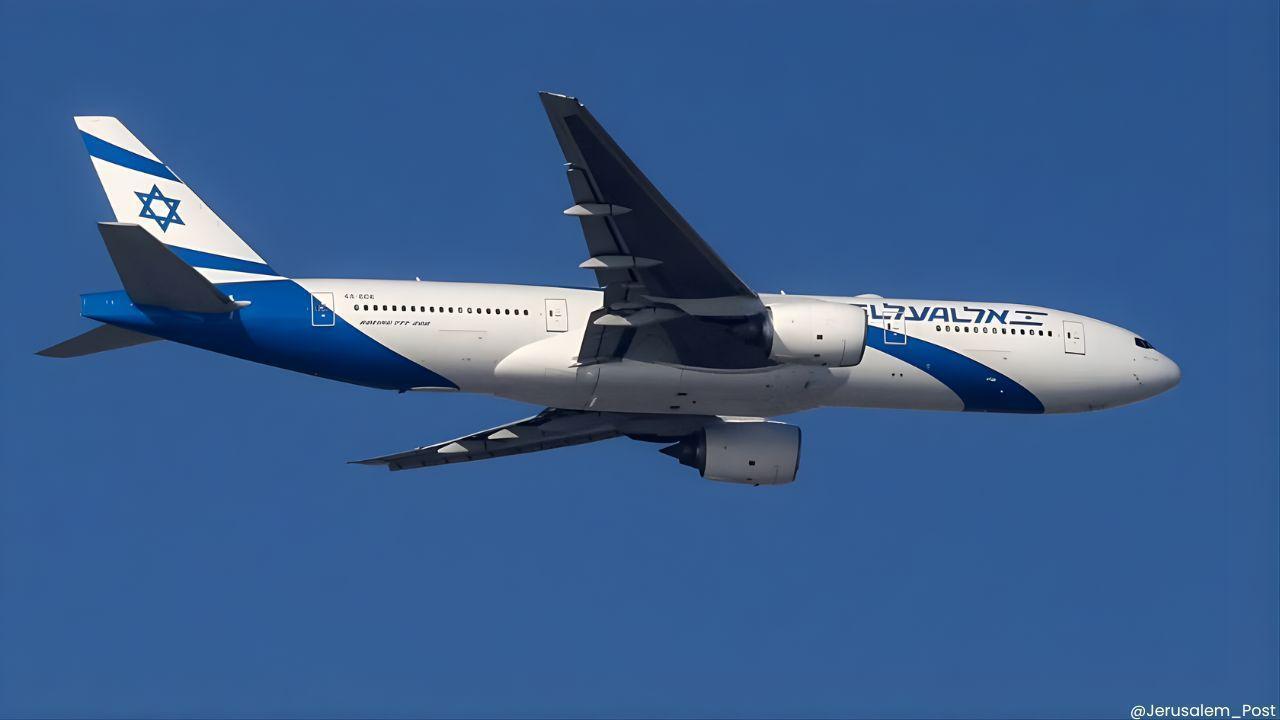
Photo : X / @Jerusalem_Post
Israel’s aviation sector is facing one of its most intense disruptions in recent years as El Al drastically scales back operations following strict airspace and airport limitations. The sudden tightening of flight movements at Ben Gurion Airport has forced the airline into an emergency operating mode, significantly reducing its presence in global air traffic. What was once a high-frequency international hub has now transitioned into a tightly controlled gateway, reshaping both passenger movement and airline strategy overnight.
El Al’s decision to operate at just a fraction of its usual capacity reflects the severity of the restrictions imposed. With flight movements limited and passenger volumes capped, the airline has been compelled to suspend the majority of its routes. This dramatic contraction highlights the fragility of aviation systems during crisis conditions, where even well-established carriers must pivot quickly to maintain essential services. The airline is now operating only a handful of flights, prioritizing continuity over commercial expansion.
The core of the disruption lies in the strict operational controls placed on Ben Gurion Airport, where flight slots have been reduced to minimal levels. With only a limited number of aircraft movements allowed per hour, the airport’s ability to function as a major international hub has been severely compromised. These measures, introduced in response to heightened security concerns, are aimed at ensuring safety but have come at the cost of efficiency and connectivity. The result is a system operating under pressure, with limited room for flexibility or recovery in the short term.
In response to the restrictions, El Al has shifted its operational focus toward essential travel, maintaining critical routes that support urgent passenger movement. This includes prioritizing flights that serve key international connections, ensuring that vital travel needs are met despite the constrained environment. The airline’s strategy reflects a broader industry trend during disruptions reducing scale while maintaining strategic relevance through targeted operations.
The ripple effects of the restrictions extend beyond a single airline, influencing regional aviation dynamics. Other carriers are exploring alternative airports outside Israel to sustain operations, creating a temporary shift in travel patterns across neighboring regions. This adaptation highlights how interconnected global aviation networks are, where disruptions in one hub can quickly alter the flow of traffic across multiple markets.
As the crisis continues, attention is turning toward alternative airport infrastructure within the country. Expanding operations to secondary airports is being considered as a way to ease congestion and restore some level of normalcy. However, logistical challenges and infrastructure limitations present hurdles that cannot be resolved overnight. This situation underscores the importance of diversified aviation infrastructure in ensuring resilience during unexpected disruptions.
El Al’s capacity reduction serves as a stark reminder of how external factors can rapidly reshape aviation operations. The shift from full-scale international connectivity to minimal essential services reflects the industry’s vulnerability but also its ability to adapt under pressure. As the situation evolves, the focus will remain on balancing safety with operational continuity, while the broader aviation ecosystem watches closely for signs of recovery. In this moment of uncertainty, resilience and adaptability have become the true benchmarks of success.
El Al capacity cut, Ben Gurion restrictions, Israel aviation crisis, airline operations disruption, airport traffic limits, aviation industry impact, Middle East flights







Advances in Aerospace Technology and Commercial Aviation Recovery
Insights into breakthrough aerospace technologies and commercial aviation’s recovery amid 2025 chall

Defense Modernization and Strategic Spending Trends
Explore key trends in global defense modernization and strategic military spending shaping 2025 secu

Tens of Thousands Protest in Serbia on Anniversary of Deadly Roof Collapse
Tens of thousands in Novi Sad mark a year since a deadly station roof collapse that killed 16, prote

Canada PM Carney Apologizes to Trump Over Controversial Reagan Anti-Tariff Ad
Canadian PM Mark Carney apologized to President Trump over an Ontario anti-tariff ad quoting Reagan,

The ad that stirred a hornets nest, and made Canadian PM Carney say sorry to Trump
Canadian PM Mark Carney apologizes to US President Trump after a tariff-related ad causes diplomatic

Bengaluru-Mumbai Superfast Train Approved After 30-Year Wait
Railways approves new superfast train connecting Bengaluru and Mumbai, ending a 30-year demand, easi



