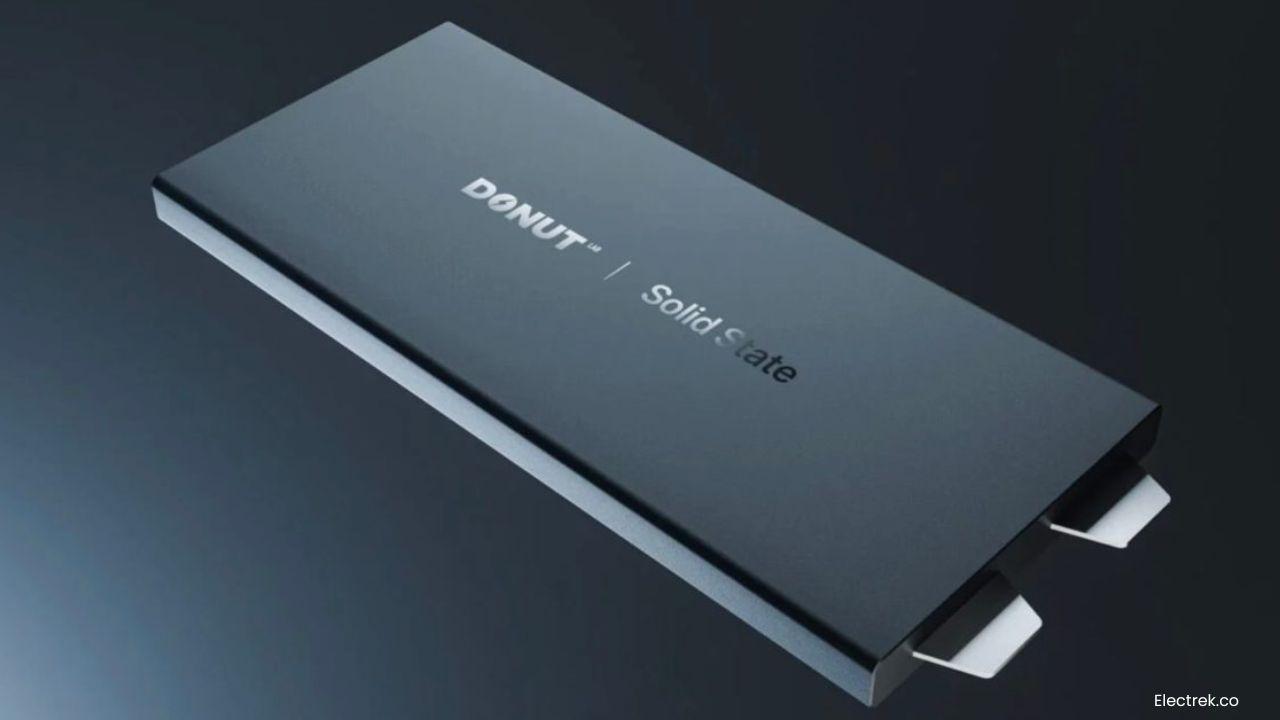
Post by : Avinab Raana
Photo : X / Electrek.co
In a major milestone for next-generation energy storage, Donut Lab and VTT Technical Research Centre have jointly unveiled compelling solid-state battery breakthrough results that show significantly faster charging times without the degradation challenges found in conventional lithium-ion cells. As the global push toward electric mobility intensifies, this development could redefine performance expectations for electric vehicles and grid storage alike. Industry experts are calling the results “a turning point” in overcoming the key limitations of battery life, safety and charging speed.
The partnership between EV battery innovator Donut Lab and Finland’s VTT has yielded data showing that their prototype solid-state cell can be charged rapidly in minutes rather than hours, while maintaining structural integrity and minimal capacity loss over repeated cycles. This fast-charging EV batteries proof of concept addresses one of the most persistent hurdles in electrification: balancing rapid energy intake with long-term stability. Engineers involved in the project describe the results as a significant step forward, illustrating a path toward commercial viability for solid-state technology.
Solid-state cells replace the liquid electrolytes found in traditional lithium-ion batteries with solid materials, dramatically improving safety by reducing the risk of thermal runaway and fires. This leap not only enhances safety but also allows for denser energy storage and faster ion transport during charging. The breakthrough paves the way for vehicles that can recharge at speeds approaching the familiar experience of refueling internal combustion cars, fulfilling a long-standing promise within the EV community.
Initial evaluations carried out by VTT show that the prototype solid-state cell retains a high percentage of its original capacity after numerous fast charge cycles. This result is important because rapid charging has traditionally accelerated battery wear in standard lithium-ion designs. Donut Lab’s formulation and cell architecture reportedly mitigate these wear issues, preserving performance while delivering the fast-charge capabilities that consumers and commercial users demand. For OEMs and battery manufacturers, the positive test output signals a future where range anxiety and long charging waits become relics of the past.
The automotive industry is racing toward solutions that can propel EV adoption into the mainstream, and battery breakthroughs are at the core of that effort. With faster charging and improved longevity, consumers could feasibly use electric cars for longer trips without the downtime associated with current charging infrastructure. Fleet operators, especially those in logistics and ride-hailing stand to benefit enormously, converting downtime into productivity. As a result, fast-charging EV batteries may soon become a central selling point in vehicle design and fleet procurement strategies.
Beyond transportation, advanced solid-state batteries hold promise for grid storage systems that support renewable energy sources like solar and wind. The ability to charge rapidly and cycle frequently makes these cells ideal for smoothing intermittent generation and stabilizing energy networks. As countries invest heavily in clean energy transitions, efficient energy storage technologies are essential to ensure reliable and resilient power systems.
Despite the optimism around these results, several hurdles remain before solid-state batteries enter mass production. Scaling manufacturing processes, ensuring consistent material quality, and managing production costs are significant challenges that industry players must overcome. However, the collaboration between Donut Lab and VTT demonstrates that targeted research partnerships can accelerate progress toward competitive commercial products.
Market analysts are watching this development closely, noting that breakthroughs in solid-state battery technology could reshape competitive dynamics across the EV and energy storage sectors. Automakers, battery suppliers, and government policy makers are increasingly prioritizing investments in advanced battery research to stay ahead in innovation and meet ambitious climate goals. The recent successful tests by Donut Lab and VTT signal that the industry might be on the brink of a new era in energy storage capability.
While these test results are far from announcing a retail-ready product, they mark a pivotal moment in the evolution of battery science. Continued research, pilot manufacturing lines, and strategic investment will determine how soon consumers and utilities benefit from this technology. Still, the breakthrough injects renewed confidence into the global push for electrification, offering a tangible glimpse of a future with safer, longer-lasting and significantly faster charging energy storage systems.
solid-state battery breakthrough, fast-charging EV batteries, Donut Lab VTT results









Advances in Aerospace Technology and Commercial Aviation Recovery
Insights into breakthrough aerospace technologies and commercial aviation’s recovery amid 2025 chall

Defense Modernization and Strategic Spending Trends
Explore key trends in global defense modernization and strategic military spending shaping 2025 secu

Tens of Thousands Protest in Serbia on Anniversary of Deadly Roof Collapse
Tens of thousands in Novi Sad mark a year since a deadly station roof collapse that killed 16, prote

Canada PM Carney Apologizes to Trump Over Controversial Reagan Anti-Tariff Ad
Canadian PM Mark Carney apologized to President Trump over an Ontario anti-tariff ad quoting Reagan,

The ad that stirred a hornets nest, and made Canadian PM Carney say sorry to Trump
Canadian PM Mark Carney apologizes to US President Trump after a tariff-related ad causes diplomatic

Bengaluru-Mumbai Superfast Train Approved After 30-Year Wait
Railways approves new superfast train connecting Bengaluru and Mumbai, ending a 30-year demand, easi



