
Post by : Avinab Raana
In a development that could redefine the very physics of flight, the DARPA-backed X-65 experimental aircraft has officially moved into its final assembly stage—bringing the aviation industry one step closer to a radical transformation in aircraft design. Built by Aurora Flight Sciences under the ambitious CRANE (Control of Revolutionary Aircraft with Novel Effectors) program, the X-65 is not just another prototype—it represents a fundamental shift in how aircraft will maneuver in the future. As global aerospace players push for lighter, smarter, and more efficient platforms, this program is rapidly emerging as one of the most closely watched innovations in aviation engineering.
What sets the X-65 apart is its bold departure from conventional flight control systems. Instead of relying on mechanical components like flaps, rudders, and ailerons, the aircraft uses “Active Flow Control” (AFC), a technology that manipulates airflow using precisely directed jets of pressurized air. This approach allows the aircraft to control pitch, roll, and yaw without moving physical surfaces. The implications are enormous: reduced weight, lower mechanical complexity, and improved aerodynamic efficiency. Engineers believe that eliminating traditional control surfaces could unlock entirely new aircraft configurations that were previously impossible due to mechanical limitations.
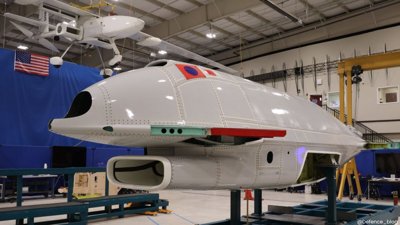
The transition into final systems integration marks one of the most crucial milestones in the X-65’s journey. The aircraft’s fuselage has now been moved to Virginia, where teams are installing advanced electrical, propulsion, and AFC systems. Meanwhile, critical components such as wings and tail structures continue to be manufactured in parallel facilities. This phase represents the shift from structural assembly to full aircraft integration—a stage where design meets operational reality. With every subsystem being installed and tested, the program is steadily progressing toward its first flight target, currently expected around 2027.
The X-65 is not designed for commercial deployment but as a testbed to validate next-generation aerodynamics. With a wingspan of approximately 30 feet and a modular design, the aircraft allows engineers to experiment with different configurations and AFC effectors. Its system of embedded air jets distributed across the aircraft’s surfaces offers unprecedented control precision, potentially outperforming traditional systems in both efficiency and responsiveness. If proven successful, this technology could reshape military aviation, unmanned systems, and even future commercial aircraft by reducing drag and maintenance demands while enhancing performance.
The timing of the X-65 program aligns with a broader global push toward lightweight, sustainable, and high-performance aircraft. As aviation grapples with rising fuel costs, emissions regulations, and evolving mission requirements, innovations like AFC are becoming critical. The ability to simplify aircraft structures while boosting aerodynamic performance could dramatically cut operational costs and open new design frontiers. Moreover, for defense applications, the reduced mechanical complexity could translate into higher reliability and survivability in demanding environments.
As the X-65 edges closer to its first flight, the aviation world is watching closely. Success could mark the beginning of a new chapter where airflow—not mechanical movement defines how aircraft fly. For an industry constantly seeking efficiency and innovation, this breakthrough could ripple across everything from next-gen fighter jets to autonomous aerial systems. The X-65 is more than an experimental aircraft. It is a glimpse into the future of flight, where engineering meets imagination, and the sky is no longer the limit but just the beginning.
#trending #latest,#DARPA #X65Aircraft #ActiveFlowControl #AerospaceInnovation #FutureOfFlight









Advances in Aerospace Technology and Commercial Aviation Recovery
Insights into breakthrough aerospace technologies and commercial aviation’s recovery amid 2025 chall

Defense Modernization and Strategic Spending Trends
Explore key trends in global defense modernization and strategic military spending shaping 2025 secu

Tens of Thousands Protest in Serbia on Anniversary of Deadly Roof Collapse
Tens of thousands in Novi Sad mark a year since a deadly station roof collapse that killed 16, prote

Canada PM Carney Apologizes to Trump Over Controversial Reagan Anti-Tariff Ad
Canadian PM Mark Carney apologized to President Trump over an Ontario anti-tariff ad quoting Reagan,

The ad that stirred a hornets nest, and made Canadian PM Carney say sorry to Trump
Canadian PM Mark Carney apologizes to US President Trump after a tariff-related ad causes diplomatic

Bengaluru-Mumbai Superfast Train Approved After 30-Year Wait
Railways approves new superfast train connecting Bengaluru and Mumbai, ending a 30-year demand, easi



