Post by : Amit
Photo: Reuters
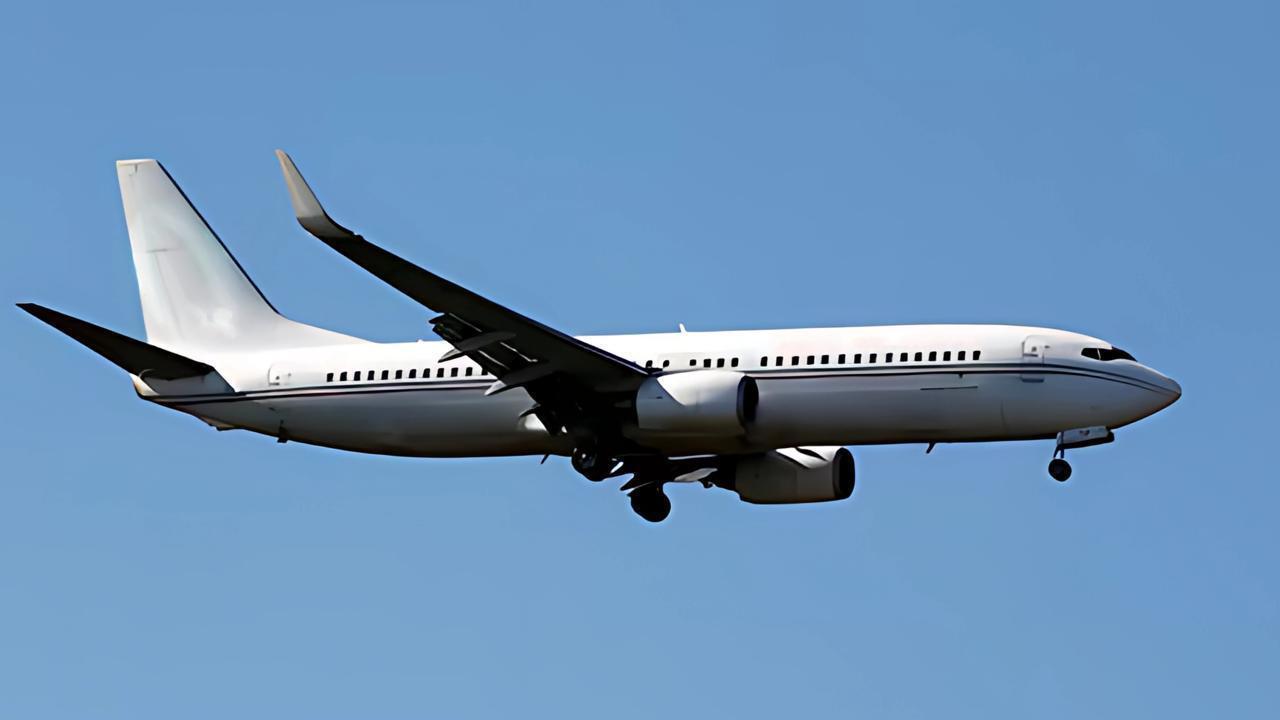
Moscow — Russia’s ambitious bid to build a homegrown rival to the Airbus A320 and Boeing 737 families is accelerating. The Irkut MC-21 program — a next-generation narrowbody airliner developed by United Aircraft Corporation (UAC) — has entered a key new phase, with more than 20 aircraft now under assembly and a new prototype starting certification flight testing.
The aircraft, which promises modern design, advanced materials, and greater fuel efficiency, is viewed as Russia’s most significant commercial aviation program in decades. With this recent progress, Moscow is signaling its intent to break Western dominance in the single-aisle jet market, especially as global tensions push Russia to develop sovereign alternatives to imported technologies.
The latest MC-21 prototype — the fifth test aircraft — took off recently to begin its certification flight trials. According to UAC, the jet will be used to validate refinements in systems integration, flight performance, and cockpit avionics, forming a critical part of the approval pathway toward commercial service.
Notably, this prototype features 100% Russian-made components, including domestically developed PD-14 engines, avionics, and landing gear — a response to international sanctions that restricted Russia’s access to Western parts. Earlier MC-21 versions relied on engines from Pratt & Whitney and other foreign systems.
This shift to full localization makes the fifth prototype especially important. It's the most representative of the production-standard MC-21 that will be delivered to Russian airlines under current state-backed contracts.
At Irkut’s factory in Irkutsk, Siberia, more than 20 MC-21 aircraft are currently in various stages of final assembly. This includes a mix of airframes for flight testing, customer deliveries, and operational readiness evaluations.
This surge in production signals UAC’s confidence in meeting early delivery targets, even as the industry faces headwinds from supply chain disruptions and international export restrictions. While full-rate production is still a few years away, Russian aviation officials have confirmed that multiple airlines — including Aeroflot and Rossiya — are in line to receive the first MC-21 deliveries once certification is complete.
The MC-21 is a medium-range, single-aisle jetliner designed to carry between 163 and 211 passengers, directly challenging the global workhorses — the Airbus A320neo and Boeing 737 MAX. It features a composite wing made from Russian materials, a spacious cabin, next-gen avionics, and fuel-efficient engines.
The PD-14 engines developed by UEC-Aviadvigatel are also entirely Russian, offering competitive performance and emissions profiles while reducing dependency on Western propulsion systems.
Though sanctions have slowed some aspects of development, they’ve also pushed the program toward greater self-reliance — with the Kremlin backing the MC-21 as a strategic symbol of industrial independence and national pride.
The aircraft is undergoing Russian certification trials, overseen by the country’s Federal Air Transport Agency (Rosaviatsiya). Initial certification is expected by late 2025 or early 2026, with commercial entry into service to follow shortly after.
UAC is simultaneously working to increase the localization rate of all systems and components and to scale up training, logistics, and support infrastructure for airlines that will operate the MC-21.
However, the path to broader international certification — such as by the EASA or FAA — remains unlikely in the near term, especially given current geopolitical constraints. The program is therefore focused heavily on the domestic and friendly export markets, such as the Commonwealth of Independent States (CIS), parts of Asia, and Africa.
While the MC-21 faces tough competition and international isolation, it has one major strength: it is backed by the full weight of Russia’s government, aerospace sector, and industrial complex.
Officials see the MC-21 as more than just an airplane — it’s a strategic project meant to restore national aerospace prestige, create jobs, and ensure transport self-sufficiency in a world increasingly divided by technology embargoes and economic blocks.
If UAC can maintain its current momentum and deliver on promises of reliability, efficiency, and service support, the MC-21 could become a real contender in specific markets, particularly where Russian partnerships remain strong.
The MC-21 is no longer just a paper project or prototype program. With over 20 jets under assembly and the latest test aircraft flying with fully Russian systems, the program is edging closer to its long-awaited commercial debut.
In an era of disrupted global supply chains and shifting alliances, the MC-21 stands as a testament to Russia’s push for industrial independence — and a bold attempt to chart its own course in commercial aviation.
Russia, MC-21 aircraft









Advances in Aerospace Technology and Commercial Aviation Recovery
Insights into breakthrough aerospace technologies and commercial aviation’s recovery amid 2025 chall

Defense Modernization and Strategic Spending Trends
Explore key trends in global defense modernization and strategic military spending shaping 2025 secu

Tens of Thousands Protest in Serbia on Anniversary of Deadly Roof Collapse
Tens of thousands in Novi Sad mark a year since a deadly station roof collapse that killed 16, prote

Canada PM Carney Apologizes to Trump Over Controversial Reagan Anti-Tariff Ad
Canadian PM Mark Carney apologized to President Trump over an Ontario anti-tariff ad quoting Reagan,

The ad that stirred a hornets nest, and made Canadian PM Carney say sorry to Trump
Canadian PM Mark Carney apologizes to US President Trump after a tariff-related ad causes diplomatic

Bengaluru-Mumbai Superfast Train Approved After 30-Year Wait
Railways approves new superfast train connecting Bengaluru and Mumbai, ending a 30-year demand, easi



