
Post by : Avinab Raana
Photo : X / The Middle East
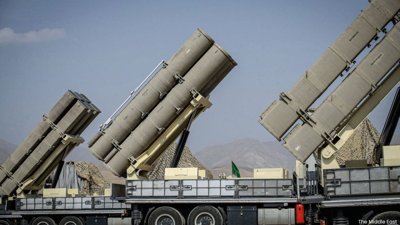
In a move that is sending ripples across global defense and aerospace sectors, Iran is significantly expanding its missile and drone stockpiles, marking a strategic shift that reflects the growing importance of unmanned and precision strike capabilities in modern warfare. The scale and pace of this expansion have raised fresh concerns among international observers, as the country continues to invest heavily in technologies that combine affordability with tactical effectiveness. This surge is not just a regional development, it is a signal of how emerging military doctrines are increasingly centered around drones and missile systems as primary tools of deterrence and influence.
Iran’s growing emphasis on drone technology highlights a broader transformation in global combat strategies, where unmanned aerial vehicles are becoming central to both surveillance and offensive operations. These drones, often designed to be cost-effective and mass-producible, provide flexibility in deployment and can overwhelm traditional defense systems through sheer numbers. By scaling up production, Iran is leveraging drones as force multipliers, enabling it to project power beyond its borders while maintaining operational efficiency. This shift reflects a global trend where nations are prioritizing unmanned systems to enhance their military capabilities without incurring the high costs associated with conventional aircraft fleets.
Parallel to its drone expansion, Iran is also enhancing its missile arsenal, focusing on improving range, accuracy, and payload capabilities. These developments are aimed at reinforcing its deterrence posture in a region marked by geopolitical volatility. The integration of advanced guidance systems and evolving propulsion technologies suggests a long-term commitment to strengthening strike precision. This dual investment in missiles and drones creates a layered defense and offense strategy, allowing for coordinated operations that can target multiple objectives simultaneously, thereby increasing strategic leverage in regional conflicts.
The rapid growth of Iran’s missile and drone capabilities is not only a geopolitical issue but also a significant development for the global aerospace and defense industry. It underscores the accelerating shift toward technologies that prioritize scalability, autonomy, and adaptability. Defense manufacturers worldwide are likely to intensify their focus on counter-drone systems, advanced radar technologies, and integrated air defense networks in response to such developments. This evolving landscape is pushing innovation cycles faster, as nations seek to stay ahead in an increasingly technology-driven security environment.
Iran’s expanding stockpiles illustrate how warfare is entering a new era, one defined by speed, precision, and technological integration. The combination of drones and missiles represents a strategic evolution that challenges traditional military paradigms and compels nations to rethink defense strategies. As these systems become more sophisticated and widespread, their impact will extend far beyond regional boundaries, influencing global security frameworks and defense investments for years to come.
As the world watches these developments unfold, the implications are profound. The increasing accessibility and effectiveness of drone and missile technologies are reshaping power dynamics, making it imperative for nations to adapt quickly. Whether through diplomatic efforts, technological innovation, or strategic alliances, the response to this shift will define the next phase of global security. For the aerospace and defense sectors, this moment represents both a challenge and an opportunity to innovate in ways that address the complexities of modern warfare while ensuring long-term stability.
#trending #latest,#IranDefense #DroneWarfare #MissileTechnology #GlobalSecurity #AerospaceTrends








Advances in Aerospace Technology and Commercial Aviation Recovery
Insights into breakthrough aerospace technologies and commercial aviation’s recovery amid 2025 chall

Defense Modernization and Strategic Spending Trends
Explore key trends in global defense modernization and strategic military spending shaping 2025 secu

Tens of Thousands Protest in Serbia on Anniversary of Deadly Roof Collapse
Tens of thousands in Novi Sad mark a year since a deadly station roof collapse that killed 16, prote

Canada PM Carney Apologizes to Trump Over Controversial Reagan Anti-Tariff Ad
Canadian PM Mark Carney apologized to President Trump over an Ontario anti-tariff ad quoting Reagan,

The ad that stirred a hornets nest, and made Canadian PM Carney say sorry to Trump
Canadian PM Mark Carney apologizes to US President Trump after a tariff-related ad causes diplomatic

Bengaluru-Mumbai Superfast Train Approved After 30-Year Wait
Railways approves new superfast train connecting Bengaluru and Mumbai, ending a 30-year demand, easi



