Post by : Avinab Raana
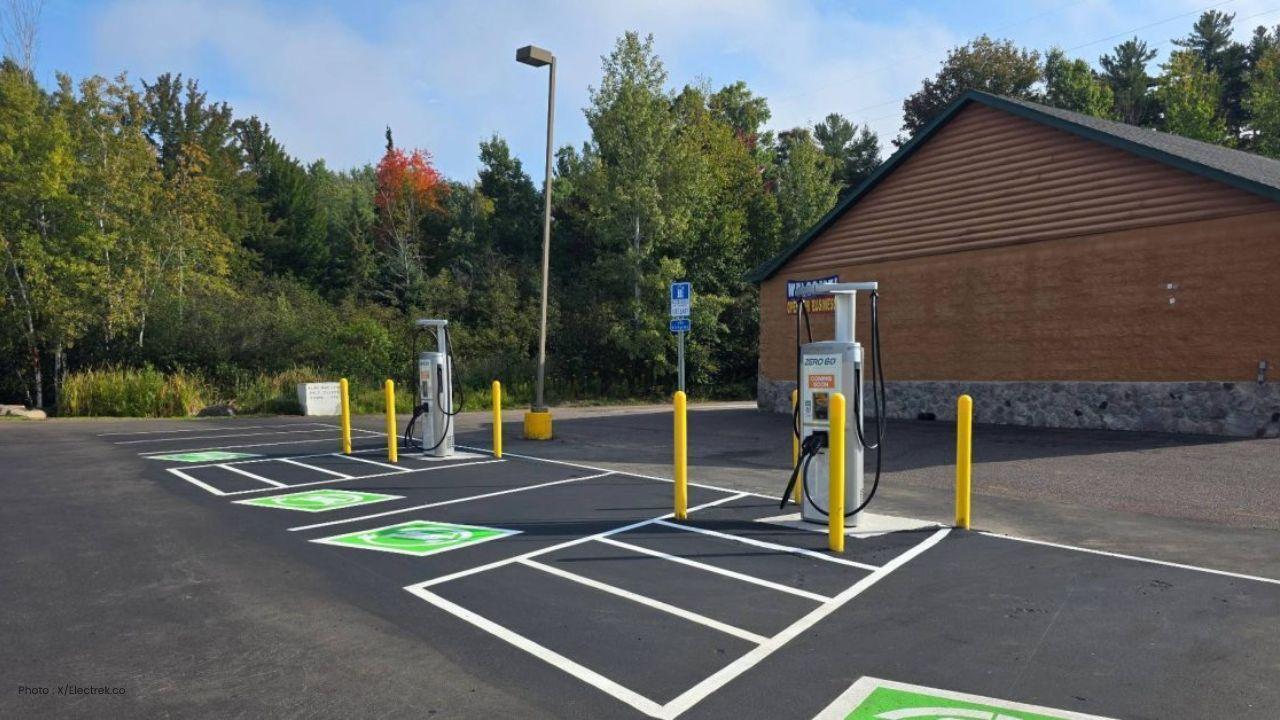
Travelers in Wisconsin’s Northwoods are about to experience something unusual and surprisingly forward-thinking: the chance to grab Culver’s famous frozen custard while topping up their electric vehicle with high-speed charging. In Rhinelander, one of the state’s small but busy towns, a Culver’s restaurant has partnered with charging company Zero 60 to install four 160-kilowatt fast-charging ports. The project marks a significant moment in the state’s journey toward building an inclusive EV charging network, especially in regions long dismissed as “charging deserts.”
The charging station at Culver’s is the result of collaboration between Zero 60, an EV charging operator already active in multiple U.S. states, and Faith Technologies Incorporated, known for its engineering and installation expertise. With the Wisconsin Department of Transportation’s WEVI program providing funding support, the partnership combines private innovation and public infrastructure planning in a way that reflects how EV networks are increasingly built in America. Zero 60 will finance, own, and operate the Rhinelander station, while FTI will handle the technical aspects, ensuring the chargers are reliable and well-maintained.
For EV drivers, Wisconsin’s rural regions have historically been difficult territory. Outside of larger cities like Madison and Milwaukee, the charging landscape has been patchy at best. Rhinelander lies along a state-designated Alternative Fuel Corridor, and yet until now there has been little to no fast-charging access in the area. By placing a high-capacity site in this location, the project directly addresses range anxiety for drivers heading into the Northwoods, whether for vacations, family visits, or business. It also ensures that the environmental and economic benefits of EV adoption extend to smaller communities rather than staying concentrated in urban centers.
Culver’s may seem like an unlikely partner in electrification, but in many ways the brand is perfect for the role. With restaurants across the Midwest, Culver’s locations are already popular rest stops. Adding EV fast chargers at such sites transforms a familiar food stop into a dual-purpose destination. Drivers can recharge their vehicles in roughly the same time it takes to eat a meal or enjoy a dessert. That natural overlap between dwell time and charging needs makes the pairing both practical and attractive for consumers.
Beyond convenience, the Rhinelander station is designed with sustainability in mind. Zero 60 and FTI are emphasizing the role of renewable power in operating the chargers, underscoring the project’s contribution to Wisconsin’s clean energy goals. It means that charging an EV here is not just faster, but also greener, helping reduce the overall carbon footprint of electric mobility. For consumers increasingly conscious of the sources behind their power, this detail could make the difference between occasional use and long-term loyalty to a charging brand.
For EV drivers in northern Wisconsin, this station could be transformative. Instead of carefully planning routes around scarce charging points, they can now treat Rhinelander as a reliable hub. The availability of four 160-kilowatt ports means multiple cars can charge simultaneously, easing concerns about queues or long wait times. For Culver’s itself, the chargers bring new customers who may not otherwise have stopped, generating additional sales and embedding the restaurant more firmly in community and traveler routines. It is a business model that aligns profit with progress.
This development also reflects a wider trend across the United States, where hospitality brands from fast-food restaurants to hotels and shopping centers—are integrating EV chargers into their customer experience. For businesses, it is a chance to stay competitive and relevant in a changing marketplace. For consumers, it provides seamless charging without the need to detour to standalone charging sites. Rhinelander’s Culver’s is simply one of the first examples in Wisconsin, but it may not be the last.
Despite the optimism, expanding EV charging into rural areas comes with hurdles. Harsh winter weather could test the durability of the equipment. High demand during peak travel periods may cause congestion at the site. Grid capacity in northern regions may require upgrades to support more high-speed chargers over time. Zero 60 and its partners will need to ensure consistent maintenance and customer support to prevent reliability issues. A single outage could discourage drivers already nervous about venturing far from existing charging hubs.
The Rhinelander station also highlights the role of policy in accelerating EV infrastructure. Wisconsin’s WEVI program is aligned with broader federal efforts to deploy chargers along national travel corridors. Without this public funding, many rural installations would remain financially unfeasible. Policymakers recognize that EV adoption cannot succeed if entire regions remain under-served. In this sense, the Culver’s project is more than a single installation. It is a signal of the state’s intent to create equitable access to clean transportation.
The benefits of the station go beyond drivers and the environment. Rhinelander businesses stand to gain from the increased traffic, as charging stops often lead to longer stays and more spending. For the Northwoods region, the presence of reliable EV charging could enhance tourism, making the area more accessible to visitors from across the Midwest. It is a reminder that clean infrastructure is not just about technology. It is about weaving economic opportunity into the communities it serves.
If this project succeeds, it may pave the way for similar Culver’s-Zero 60 collaborations elsewhere. The model pairing a trusted local brand with renewable fast charging could be scaled across other towns in Wisconsin and beyond. As EV adoption rises, the expectation will be that rural America is just as connected as its urban counterparts. For now, Rhinelander offers a glimpse of what that future could look like.
What began as a plan to expand EV infrastructure has also become a story about cultural change. The simple act of stopping for frozen custard in Rhinelander is now tied to the larger narrative of America’s energy transition. It illustrates how familiar spaces can become the backdrop for new technologies, how everyday routines can evolve into climate solutions, and how small towns can lead in ways that surprise even their residents. For Wisconsin drivers, this is more than a place to eat, it is a place where the road ahead becomes electric.
#Culver’s fast charge Wisconsin, #Zero 60 charging stations, WEVI program EV infrastructure, #Renewable-powered fast chargers, #EV charging rural Wisconsin



Advances in Aerospace Technology and Commercial Aviation Recovery
Insights into breakthrough aerospace technologies and commercial aviation’s recovery amid 2025 chall

Defense Modernization and Strategic Spending Trends
Explore key trends in global defense modernization and strategic military spending shaping 2025 secu

Tens of Thousands Protest in Serbia on Anniversary of Deadly Roof Collapse
Tens of thousands in Novi Sad mark a year since a deadly station roof collapse that killed 16, prote

Canada PM Carney Apologizes to Trump Over Controversial Reagan Anti-Tariff Ad
Canadian PM Mark Carney apologized to President Trump over an Ontario anti-tariff ad quoting Reagan,

The ad that stirred a hornets nest, and made Canadian PM Carney say sorry to Trump
Canadian PM Mark Carney apologizes to US President Trump after a tariff-related ad causes diplomatic

Bengaluru-Mumbai Superfast Train Approved After 30-Year Wait
Railways approves new superfast train connecting Bengaluru and Mumbai, ending a 30-year demand, easi



