Post by : Saif
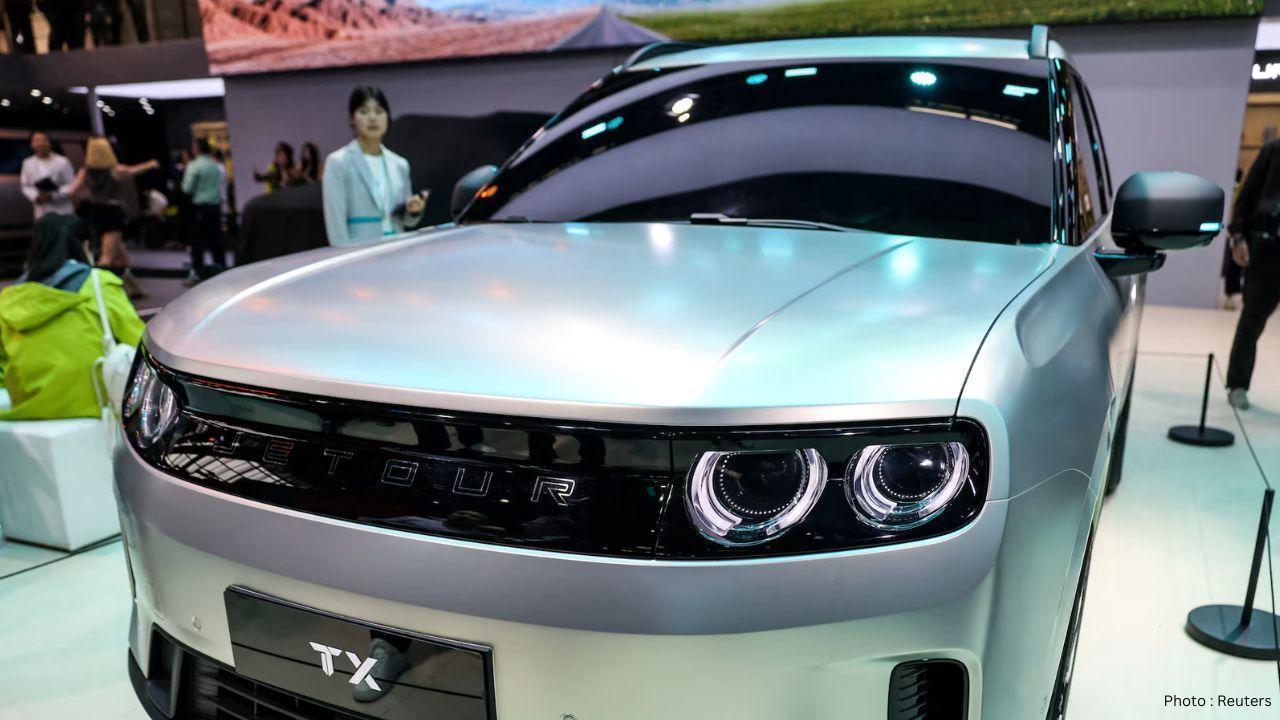
Chinese carmakers are now looking beyond their home market as they search for new growth opportunities. With strong competition and slowing sales inside China, many companies are trying to expand globally. This strategy is being compared to the success of small, affordable cars like the Toyota Yaris, which helped Japanese automakers grow worldwide in the past.
The idea is simple: build reliable, affordable cars and sell them in many countries. Chinese automakers believe they can repeat this success story by offering modern vehicles at competitive prices. Their goal is to win trust in global markets and become strong international brands.
One major reason behind this shift is the slowdown in China’s domestic car market. Sales growth has weakened, and competition among local companies has increased sharply. Reports show that car sales in China have fallen in recent months, and future growth is expected to remain slow.
Because of this, companies are turning to overseas markets where they see better opportunities. In recent years, China has already become one of the world’s largest exporters of cars. In fact, exports reached nearly 5.8 million vehicles last year, showing strong global demand for Chinese-made cars.
Many Chinese brands are now targeting regions like Europe, Southeast Asia, Latin America, and Africa. These markets are important because they offer growing demand and fewer restrictions compared to countries like the United States, where Chinese cars face barriers.
Companies such as BYD, Geely, and Changan are leading this global push. They are investing in new factories, launching new models, and improving their technology to attract international customers.
For example, some companies plan to sell over a million vehicles overseas in the coming years. BYD alone aims for major export growth, while Geely is also increasing its global targets.
The strategy is not only about selling cars but also about building a global image. Chinese carmakers are working on better design, improved safety features, and advanced technology like electric vehicles and smart driving systems. These improvements are helping them compete with well-known global brands.
In Europe, Chinese automakers have already started gaining market share. Their cars are often cheaper than similar models from traditional brands, making them attractive to buyers who want value for money.
However, challenges remain. Some countries have introduced tariffs on Chinese electric vehicles, and there are concerns about quality and brand trust. In markets like Germany and France, it is still difficult for new brands to win over customers who are loyal to established carmakers.
Another challenge is the global competition itself. Automakers from Japan, Europe, and South Korea are also fighting hard to protect their market share. This has led to price cuts and more competition, especially in regions like Europe.
Despite these challenges, the push for overseas growth is unlikely to slow down. Chinese carmakers know that relying only on the domestic market is no longer enough. By expanding globally, they hope to secure long-term growth and reduce risks from local economic changes.
The comparison to the Toyota Yaris strategy is important. The Yaris helped Japanese carmakers build a strong global presence by focusing on affordability, reliability, and wide availability. Chinese companies now want to follow a similar path, but with modern technology like electric vehicles and smart features.
This shift marks a new phase in the global auto industry. Chinese brands are no longer just local players—they are becoming global competitors. Their success or failure will shape the future of the car market in the coming years.
The road ahead will not be easy, but the direction is clear. Chinese carmakers are stepping onto the global stage, aiming to turn today’s challenges into tomorrow’s opportunities.
#trending #latest #ChineseCarmakers #AutoIndustry #GlobalExpansion #ElectricVehicles #EVMarket #CarExports #BYD #Geely #Changan #ToyotaYaris #AutomobileNews #GlobalMarkets #CarIndustry #FutureOfMobility







Advances in Aerospace Technology and Commercial Aviation Recovery
Insights into breakthrough aerospace technologies and commercial aviation’s recovery amid 2025 chall

Defense Modernization and Strategic Spending Trends
Explore key trends in global defense modernization and strategic military spending shaping 2025 secu

Tens of Thousands Protest in Serbia on Anniversary of Deadly Roof Collapse
Tens of thousands in Novi Sad mark a year since a deadly station roof collapse that killed 16, prote

Canada PM Carney Apologizes to Trump Over Controversial Reagan Anti-Tariff Ad
Canadian PM Mark Carney apologized to President Trump over an Ontario anti-tariff ad quoting Reagan,

The ad that stirred a hornets nest, and made Canadian PM Carney say sorry to Trump
Canadian PM Mark Carney apologizes to US President Trump after a tariff-related ad causes diplomatic

Bengaluru-Mumbai Superfast Train Approved After 30-Year Wait
Railways approves new superfast train connecting Bengaluru and Mumbai, ending a 30-year demand, easi



