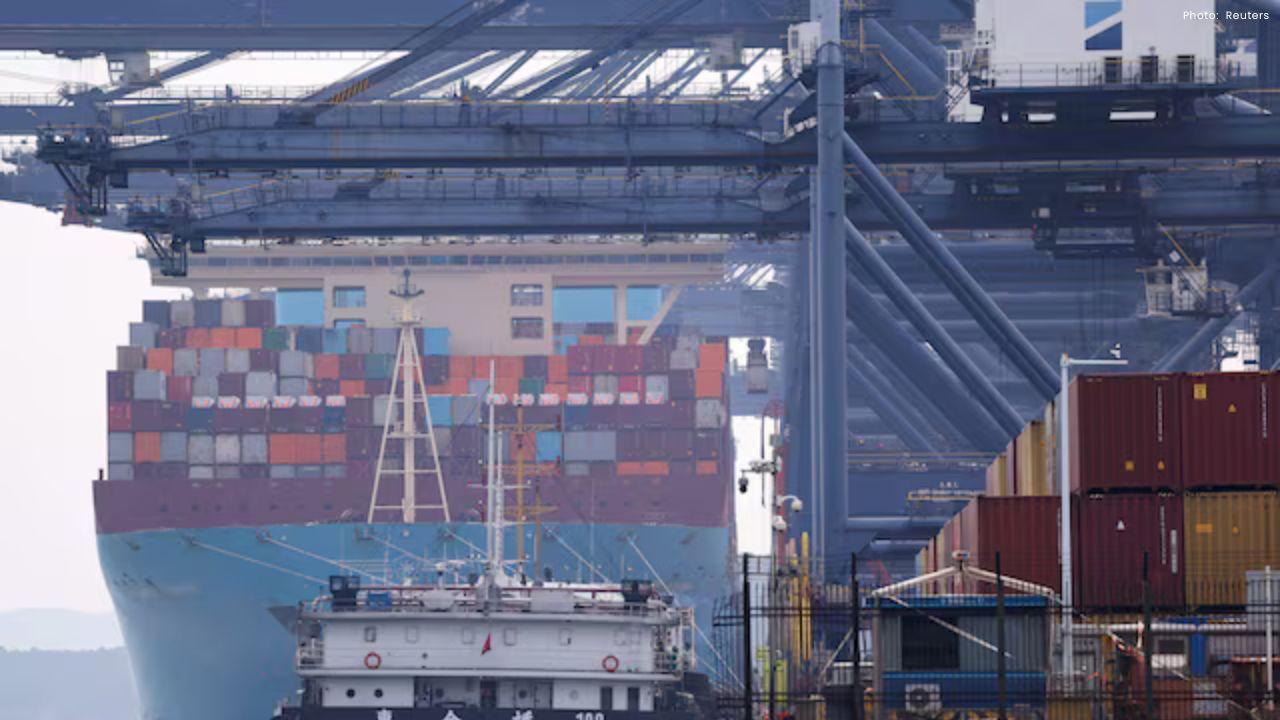
Post by : Saif
China has announced new export restrictions on 20 Japanese companies, saying the action is needed to stop what it describes as Japan’s growing military expansion. The move has increased tensions between the two countries and led to a sharp protest from the Japanese government.
China’s commerce ministry said it will no longer allow the export of certain dual-use materials to the listed firms. Dual-use items are products that can be used for both civilian and military purposes. These include rare earth minerals and other important materials used in modern technology and defense systems.
The affected companies are linked to industries such as shipbuilding, aerospace, and advanced manufacturing. China also added 20 more Japanese firms to a watch list. Companies that want to export sensitive goods to these firms must now apply for special licenses and give written promises that the items will not support military use.
Rare earth elements are very important in today’s world. Even though they are used in small amounts, they are necessary for making electric cars, smartphones, aircraft engines, weapons systems, and other high-tech products. China is one of the world’s largest suppliers of these materials. By limiting exports, Beijing is using its strong position in global supply chains to send a political message.
Chinese officials said the restrictions are meant to protect national security and prevent support for Japan’s military development. They also said that normal trade relations between the two countries should not be affected and that companies operating honestly have nothing to fear.
Japan strongly criticized the decision. Government representatives called the measures “completely unacceptable” and demanded that China cancel them. Tokyo warned that such actions could harm economic relations and disrupt supply chains that both countries depend on.
The dispute comes as Japan is reviewing its defense strategy. Prime Minister Sanae Takaichi has promised to strengthen the country’s military and update key security policies. Japan plans to raise defense spending to 2% of its gross domestic product by the end of March. This would make Japan one of the world’s largest military spenders, even though its constitution limits military activity.
China has expressed concern about Japan’s closer defense cooperation with the United States and its increased military spending. Beijing believes these steps could affect regional stability. Tensions have also grown over comments made by Japanese leaders about Taiwan, an issue that China considers extremely sensitive.
Trade between China and Japan is large and important. Many businesses in both countries depend on each other for materials, technology, and markets. Because of this close link, any trade restriction can create uncertainty for companies and investors. After the announcement, some Japanese company shares fell, while others rose, showing mixed reactions in financial markets.
Experts say this situation shows how economic tools are now often used for political and security purposes. Export controls are becoming more common as countries try to protect their strategic interests. However, such measures can also increase mistrust and slow down economic growth.
Japanese companies are known to keep stockpiles of rare earth materials, which may reduce short-term problems. Still, if restrictions continue for a long time, industries could face supply challenges.
The latest action reflects deeper political and security disagreements between the two nations. While both sides say they want stable economic ties, trust has weakened in recent years.
The coming weeks will show whether diplomatic talks can ease the tension. Strong communication and balanced policies will be important to prevent further strain in one of Asia’s most important economic relationships.
#trending #latest #China #Japan #RareEarths #ExportControls #TradeDispute #AsiaNews #GlobalTrade #SecurityPolicy #armustnews






Advances in Aerospace Technology and Commercial Aviation Recovery
Insights into breakthrough aerospace technologies and commercial aviation’s recovery amid 2025 chall

Defense Modernization and Strategic Spending Trends
Explore key trends in global defense modernization and strategic military spending shaping 2025 secu

Tens of Thousands Protest in Serbia on Anniversary of Deadly Roof Collapse
Tens of thousands in Novi Sad mark a year since a deadly station roof collapse that killed 16, prote

Canada PM Carney Apologizes to Trump Over Controversial Reagan Anti-Tariff Ad
Canadian PM Mark Carney apologized to President Trump over an Ontario anti-tariff ad quoting Reagan,

The ad that stirred a hornets nest, and made Canadian PM Carney say sorry to Trump
Canadian PM Mark Carney apologizes to US President Trump after a tariff-related ad causes diplomatic

Bengaluru-Mumbai Superfast Train Approved After 30-Year Wait
Railways approves new superfast train connecting Bengaluru and Mumbai, ending a 30-year demand, easi



