Post by : Avinab Raana
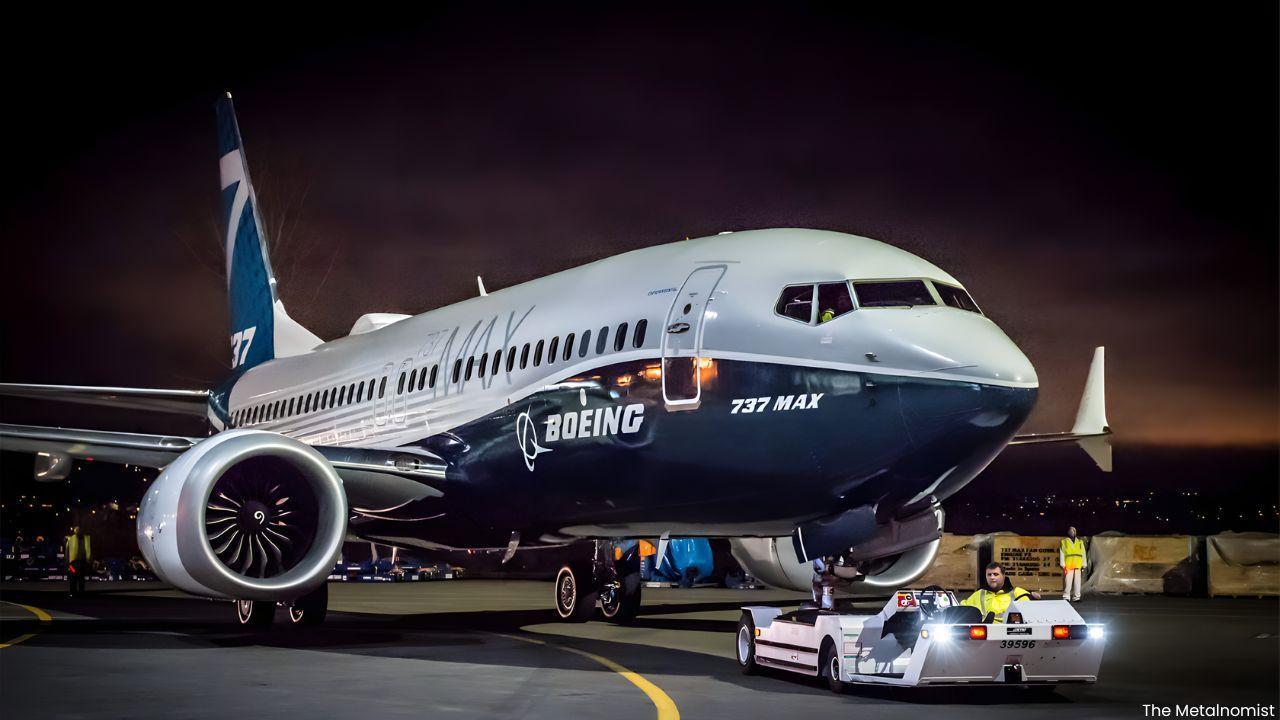
Photo : X / The Metalnomist
In a decisive response to ongoing global supply chain disruptions, Boeing Global Services is accelerating its investment in artificial intelligence, data analytics, and alternative inventory strategies to stabilize aircraft parts availability. The move comes at a critical time for the aviation industry, where supply shortages continue to challenge airlines, maintenance providers, and manufacturers alike. By leveraging advanced digital tools, Boeing is not just reacting to the crisis—it is attempting to redefine how aviation supply chains operate in an era of persistent uncertainty.
At the heart of Boeing’s transformation is a growing reliance on AI-driven platforms designed to predict demand and optimize inventory flows. Tools like its “Parts Planning Hub” are enabling real-time collaboration across the supply chain, allowing stakeholders to forecast parts requirements with greater accuracy and speed.
In parallel, Boeing is deploying predictive analytics in areas such as landing gear maintenance, where aircraft health monitoring data is used to anticipate component failures before they occur. This shift toward predictive maintenance is helping airlines minimize downtime while ensuring that critical parts are available exactly when needed, a crucial advantage in an industry where delays can ripple across global operations.
Beyond digital transformation, Boeing is placing a strong emphasis on expanding its use of Used Serviceable Material (USM)-a cost-effective and increasingly vital solution to supply shortages. USM allows operators to reuse certified aircraft components, reducing dependency on new manufacturing pipelines that are currently under strain.
This strategy is particularly significant as older aircraft remain in service longer than expected, driving demand for spare parts while limiting the availability of new components. By scaling up USM inventory, Boeing is helping airlines maintain fleet readiness without compromising safety or operational performance, while also lowering maintenance costs in a highly competitive market.
Despite these aggressive measures, Boeing acknowledges that a full recovery to pre-pandemic supply chain performance may not be achieved within this decade. Persistent challenges such as supplier capacity constraints, component shortages, and quality inconsistencies continue to disrupt production and maintenance cycles.
The situation is further complicated by a surge in maintenance demand, as airlines address deferred repairs and extend the lifespan of aging fleets. This has created a complex environment where demand is rising faster than supply can stabilize, forcing companies like Boeing to innovate rapidly to bridge the gap.
Boeing’s approach signals a broader transformation across the aviation industry, where digital intelligence and flexible inventory models are becoming essential to survival. The integration of AI, predictive maintenance, and USM solutions is not just a temporary fix, it represents a long-term shift toward smarter, more resilient supply chains capable of adapting to global disruptions.As airlines continue to navigate an unpredictable operational landscape, Boeing’s strategy could set a new industry benchmark. The ability to deliver the right part at the right time is no longer just an operational goal, it is becoming the defining factor in maintaining global connectivity and sustaining aviation growth
#trending #latest,#Boeing #AviationSupplyChain #AIinAviation #MROIndustry









Advances in Aerospace Technology and Commercial Aviation Recovery
Insights into breakthrough aerospace technologies and commercial aviation’s recovery amid 2025 chall

Defense Modernization and Strategic Spending Trends
Explore key trends in global defense modernization and strategic military spending shaping 2025 secu

Tens of Thousands Protest in Serbia on Anniversary of Deadly Roof Collapse
Tens of thousands in Novi Sad mark a year since a deadly station roof collapse that killed 16, prote

Canada PM Carney Apologizes to Trump Over Controversial Reagan Anti-Tariff Ad
Canadian PM Mark Carney apologized to President Trump over an Ontario anti-tariff ad quoting Reagan,

The ad that stirred a hornets nest, and made Canadian PM Carney say sorry to Trump
Canadian PM Mark Carney apologizes to US President Trump after a tariff-related ad causes diplomatic

Bengaluru-Mumbai Superfast Train Approved After 30-Year Wait
Railways approves new superfast train connecting Bengaluru and Mumbai, ending a 30-year demand, easi



