Post by : Avinab Raana
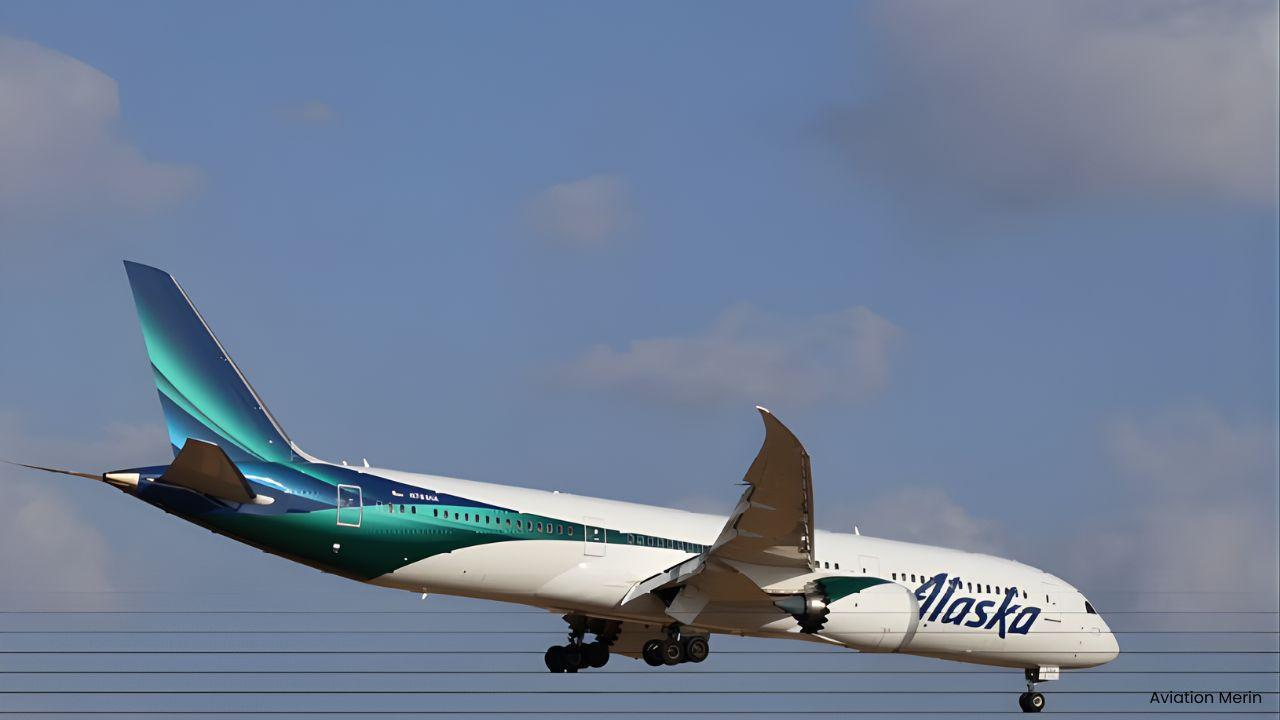
Photo : X / Aviation Merin
An Alaska Airlines delay unfolded dramatically when a flight that departed on schedule was forced into an unexpected operational detour following a power bank fire in the cabin, culminating in the aircraft arriving roughly seven hours behind its original arrival time. The incident has drawn scrutiny for cabin safety procedures and ignited discussions about how passengers and airlines handle portable electronic device hazards during air travel. For the passengers onboard and operations teams on the ground, what began as a routine service quickly turned into a test of safety protocols and crisis management.
Shortly after takeoff, a portable power bank often used for charging phones or tablets ignited inside a passenger’s carry-on bag, producing smoke and drawing the attention of cabin crew. Flight attendants immediately initiated emergency procedures, using onboard fire suppression tools to contain the blaze and protect surrounding passengers and interior surfaces. The crew’s rapid response prevented further escalation and allowed the flight deck to assess the situation, prioritising passenger safety above all.
Recognising the severity of a power bank fire onboard, the flight crew made the decision to divert to the nearest suitable airport, coordinating with air traffic control and airline safety operations teams. The aircraft touched down safely, and emergency responders were on standby to inspect the cabin and verify that the situation was fully resolved. Once the hazard was confirmed to be contained and the cabin environment secured, passengers were disembarked and provided with updates about next steps.
What should have been a routine travel day quickly extended into a lengthy delay, as airport officials and the airline organised ground logistics for stranded passengers. Because of required safety inspections, repositioning of aircraft, and regulatory clearances to resume the journey, the flight arrived at its final destination about seven hours later than scheduled. Travelers experienced longer wait times, rebooking challenges and a host of airline service interactions designed to mitigate the disruption.
The incident has highlighted the importance of proper handling and storage of portable electronics during flights. Aviation regulators and carriers have long warned about the hazards of power bank fires, which can occur when lithium-ion batteries are damaged, improperly stored, or exceed airline restrictions. Such fires pose a unique challenge because they can ignite unexpectedly and generate intense heat within confined cabin spaces.
In a post-incident announcement, Alaska Airlines reaffirmed that passenger safety remains its top priority and praised the flight crew’s swift action in responding to the onboard emergency. The airline noted that safety protocols were followed precisely, and that passengers were cared for throughout the extended delay. Alaska Airlines representatives also emphasised that policies governing portable electronic devices and hazardous materials remain in place precisely to prevent and mitigate such rare but serious events.
Safety analysts say that while incidents involving power bank fires remain uncommon, they are among the more dangerous cabin safety threats because of the energy density of lithium-ion cells. Regulators recommend that passengers carry such devices in hand luggage rather than checked bags, keep them switched off during flight, and ensure they are undamaged and compliant with airline limits. Airlines and airport authorities frequently remind flyers about these guidelines as part of broader passenger safety messaging.
As the aviation community digests this episode, expectations are high for renewed passenger education around device safety and clearer communication from carriers about allowable electronics. The Alaska Airlines delay serves as a real-world example of how prudent safety procedures, vigilant cabin crews, and informed passengers can together avert worse outcomes when unexpected events occur mid-flight.
Alaska Airlines delay, power bank fire, aviation safety incident








Advances in Aerospace Technology and Commercial Aviation Recovery
Insights into breakthrough aerospace technologies and commercial aviation’s recovery amid 2025 chall

Defense Modernization and Strategic Spending Trends
Explore key trends in global defense modernization and strategic military spending shaping 2025 secu

Tens of Thousands Protest in Serbia on Anniversary of Deadly Roof Collapse
Tens of thousands in Novi Sad mark a year since a deadly station roof collapse that killed 16, prote

Canada PM Carney Apologizes to Trump Over Controversial Reagan Anti-Tariff Ad
Canadian PM Mark Carney apologized to President Trump over an Ontario anti-tariff ad quoting Reagan,

The ad that stirred a hornets nest, and made Canadian PM Carney say sorry to Trump
Canadian PM Mark Carney apologizes to US President Trump after a tariff-related ad causes diplomatic

Bengaluru-Mumbai Superfast Train Approved After 30-Year Wait
Railways approves new superfast train connecting Bengaluru and Mumbai, ending a 30-year demand, easi



