Post by : Avinab Raana
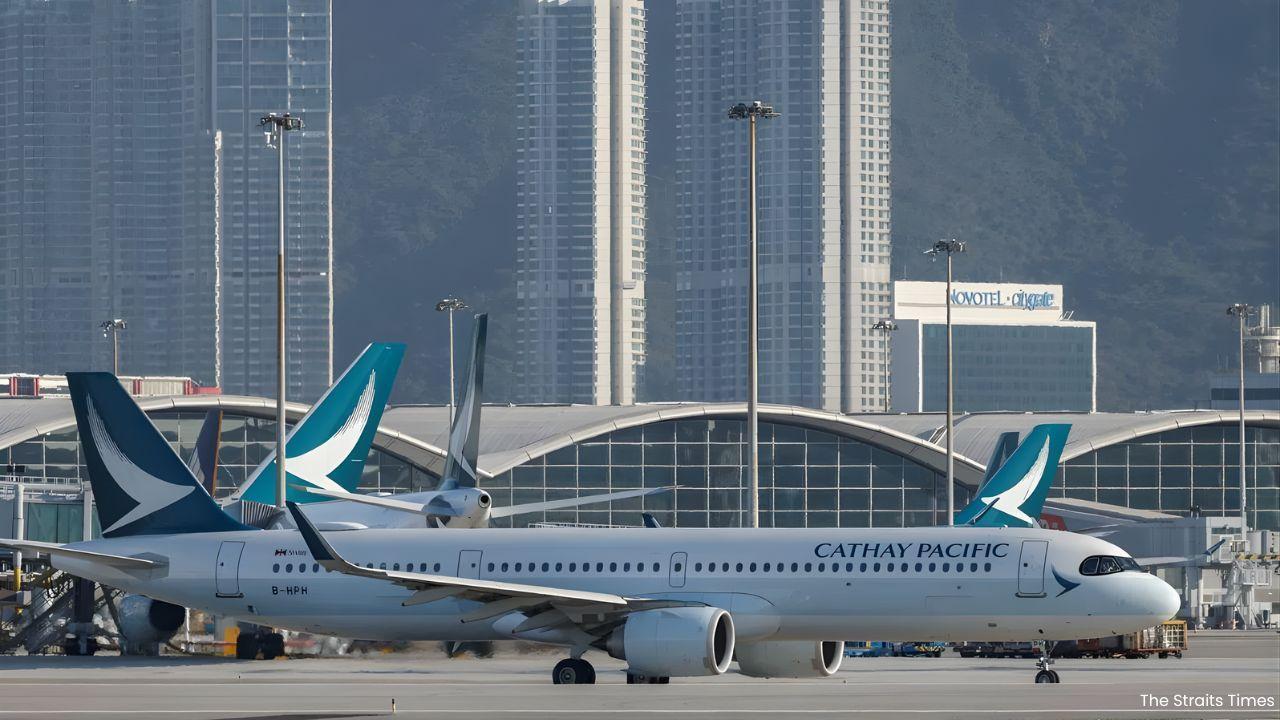
Photo : X / The Straits Times
The fragile balance of global aviation has been shaken as escalating tensions in the Middle East begin to ripple across international air travel. Several major airlines have canceled flights and adjusted schedules amid growing security concerns in the region. What started as a geopolitical escalation is now translating into widespread aviation disruptions, leaving passengers uncertain and forcing airlines to rethink critical international routes. Airlines operating between Europe, Asia, and the Middle East have been among the most affected, as carriers respond quickly to protect passenger safety while navigating a rapidly changing security environment.
Many international carriers have temporarily halted flights to major destinations across the Middle East. Airports that serve as important aviation hubs are now witnessing reduced connectivity as airlines suspend operations or limit services to the region. For airlines, the decision to cancel or reroute flights is rarely taken lightly. Such actions involve significant financial implications and logistical challenges. However, when geopolitical tensions escalate near key air corridors, aviation safety protocols require airlines to prioritize precautionary measures over operational schedules.
Beyond outright cancellations, many airlines are also altering flight paths to avoid sensitive airspace zones. These rerouted journeys often result in longer travel times, higher fuel consumption, and complex scheduling adjustments for airline operations. Flights traveling between Europe and Asia typically rely on strategic corridors passing near the Middle East. When those corridors become uncertain, airlines must quickly redesign routes to maintain safe distances from potential risk zones. These adjustments can create cascading delays throughout global airline networks.
For travelers, the sudden wave of flight cancellations has caused confusion and frustration. Many passengers have been forced to reschedule journeys, extend layovers, or seek alternative travel routes. Major international airports are witnessing increased congestion as airlines work to accommodate stranded passengers on alternative flights. The situation highlights how dependent global travel has become on stable geopolitical conditions. Even localized tensions can rapidly disrupt carefully planned airline networks connecting continents.
Airlines continuously monitor geopolitical developments through global aviation safety advisories and international regulatory guidance. When risks escalate, airline operations teams collaborate with government agencies and aviation authorities to evaluate whether routes remain safe for commercial flights. The priority remains clear: protecting passengers, crew members, and aircraft at all times. Even if disruptions affect schedules, safety-driven decisions are central to the aviation industry’s operational philosophy.
The unfolding situation in the Middle East illustrates the delicate nature of international aviation networks. Airlines depend on open, stable airspace corridors to maintain efficient global connectivity. When tensions arise, those networks can quickly become strained. For now, airlines are closely monitoring developments while preparing contingency plans to adapt to evolving circumstances. As the situation continues to unfold, the aviation industry remains on high alert, balancing operational resilience with the need to safeguard every journey.
#trending #latest, Middle East flight cancellations, airlines cancel flights Middle East tensions, global air travel disruption 2026, airline route suspensions Middle East, aviation crisis airspace closures, international flight cancellations news, airline industry geopolitical impact









Advances in Aerospace Technology and Commercial Aviation Recovery
Insights into breakthrough aerospace technologies and commercial aviation’s recovery amid 2025 chall

Defense Modernization and Strategic Spending Trends
Explore key trends in global defense modernization and strategic military spending shaping 2025 secu

Tens of Thousands Protest in Serbia on Anniversary of Deadly Roof Collapse
Tens of thousands in Novi Sad mark a year since a deadly station roof collapse that killed 16, prote

Canada PM Carney Apologizes to Trump Over Controversial Reagan Anti-Tariff Ad
Canadian PM Mark Carney apologized to President Trump over an Ontario anti-tariff ad quoting Reagan,

The ad that stirred a hornets nest, and made Canadian PM Carney say sorry to Trump
Canadian PM Mark Carney apologizes to US President Trump after a tariff-related ad causes diplomatic

Bengaluru-Mumbai Superfast Train Approved After 30-Year Wait
Railways approves new superfast train connecting Bengaluru and Mumbai, ending a 30-year demand, easi



