Post by : Saif
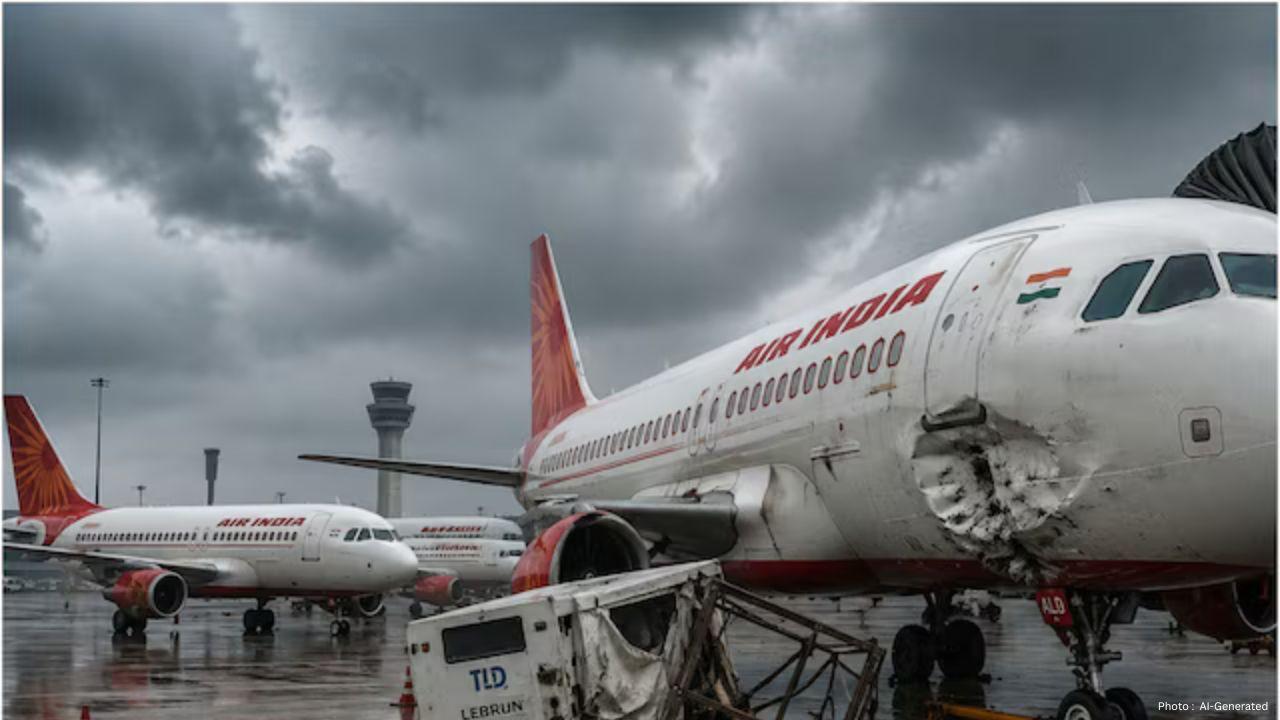
Damage to three Air India aircraft during severe weather at Delhi Airport has sparked fresh discussions about aviation safety, airport preparedness, and the challenges of operating in unpredictable weather conditions. The incident occurred when strong winds moved ground support equipment across the airport apron, causing it to strike parked aircraft and forcing the airline to temporarily remove the affected planes from service.
Fortunately, no passengers, crew members, or airport workers were injured. However, the event has drawn attention to an important part of aviation that often remains unnoticed by the public. While most people focus on aircraft in the sky, a significant amount of work takes place on the ground, where safety procedures are just as important as those followed during flight operations.
Airports function like highly organized cities. Every day, thousands of workers coordinate aircraft arrivals, departures, baggage handling, maintenance, fueling, catering, and passenger services. To support these activities, a large amount of specialized equipment operates near aircraft. Under normal conditions, strict procedures help ensure that all machinery remains safely positioned. During severe weather, however, those procedures face additional challenges.
Reports indicate that strong winds and heavy rain affected parts of the airport area, creating conditions that allowed equipment to shift from its location. As weather conditions worsened, the moving machinery reportedly collided with parked aircraft, causing visible damage. The affected planes were later inspected by engineering teams to assess the extent of repairs required before they could safely return to operation.
Although aviation remains one of the safest forms of transportation, incidents involving ground operations can still occur. Such events serve as reminders that safety depends on every stage of the aviation process. From runway management and weather monitoring to aircraft maintenance and equipment control, each element plays a critical role in protecting passengers and ensuring reliable service.
The occurrence has also highlighted the growing impact of extreme weather on transportation infrastructure. Across many parts of the world, airports are experiencing more frequent weather-related disruptions, including storms, heavy rainfall, strong winds, and periods of reduced visibility. These conditions can create operational difficulties even for well-equipped facilities.
Weather forecasting technology has improved significantly over the years, allowing airports and airlines to receive advance warnings about approaching storms. However, rapidly changing conditions can still present challenges. Sudden weather shifts sometimes leave limited time for ground crews to take additional protective measures, particularly when operations are taking place at busy airports handling hundreds of flights each day.
Delhi Airport serves as one of the largest aviation hubs in the country. The facility handles a vast number of domestic and international flights and plays an important role in connecting travelers across India and around the world. Any disruption involving aircraft availability can affect schedules, maintenance planning, and operational efficiency.
For airlines, even minor damage can lead to significant consequences. Before an aircraft is cleared for service, engineers must conduct detailed inspections to ensure that every system meets safety standards. Depending on the extent of the damage, repairs may involve replacement parts, structural assessments, and regulatory approvals. These procedures are necessary to maintain passenger safety and operational reliability.
Financial costs are another important consideration. Repairing aircraft requires specialized expertise and resources. Airlines may also face scheduling adjustments while affected planes remain unavailable. Although such challenges are manageable, they highlight why prevention remains the most effective approach.
The incident is likely to encourage a review of existing safety procedures related to severe weather. Airport operators continuously assess risks and update guidelines to address changing conditions. Reviews following unexpected events often lead to improvements in equipment security, emergency response planning, and weather-related operational protocols.
Experts frequently note that aviation safety evolves through constant learning. Every incident, whether large or small, provides valuable information that can help strengthen future operations. The industry has developed many of its current safety standards by carefully studying past events and implementing lessons learned.
Another important issue is the need for resilience in modern transportation systems. Airports are expected to continue functioning efficiently despite changing weather patterns and increasing traffic volumes. Achieving that goal requires investment in technology, staff training, infrastructure improvements, and effective risk management strategies.
Passengers may view flight safety mainly in terms of aircraft performance and pilot expertise. Yet many of the most important protections begin long before a plane leaves the ground. Secure equipment handling, accurate weather information, efficient communication, and well-trained personnel all contribute to safe operations.
The recent incident at Delhi Airport demonstrates how quickly weather conditions can create unexpected challenges. While no injuries occurred and corrective measures were taken promptly, the event has reinforced the importance of preparedness and preventive action. Strong safety systems are built not only to respond to problems but also to reduce the likelihood of those problems occurring in the first place.
Damage to three Air India aircraft during adverse weather conditions serves as a reminder that aviation safety extends far beyond the cockpit. Careful planning, continuous monitoring, and effective ground operations remain essential for protecting aircraft, passengers, and airport personnel. As reviews continue, the lessons from this event may help strengthen safety practices and improve preparedness for future weather-related challenges across the aviation sector.
#trending #latest #AirIndia #DelhiAirport #AviationSafety #AircraftDamage #AirportOperations #FlightSafety #IndiaAviation #AirTravel #AirportManagement #WeatherImpact #CivilAviation #TransportationNews #AviationIndustry










Advances in Aerospace Technology and Commercial Aviation Recovery
Insights into breakthrough aerospace technologies and commercial aviation’s recovery amid 2025 chall

Defense Modernization and Strategic Spending Trends
Explore key trends in global defense modernization and strategic military spending shaping 2025 secu

Tens of Thousands Protest in Serbia on Anniversary of Deadly Roof Collapse
Tens of thousands in Novi Sad mark a year since a deadly station roof collapse that killed 16, prote

Canada PM Carney Apologizes to Trump Over Controversial Reagan Anti-Tariff Ad
Canadian PM Mark Carney apologized to President Trump over an Ontario anti-tariff ad quoting Reagan,

The ad that stirred a hornets nest, and made Canadian PM Carney say sorry to Trump
Canadian PM Mark Carney apologizes to US President Trump after a tariff-related ad causes diplomatic

Bengaluru-Mumbai Superfast Train Approved After 30-Year Wait
Railways approves new superfast train connecting Bengaluru and Mumbai, ending a 30-year demand, easi



