
Post by : Meena Rani
Every year, cargo fires destroy ships, endanger lives, and cause billions of dollars in damage. Despite strict regulations, hidden hazardous materials, misdeclared goods, and human error continue to pose a serious threat to maritime safety.
But now, a new ally has entered the fight — Artificial Intelligence (AI).
From smart cargo scanners to predictive fire detection systems, AI is revolutionizing how ships identify danger before it ignites.
As global trade grows more complex, AI is emerging as the most powerful tool for preventing maritime disasters at sea.
The modern shipping industry handles over 11 billion tons of cargo annually, transported in containers that often conceal the true nature of their contents.
According to the International Union of Marine Insurance (IUMI), around 1,500 cargo-related fires are reported every year — many starting from misdeclared or improperly packed dangerous goods.
Lithium batteries, chemicals, and flammable liquids are among the biggest culprits.
Just one mislabeled container can trigger a catastrophic fire — like the ones that destroyed the Maersk Honam and Felicity Ace, resulting in multimillion-dollar losses and environmental damage.
Traditional inspection systems rely heavily on manual checks and paperwork verification, leaving dangerous gaps. AI is closing those gaps by bringing machine intelligence into every stage of cargo handling.
AI-powered cargo safety systems analyze data from shipping manifests, sensors, and X-ray scans to detect inconsistencies, anomalies, or potential hazards — long before containers are loaded onto a vessel.
Here’s how it works:
Advanced AI algorithms cross-check declared cargo details with historical shipping data and global risk databases.
If a shipment’s chemical code or description doesn’t align with known patterns, the system automatically flags it for review.
For example, if a cargo labeled “consumer electronics” contains materials with lithium content, AI instantly recognizes the potential fire risk.
Modern ships are now equipped with AI-driven heat and gas detection systems.
These sensors continuously monitor temperature, CO₂ levels, and chemical signatures in cargo holds. If even a slight increase indicates combustion risk, the AI alerts the crew and triggers automatic fire suppression systems.
AI uses predictive analytics to identify early warning signs based on patterns — such as slight temperature fluctuations or unusual gas readings.
Unlike human inspectors, AI systems never tire, miss signals, or overlook subtle trends.
AI vision systems integrated with X-ray and 3D scanners analyze container imagery to spot irregular packing, hazardous symbols, or undeclared materials.
These models can process thousands of containers per hour, learning and improving accuracy over time.
Leading shipping companies and tech firms are investing heavily in AI-driven fire prevention.
Maersk, one of the world’s largest carriers, has partnered with AI firms to develop cargo risk scoring systems that evaluate every shipment before loading.
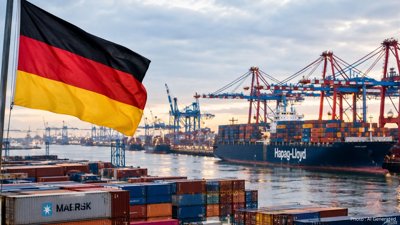
Mediterranean Shipping Company (MSC) and Hapag-Lloyd are testing AI-based cargo inspection tools at major ports, including Rotterdam and Singapore, to automatically flag high-risk containers.
Meanwhile, ports in Shanghai, Hamburg, and Dubai have deployed machine-learning-based scanners that integrate with customs and safety authorities, reducing inspection time by up to 60%.
These technologies are transforming cargo safety from reactive firefighting to predictive prevention.
AI thrives on data — and the shipping industry generates enormous amounts of it.
Every container, manifest, and voyage produces digital records that feed into global maritime databases.
To strengthen AI accuracy, organizations like the IMO, DNV, and Lloyd’s Register are working to standardize how cargo data is collected and shared.
This collaboration allows AI systems to recognize emerging fire risks faster, such as new chemical compounds or battery types entering circulation.
By creating interconnected safety networks, AI ensures that lessons learned from one incident are instantly applied across the entire industry.
AI isn’t just spotting risks — it’s learning how to fight them.
Next-generation systems can automatically activate CO₂ flooding units, adjust air circulation, and isolate compartments where smoke or heat is detected.
Some shipping lines are also testing autonomous firefighting drones, capable of identifying and extinguishing small fires using onboard sensors and heat-resistant cameras.
With AI guiding both prevention and response, maritime safety is moving toward a future where fires are detected, contained, and controlled in seconds, not hours.
While the potential is immense, AI adoption faces challenges.
Data Fragmentation: Not all carriers share digital cargo data, limiting AI accuracy.
Cybersecurity Risks: Connected systems are vulnerable to hacking if not properly secured.
Cost of Implementation: AI sensors and scanning infrastructure require significant upfront investment.
Legal Liability: Determining accountability for AI decisions remains a gray area in international law.
However, as technology matures and regulations evolve, these challenges are being steadily addressed through global maritime standards and cybersecurity frameworks.
The integration of AI into maritime safety marks a turning point for global trade.
What once depended on human vigilance and paper manifests is now evolving into an ecosystem of predictive intelligence — capable of identifying danger before it strikes.
High-volume trending keywords driving interest in this topic include:
AI shipping safety, cargo fire detection, smart maritime technology, predictive maintenance ships, AI cargo inspection, maritime AI analytics, smart ship monitoring, AI logistics 2025.
The shipping industry’s future will not only be more connected — it will be safer, cleaner, and powered by artificial intelligence.
This article is intended for informational and educational purposes only. It summarizes recent developments in maritime safety and artificial intelligence based on public sources. It should not be considered engineering, legal, or investment advice.
AI in shipping, cargo fire prevention, maritime safety tech, smart cargo inspection, hazardous goods detection, AI cargo scanning, ship safety innovation, digital maritime security, maritime AI systems 2025





Advances in Aerospace Technology and Commercial Aviation Recovery
Insights into breakthrough aerospace technologies and commercial aviation’s recovery amid 2025 chall

Defense Modernization and Strategic Spending Trends
Explore key trends in global defense modernization and strategic military spending shaping 2025 secu

Tens of Thousands Protest in Serbia on Anniversary of Deadly Roof Collapse
Tens of thousands in Novi Sad mark a year since a deadly station roof collapse that killed 16, prote

Canada PM Carney Apologizes to Trump Over Controversial Reagan Anti-Tariff Ad
Canadian PM Mark Carney apologized to President Trump over an Ontario anti-tariff ad quoting Reagan,

The ad that stirred a hornets nest, and made Canadian PM Carney say sorry to Trump
Canadian PM Mark Carney apologizes to US President Trump after a tariff-related ad causes diplomatic

Bengaluru-Mumbai Superfast Train Approved After 30-Year Wait
Railways approves new superfast train connecting Bengaluru and Mumbai, ending a 30-year demand, easi



