Post by : Saif
Indian Railways has launched its first train powered by liquefied natural gas (LNG), even though almost the entire broad-gauge network is already electrified. The reason is linked to a specific type of train that cannot simply be pulled by an electric locomotive.
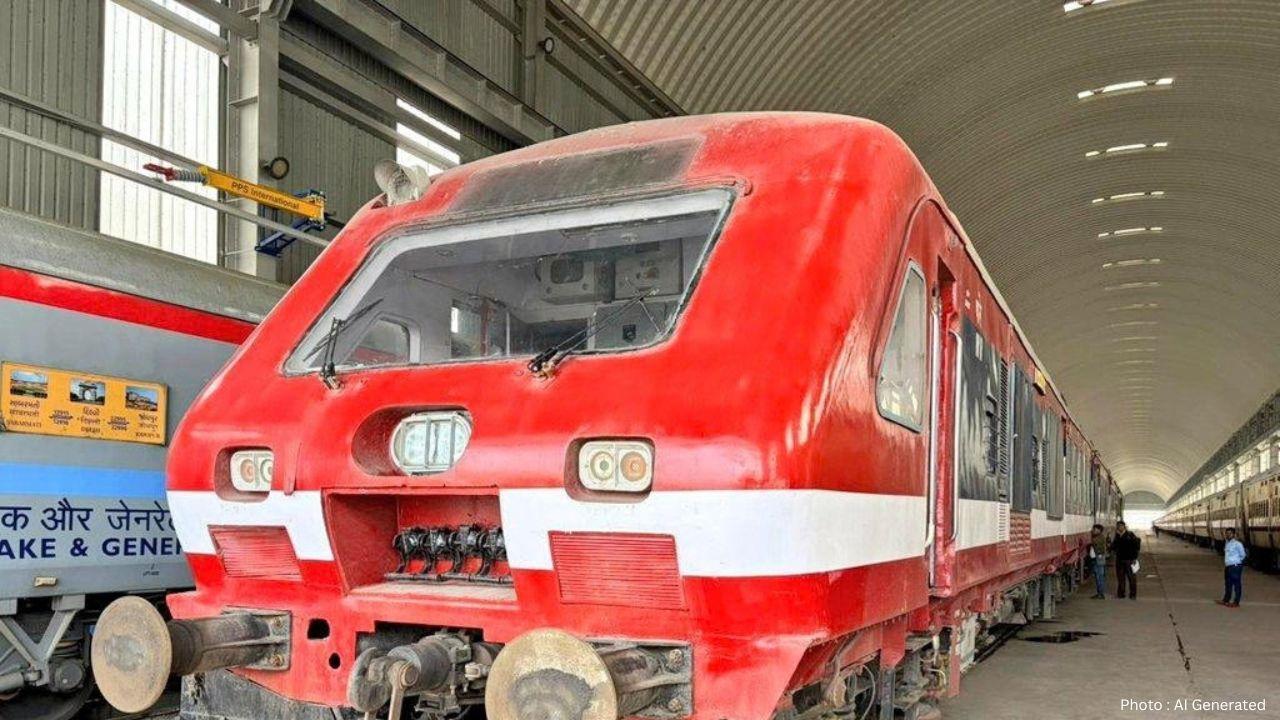
The LNG train, launched from Sabarmati in Gujarat on September 27, is a modified Diesel Electric Multiple Unit (DEMU). It can operate using both LNG and diesel, allowing the Railways to reduce diesel consumption while continuing to use existing trains.
Indian Railways had electrified about 99.6% of its broad-gauge network by 2026, according to the Ministry of Railways. The remaining sections are still being electrified. Diesel consumption for railway traction has also fallen sharply, from 293 crore litres in 2015-16 to 108 crore litres in 2024-25.
This means electric traction remains the main direction for reducing fossil-fuel use across the network. The LNG project is aimed at dealing with existing diesel-powered assets rather than replacing the electrification programme.
DEMU trains are different from conventional trains hauled by separate locomotives.
Their driving power cars have engines and other equipment built into the train itself. In a conventional electric train, electricity comes through overhead wires and powers traction equipment. A DEMU, however, uses an onboard diesel engine to generate electricity for its traction motors.
Because these trainsets do not have a conventional locomotive attached to them, they cannot simply be connected to an electric locomotive. This makes converting existing DEMUs to alternative fuels one option for reducing their dependence on diesel.
The new train uses a dual-fuel system, meaning it can run on LNG as well as diesel.
The converted train is designed to use about 40% LNG and 60% diesel during normal operation. It also has LNG storage, electronic fuel controls and gas-leak detection and safety systems. The power cars can still operate entirely on diesel when required.
Using LNG instead of part of the diesel fuel is expected to reduce emissions and fuel costs compared with running the train only on diesel. Reports on the project say the technology can replace around 40% of diesel use.
Read more: India’s First Bullet Train Set for 15 August 2027, Rail Minister Confirms Timeline
Indian Railways still has diesel-powered assets that have useful operational life remaining. Removing all of them immediately would mean losing the value of existing equipment.
The dual-fuel conversion allows the Railways to continue using these trains while reducing their conventional diesel consumption. It also provides flexibility because the trains can switch back to diesel when necessary.
The first conversion reportedly cost around Rs 1.86 crore, and the Ahmedabad division has a provision to convert 10 DEMU driving power cars, covering five trains. The converted power cars have also undergone field trials.
The LNG project is not a replacement for railway electrification. Instead, it is part of a broader effort to reduce emissions from railway assets that cannot immediately move to electric traction.
Indian Railways has also been developing alternative technologies such as hydrogen-powered trains while increasing its use of renewable electricity. The government says more than 1,260 MW of solar and wind capacity had been commissioned for railway operations by 2026.
For now, the LNG train is best understood as a transition technology: it allows existing DEMU trains to consume less diesel while India's wider railway network moves toward complete electrification and greater use of renewable energy.
#trending #latest #IndianRailways #LNGTrain #IndianRailwaysNews #RailwayElectrification #GreenRailways #LNG #RailwayNews #CleanEnergy #SustainableTransport #IndiaNews






Advances in Aerospace Technology and Commercial Aviation Recovery
Insights into breakthrough aerospace technologies and commercial aviation’s recovery amid 2025 chall

Defense Modernization and Strategic Spending Trends
Explore key trends in global defense modernization and strategic military spending shaping 2025 secu

Tens of Thousands Protest in Serbia on Anniversary of Deadly Roof Collapse
Tens of thousands in Novi Sad mark a year since a deadly station roof collapse that killed 16, prote

Canada PM Carney Apologizes to Trump Over Controversial Reagan Anti-Tariff Ad
Canadian PM Mark Carney apologized to President Trump over an Ontario anti-tariff ad quoting Reagan,

The ad that stirred a hornets nest, and made Canadian PM Carney say sorry to Trump
Canadian PM Mark Carney apologizes to US President Trump after a tariff-related ad causes diplomatic

Bengaluru-Mumbai Superfast Train Approved After 30-Year Wait
Railways approves new superfast train connecting Bengaluru and Mumbai, ending a 30-year demand, easi



