Post by : Avinab Raana
Photo : X / Mario Nawfal
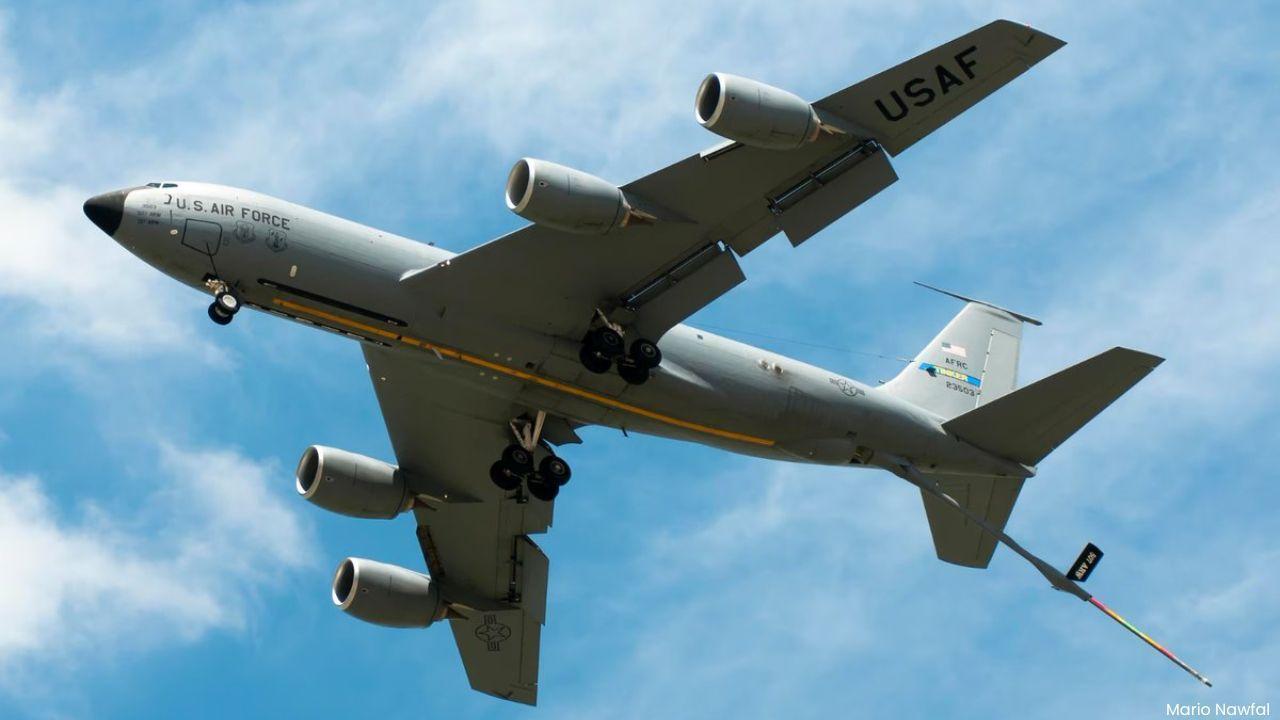
In a move that underscores shifting global military priorities, the United States Air Force has begun reactivating its iconic KC-135 Stratotanker fleet from long-term storage facilities, commonly known as the “boneyard.” The decision signals a renewed urgency in strengthening aerial refueling capabilities at a time when global tensions and operational demands are rapidly intensifying.
The reactivation effort saw aircraft being transferred from the 309th Aerospace Maintenance and Regeneration Group in Arizona to operational hubs such as Tinker Air Force Base in Oklahoma, a key center for deep-level aircraft maintenance and upgrades. This movement is far more than routine logistics—it reflects a calculated response to evolving geopolitical pressures.
Despite first entering service in the late 1950s, the KC-135 remains one of the most critical assets in the U.S. Air Force’s operational framework. Designed for aerial refueling, the aircraft extends the range and endurance of fighters, bombers, and surveillance platforms making it indispensable in long-range and sustained military operations.
Its continued relevance stems from its reliability, adaptability, and the sheer scale of its deployment history across conflicts from Vietnam to modern-day operations. In an era where air dominance depends heavily on sustained reach, tankers like the KC-135 are no longer support assets—they are strategic enablers.
The decision to pull aircraft out of storage is not merely precautionary—it is indicative of real capacity gaps. Recent developments, including high-tempo deployments and operational incidents, have placed immense pressure on the existing tanker fleet.
Simultaneously, delays and limitations in newer tanker programs, such as the transition to next-generation platforms, have forced the Air Force to lean on its legacy fleet. Reactivating stored aircraft offers a faster and more cost-effective solution compared to manufacturing new units, especially when immediate readiness is required.
The Davis-Monthan boneyard is not merely a graveyard of retired aircraft, it is a strategic reserve. Aircraft stored here are preserved in conditions that allow for potential reactivation, parts harvesting, or long-term maintenance use.
The current KC-135 revival highlights how these stored assets serve as a critical buffer in times of operational stress. Whether reintroduced into service or used for spare components, they provide flexibility that modern defense strategies increasingly rely on.
The reactivation of KC-135 tankers sends a clear message: legacy platforms still hold immense value in modern warfare ecosystems. While next-generation aircraft promise advanced capabilities, the reality of immediate operational demands often brings older, proven systems back into focus.
Looking ahead, this move could reshape how air forces globally approach fleet management balancing innovation with sustainability and readiness. In a world where speed of response defines strategic advantage, the ability to revive decades-old aircraft into active service may prove to be one of the most powerful tools in modern defense planning.
#trending #latest,#USAF #KC135 #AerialRefueling #DefenseAviation #MilitaryLogistics






Advances in Aerospace Technology and Commercial Aviation Recovery
Insights into breakthrough aerospace technologies and commercial aviation’s recovery amid 2025 chall

Defense Modernization and Strategic Spending Trends
Explore key trends in global defense modernization and strategic military spending shaping 2025 secu

Tens of Thousands Protest in Serbia on Anniversary of Deadly Roof Collapse
Tens of thousands in Novi Sad mark a year since a deadly station roof collapse that killed 16, prote

Canada PM Carney Apologizes to Trump Over Controversial Reagan Anti-Tariff Ad
Canadian PM Mark Carney apologized to President Trump over an Ontario anti-tariff ad quoting Reagan,

The ad that stirred a hornets nest, and made Canadian PM Carney say sorry to Trump
Canadian PM Mark Carney apologizes to US President Trump after a tariff-related ad causes diplomatic

Bengaluru-Mumbai Superfast Train Approved After 30-Year Wait
Railways approves new superfast train connecting Bengaluru and Mumbai, ending a 30-year demand, easi



