Post by : Saif
The United States has taken a major step in modern warfare by deploying uncrewed drone boats in its ongoing conflict with Iran. This move marks the first confirmed use of such vessels in an active war, showing how quickly military technology is changing.
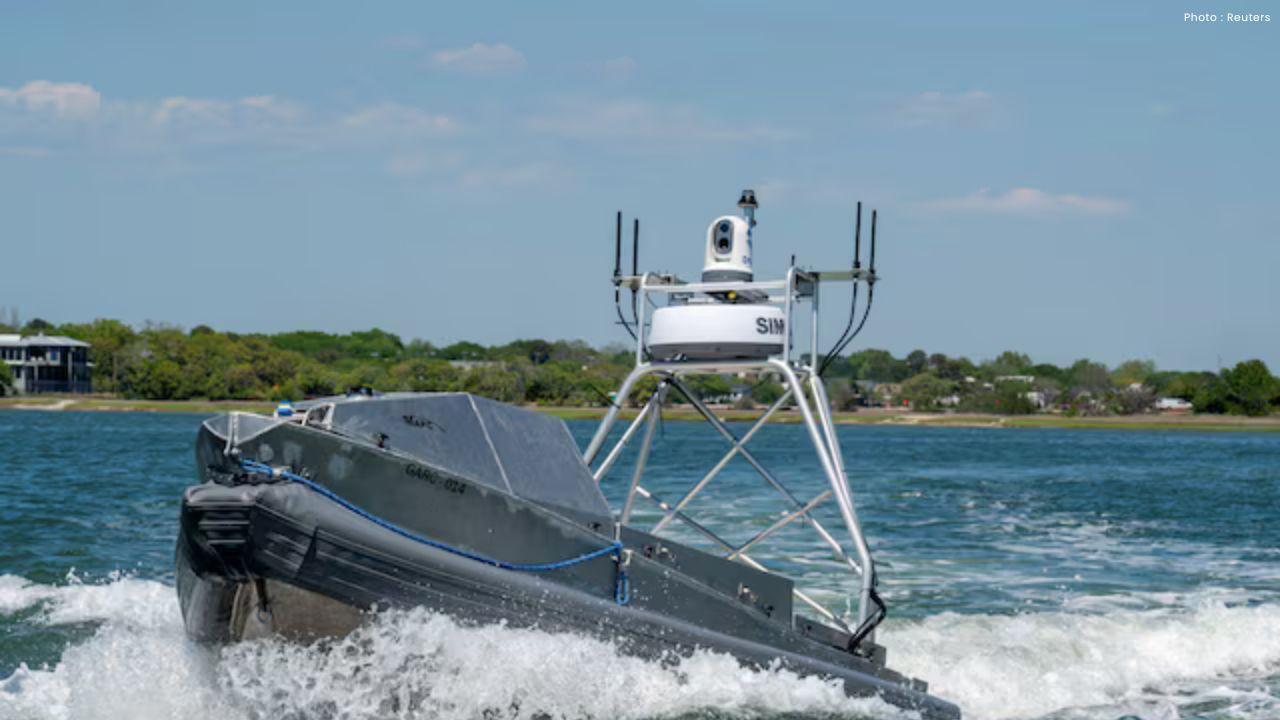
According to reports, these drone boats are being used by the U.S. military as part of its operations in the Middle East. The vessels are known as Global Autonomous Reconnaissance Craft, or GARC. They are small, fast, and can operate without a human crew on board.
These boats are designed mainly for surveillance, but they can also be used for attacks if needed. Some versions can act like “kamikaze” systems, meaning they can carry explosives and strike targets directly.
The Pentagon has said that these unmanned boats have already completed over 450 hours of patrol and traveled more than 2,200 nautical miles in the region. This shows that they are not just experimental tools but are already playing a real role in military operations.
This deployment is part of a larger campaign by the United States in its conflict with Iran. The operation, known as “Operation Epic Fury,” aims to increase control over important sea routes and improve awareness of activities in the region.
The use of drone boats highlights a major shift in how wars are fought today. In the past, naval battles depended on large ships with crews on board. Now, countries are turning to unmanned systems that can reduce risk to human life and operate for longer periods.
This change is not happening in isolation. Recent conflicts, especially the war in Ukraine, have shown how effective drones can be. Ukraine has used small sea drones to damage larger Russian ships, proving that low-cost technology can have a big impact.
However, the use of such technology also brings challenges. The U.S. Navy has faced several technical problems while developing these unmanned vessels. Reports mention issues such as collisions during testing and system failures in earlier trials.
These problems raise questions about reliability. While the technology is promising, it still needs improvement to ensure safe and effective use in real combat situations.
The decision to deploy drone boats also reflects the growing importance of the sea in the current conflict. The waters around the Middle East, especially near the Strait of Hormuz, are critical for global oil supply. Any military activity in this area can have worldwide effects.
In recent weeks, there have been reports of attacks on ships and rising tensions in the region. Iran has also used sea drones in some incidents, showing that both sides are adapting to this new style of warfare.
By using drone boats, the United States aims to improve its ability to monitor and respond to threats in these waters. These vessels can patrol large areas, gather information, and act quickly if needed.
At the same time, this move could increase tensions. The introduction of new military technology often leads to reactions from the other side. Iran may also invest more in similar systems or develop new ways to counter these drones.
For the global community, this development is important. It shows that future wars may rely more on machines than humans. While this can reduce casualties among soldiers, it also raises ethical and security concerns.
There is also the question of control. Unmanned systems depend on software, communication networks, and remote operators. Any failure or cyberattack could lead to serious risks. This makes it important for countries to build strong safeguards.
In the end, the deployment of drone boats is a clear sign that warfare is entering a new era. Technology is becoming a central part of military strategy, changing how battles are planned and fought.
The situation in the Middle East remains tense, and the use of such advanced tools adds another layer of complexity. Whether this will lead to greater stability or further escalation is still uncertain.
#trending #latest #USIranConflict #DroneWarfare #MilitaryTechnology #GlobalSecurity #MiddleEastCrisis #NavalWarfare #Geopolitics #WorldNews








Advances in Aerospace Technology and Commercial Aviation Recovery
Insights into breakthrough aerospace technologies and commercial aviation’s recovery amid 2025 chall

Defense Modernization and Strategic Spending Trends
Explore key trends in global defense modernization and strategic military spending shaping 2025 secu

Tens of Thousands Protest in Serbia on Anniversary of Deadly Roof Collapse
Tens of thousands in Novi Sad mark a year since a deadly station roof collapse that killed 16, prote

Canada PM Carney Apologizes to Trump Over Controversial Reagan Anti-Tariff Ad
Canadian PM Mark Carney apologized to President Trump over an Ontario anti-tariff ad quoting Reagan,

The ad that stirred a hornets nest, and made Canadian PM Carney say sorry to Trump
Canadian PM Mark Carney apologizes to US President Trump after a tariff-related ad causes diplomatic

Bengaluru-Mumbai Superfast Train Approved After 30-Year Wait
Railways approves new superfast train connecting Bengaluru and Mumbai, ending a 30-year demand, easi



