Post by : Saif
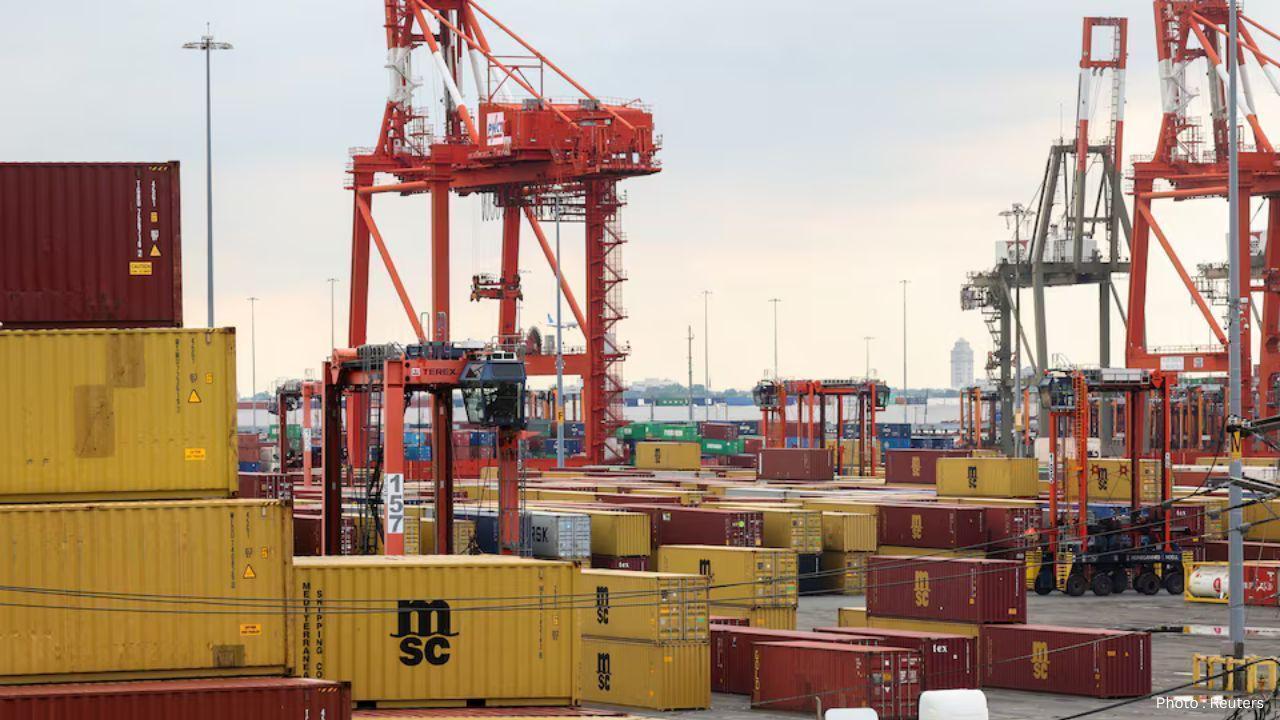
US ports handled 2.5 million 20-foot equivalent units (TEUs) of containerized goods in July, marking the fourth-highest import volume ever recorded for the month, according to Descartes Systems Group.
The July figure was 4.3% lower than the near-record level recorded in July 2025, but imports remained significantly above pre-pandemic levels. During the first seven months of 2026, US container imports were down 0.9% from the same period a year earlier.
Uncertainty over US trade policy has encouraged companies to bring goods into the country before additional tariff changes take effect.
Several tariff measures have shifted during the year, creating uncertainty for retailers, manufacturers and logistics companies. Businesses have been adjusting shipping schedules and sourcing strategies to manage the potential impact of higher import costs.
In late July, a 10% global Section 122 tariff expired and was replaced by new tariffs of up to 12.5% on imports from 60 countries, according to the report.
Imports from China recorded a significant increase in July. Chinese-origin goods reached 873,129 TEUs, marking the highest monthly volume from China in a year.
China remains the largest source of containerized goods entering the United States despite higher US tariffs targeting Chinese products.
The increase highlights the continued importance of Chinese manufacturing and supply chains to the US retail and consumer markets.
Major retailers including Walmart, Amazon and Home Depot account for roughly half of all US container imports.
Companies have increasingly started bringing seasonal merchandise into the country earlier and spreading shipments over a longer period. This trend has become more noticeable following repeated disruptions to global supply chains.
Retailers are preparing for autumn and winter demand while attempting to reduce the risks associated with tariffs, shipping delays and higher freight costs.
Read more: Japan’s Economy Shrinks for the First Time in 6 Quarters as Tariffs Hit Exports
International shipping companies are also dealing with several risks affecting transportation costs and routing decisions.
Uncertainty around the Strait of Hormuz, changing US tariff measures, restrictions affecting the Panama Canal and continuing disruption in the Red Sea are influencing global freight networks.
These challenges can affect shipping routes, delivery times, freight prices and sourcing decisions for companies importing goods into the United States.
July's strong import volume shows that companies continue to adjust their supply chains in response to changing trade policies and global transportation risks.
Although US container imports were slightly lower than last year's near-record July level, volumes remain well above pre-COVID levels. Businesses are expected to continue monitoring tariff decisions and international shipping conditions as they plan upcoming shipments.
#trending #latest #USContainerImports #USImports #USTrade #ContainerShipping #GlobalTrade #SupplyChain #ShippingIndustry #Freight #USPorts #ChinaUSTrade #ChinaImports #Tariffs #TradeTariffs #Logistics







Advances in Aerospace Technology and Commercial Aviation Recovery
Insights into breakthrough aerospace technologies and commercial aviation’s recovery amid 2025 chall

Defense Modernization and Strategic Spending Trends
Explore key trends in global defense modernization and strategic military spending shaping 2025 secu

Tens of Thousands Protest in Serbia on Anniversary of Deadly Roof Collapse
Tens of thousands in Novi Sad mark a year since a deadly station roof collapse that killed 16, prote

Canada PM Carney Apologizes to Trump Over Controversial Reagan Anti-Tariff Ad
Canadian PM Mark Carney apologized to President Trump over an Ontario anti-tariff ad quoting Reagan,

The ad that stirred a hornets nest, and made Canadian PM Carney say sorry to Trump
Canadian PM Mark Carney apologizes to US President Trump after a tariff-related ad causes diplomatic

Bengaluru-Mumbai Superfast Train Approved After 30-Year Wait
Railways approves new superfast train connecting Bengaluru and Mumbai, ending a 30-year demand, easi



