Post by : Avinab Raana
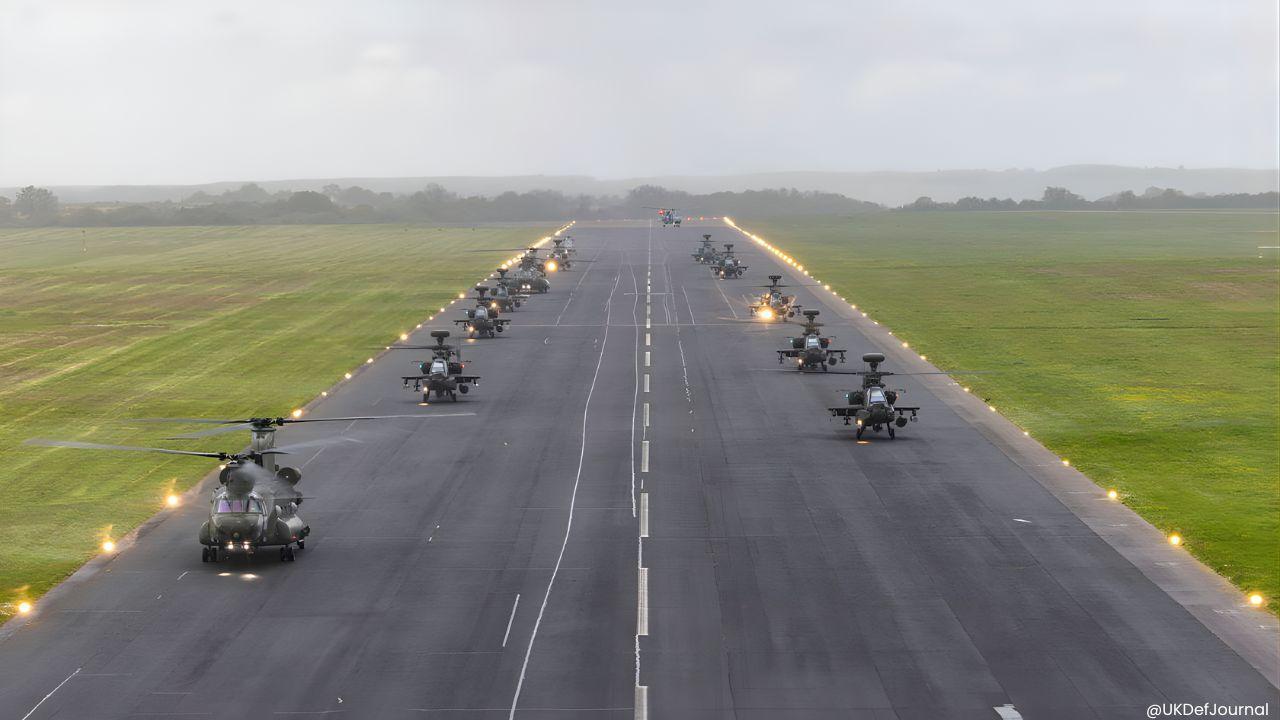
Photo : X / @UKDefJournal
In a decisive move to reinforce its military aviation backbone, the United Kingdom has awarded a massive $1.19 billion helicopter support contract to Boeing—marking a strategic leap in ensuring long-term operational readiness. This is not just another defense deal; it is a signal of how nations are rethinking sustainment, efficiency, and reliability in an increasingly complex global security environment.
The newly awarded contract is designed to provide comprehensive support for the UK’s fleet of military helicopters, focusing on maintenance, repair, and overhaul operations over an extended period. Rather than prioritizing new acquisitions, the UK is investing heavily in sustaining and optimizing its existing fleet—a move that reflects a broader shift across global defense aviation strategies.
This approach allows armed forces to extend the lifespan of critical assets while ensuring peak operational performance, particularly in high-demand environments. The partnership with Boeing brings not only technical expertise but also integrated support systems that can streamline maintenance cycles and improve aircraft availability.
In modern defense aviation, the focus is increasingly shifting from procurement to performance. Large-scale support contracts like this one are becoming essential tools for maintaining readiness without incurring the massive costs and delays associated with new aircraft programs.
By centralizing maintenance and leveraging Boeing’s global supply chain capabilities, the UK can achieve faster turnaround times, improved reliability, and cost predictability. This model also enhances mission readiness, ensuring that helicopters are available when and where they are needed most—a critical factor in both defense operations and humanitarian missions.
For Boeing, the $1.19 billion contract reinforces its position as a dominant player not just in aircraft manufacturing but also in the high-value Maintenance, Repair, and Overhaul (MRO) segment. The company’s ability to secure such large-scale sustainment deals highlights the growing importance of lifecycle services in the aviation business model.
This contract also underscores how defense partnerships are evolving into long-term service ecosystems, where manufacturers remain deeply involved in aircraft operations long after delivery. Such arrangements are reshaping the competitive landscape, pushing other aerospace giants to strengthen their own service offerings.
The timing of this deal is particularly significant. With geopolitical tensions rising across multiple regions, countries like the UK are prioritizing readiness and resilience over expansion. Helicopters play a vital role in rapid deployment, surveillance, and logistics, making their reliability a cornerstone of national defense strategies.
By securing a long-term support agreement, the UK is effectively future-proofing its helicopter fleet against operational disruptions, ensuring that it can respond swiftly to both military and civilian emergencies.
Beyond defense readiness, the contract is expected to generate economic benefits through job creation, supply chain activity, and technological advancements. Boeing’s involvement will likely drive innovation in predictive maintenance, digital monitoring systems, and advanced diagnostics—technologies that can further enhance efficiency and reduce downtime.
This ripple effect extends beyond the UK, influencing global best practices in aviation maintenance and setting new benchmarks for how large-scale support contracts are structured and executed.
The UK’s $1.19 billion agreement with Boeing represents more than a financial commitment, it is a clear indication of where defense aviation is headed. As nations balance budget constraints with operational demands, the emphasis is shifting toward smarter, more sustainable ways of maintaining existing fleets.
In this evolving landscape, the success of such contracts will depend on how effectively they deliver reliability, efficiency, and technological innovation. For now, one thing is certain: the future of defense aviation will be defined not just by what is built, but by how well it is sustained.
#trending #latest#Boeing #UKDefense #HelicopterSupport #AviationMRO #DefenseAviation







Advances in Aerospace Technology and Commercial Aviation Recovery
Insights into breakthrough aerospace technologies and commercial aviation’s recovery amid 2025 chall

Defense Modernization and Strategic Spending Trends
Explore key trends in global defense modernization and strategic military spending shaping 2025 secu

Tens of Thousands Protest in Serbia on Anniversary of Deadly Roof Collapse
Tens of thousands in Novi Sad mark a year since a deadly station roof collapse that killed 16, prote

Canada PM Carney Apologizes to Trump Over Controversial Reagan Anti-Tariff Ad
Canadian PM Mark Carney apologized to President Trump over an Ontario anti-tariff ad quoting Reagan,

The ad that stirred a hornets nest, and made Canadian PM Carney say sorry to Trump
Canadian PM Mark Carney apologizes to US President Trump after a tariff-related ad causes diplomatic

Bengaluru-Mumbai Superfast Train Approved After 30-Year Wait
Railways approves new superfast train connecting Bengaluru and Mumbai, ending a 30-year demand, easi



