Post by : Avinab Raana
Photo : X / Reuters
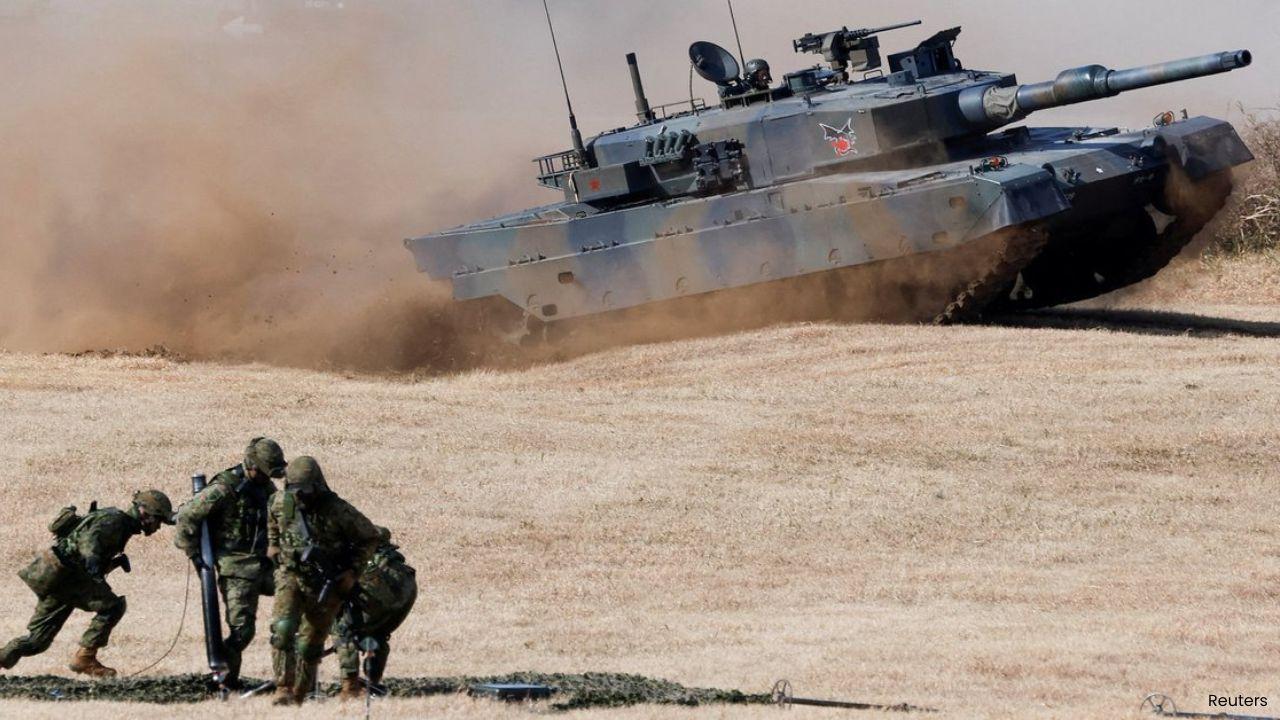
In a move that could redefine global defense dynamics, Japan is preparing to open its arms export market at an unprecedented scale, the most significant shift since World War II. What was once a pacifist nation with strict military export restrictions is now positioning itself as a key supplier in a rapidly evolving global security landscape.
Japan’s government is on the verge of formally easing its long-standing restrictions on arms exports, a policy rooted in its post-war constitution and decades of self-imposed restraint. The new framework, expected to be adopted imminently, aims to allow broader exports of defense equipment and technology to allied nations.
This decision marks a historic departure from Japan’s traditional stance, reflecting how global security challenges are forcing even the most restrained nations to rethink their strategic priorities.
The timing of Japan’s move is no coincidence. Allies across Europe and Asia are increasingly seeking alternative defense suppliers amid growing uncertainty over U.S. commitments and strained American production capacity due to multiple ongoing conflicts.
Countries such as Poland and the Philippines have already shown strong interest in Japanese defense systems as they accelerate military modernization programs.
This shift highlights a broader realignment in global defense procurement, where reliance on a single supplier is giving way to diversified partnerships.
Japan’s defense industry, long constrained by export limitations, is now preparing for rapid expansion. Major corporations like Toshiba and Mitsubishi Electric are increasing hiring, building new facilities, and establishing dedicated export divisions to capture emerging opportunities.
With annual defense spending already around $60 billion, Japan possesses the industrial capability to produce advanced systems such as submarines, fighter aircraft, and missile technologies. The easing of export rules effectively unlocks this capacity for global markets, transforming Japan into a serious competitor in the international arms trade.
Rising tensions in the Asia-Pacific region particularly in the South China Sea are accelerating demand for advanced defense systems. Nations like the Philippines are actively seeking enhanced naval and aerial capabilities to counter regional threats, making Japan’s entry into the export market both timely and strategically significant. The move also aligns with broader efforts among U.S. allies to strengthen regional security networks and reduce vulnerabilities in defense supply chains.
Japan’s policy shift is expected to have far-reaching implications for global defense supply chains. By entering the export market, Japan provides an alternative to traditional suppliers such as the United States and Europe, increasing competition and potentially driving innovation.
This diversification could make defense procurement more resilient, particularly during periods of geopolitical instability when supply chains are under pressure. It also signals a transition toward a more distributed and collaborative global defense ecosystem.
Japan’s entry into the global arms market marks the beginning of a new era in international defense dynamics. As the country balances its pacifist legacy with modern security demands, it is poised to become a major player in shaping the future of military technology and alliances.
The success of this transition will depend on how effectively Japan navigates political sensitivities, industry expansion, and global competition. But one thing is clear—the world’s defense landscape is undergoing a profound transformation, and Japan is stepping into a role it has long avoided.
#trending #latest#JapanDefense #ArmsExport #GlobalSecurity #DefenseIndustry #Geopolitics







Advances in Aerospace Technology and Commercial Aviation Recovery
Insights into breakthrough aerospace technologies and commercial aviation’s recovery amid 2025 chall

Defense Modernization and Strategic Spending Trends
Explore key trends in global defense modernization and strategic military spending shaping 2025 secu

Tens of Thousands Protest in Serbia on Anniversary of Deadly Roof Collapse
Tens of thousands in Novi Sad mark a year since a deadly station roof collapse that killed 16, prote

Canada PM Carney Apologizes to Trump Over Controversial Reagan Anti-Tariff Ad
Canadian PM Mark Carney apologized to President Trump over an Ontario anti-tariff ad quoting Reagan,

The ad that stirred a hornets nest, and made Canadian PM Carney say sorry to Trump
Canadian PM Mark Carney apologizes to US President Trump after a tariff-related ad causes diplomatic

Bengaluru-Mumbai Superfast Train Approved After 30-Year Wait
Railways approves new superfast train connecting Bengaluru and Mumbai, ending a 30-year demand, easi



