Post by : Avinab Raana
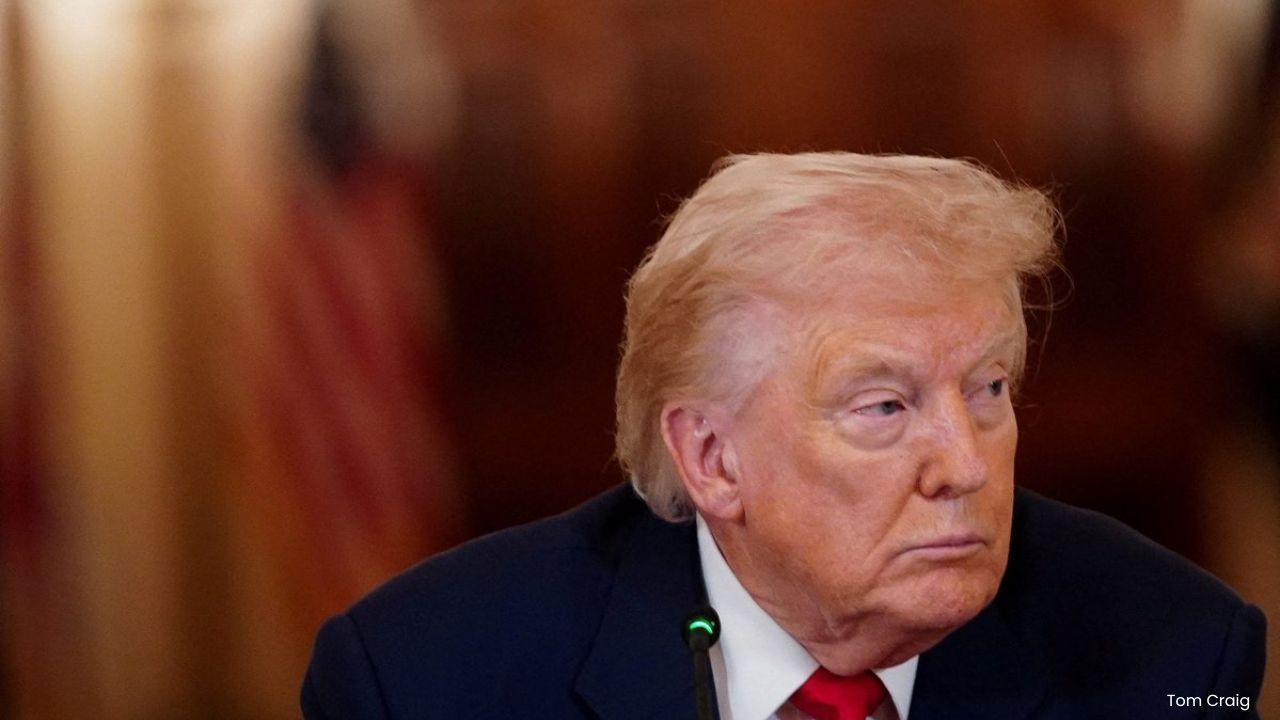
Photo : X / Tom Craig
In a significant geopolitical moment, Donald Trump has indicated that the United States may be approaching the final phase of its strategic objectives in Iran, signaling a potential shift in military posture. His remarks arrive amid heightened tensions surrounding the Strait of Hormuz, placing renewed focus on the future of one of the world’s most critical maritime corridors.
At the center of Trump’s statement is a bold proposition—that the responsibility for securing the Strait of Hormuz should no longer rest primarily with the United States. Instead, nations that rely heavily on the route for energy and trade should take a leading role in maintaining its safety. This idea marks a departure from decades of US-led security oversight, introducing a new framework where global stakeholders are expected to share the burden.
The suggestion of an “endgame” in Iran implies that the US could begin scaling back its direct involvement in the region. While this may signal confidence in achieving key objectives, it also raises critical questions about the future balance of power in the Middle East. A reduced US presence could reshape security dynamics, particularly in a region already experiencing heightened instability.
Trump’s remarks effectively place the spotlight on major energy-importing nations, especially those in Asia and Europe, which depend heavily on the Strait of Hormuz. These countries may now face increasing pressure to actively contribute to securing the route. Such a shift could lead to the formation of multinational security arrangements, redefining how global trade corridors are protected.
The Strait of Hormuz remains one of the most vital chokepoints in the world, carrying a significant share of global oil and gas shipments. Any uncertainty surrounding its security has immediate implications for international markets and supply chains. The idea of redistributing responsibility introduces both opportunity and risk, as coordination among multiple nations could either stabilize or complicate the situation further.
As discussions around responsibility and control intensify, the future of the Strait of Hormuz stands at a crossroads. The shift proposed by Trump reflects a broader change in global strategy, one where traditional power structures are being reconsidered. Whether this leads to a more balanced system or greater uncertainty remains to be seen, but it is clear that the decisions made now will shape the future of global trade and energy security.
Trump Iran strategy, Strait of Hormuz security, US foreign policy shift, global oil route crisis, Middle East tensions 2026, Hormuz responsibility nations, energy security risk, geopolitical shift






Advances in Aerospace Technology and Commercial Aviation Recovery
Insights into breakthrough aerospace technologies and commercial aviation’s recovery amid 2025 chall

Defense Modernization and Strategic Spending Trends
Explore key trends in global defense modernization and strategic military spending shaping 2025 secu

Tens of Thousands Protest in Serbia on Anniversary of Deadly Roof Collapse
Tens of thousands in Novi Sad mark a year since a deadly station roof collapse that killed 16, prote

Canada PM Carney Apologizes to Trump Over Controversial Reagan Anti-Tariff Ad
Canadian PM Mark Carney apologized to President Trump over an Ontario anti-tariff ad quoting Reagan,

The ad that stirred a hornets nest, and made Canadian PM Carney say sorry to Trump
Canadian PM Mark Carney apologizes to US President Trump after a tariff-related ad causes diplomatic

Bengaluru-Mumbai Superfast Train Approved After 30-Year Wait
Railways approves new superfast train connecting Bengaluru and Mumbai, ending a 30-year demand, easi



