Post by : Amit
A Leap Forward in Maritime Skill Development
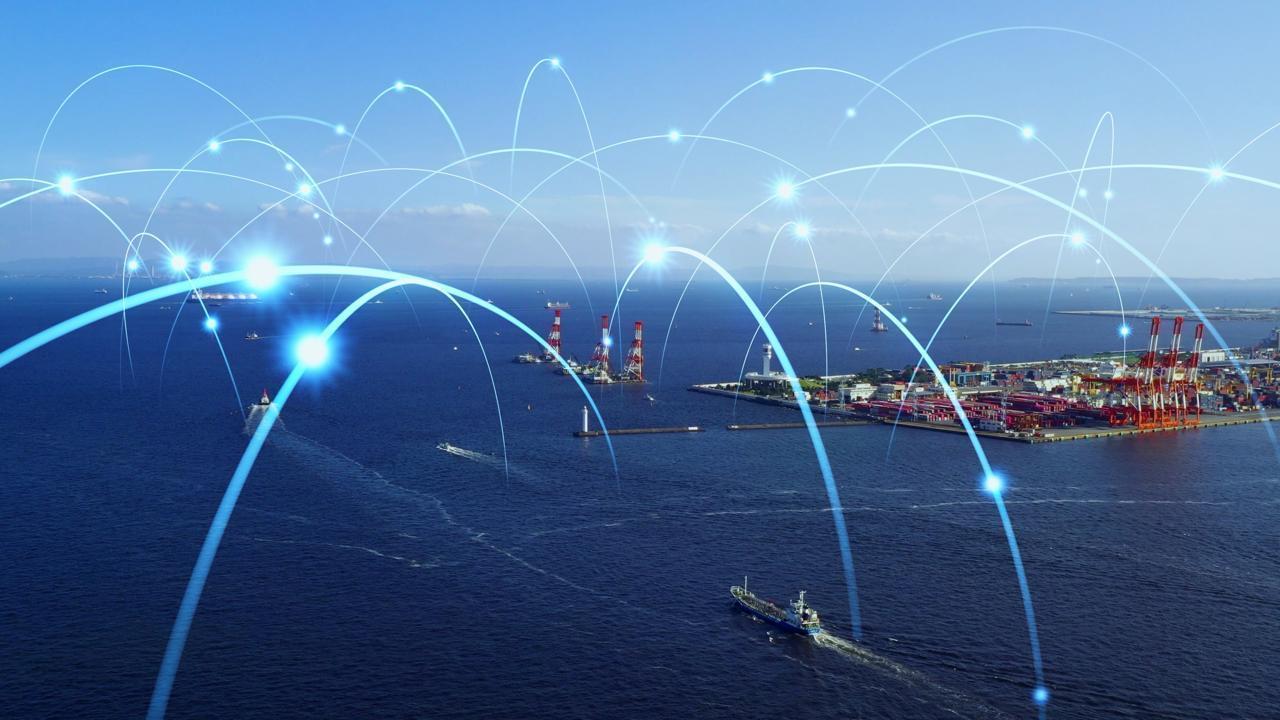
In a move that signals a new era in port operations and maritime workforce development, Tata Marine has secured regulatory approval to deploy its cutting-edge virtual reality (VR) training modules across major ports in India. This strategic initiative is set to transform the traditional methods of port worker training, infusing digital simulation and immersive environments into an industry known for its reliance on manual expertise and legacy processes.
The approval, granted by a panel comprising the Ministry of Ports, Shipping and Waterways and the Directorate General of Shipping, represents a significant endorsement of Tata Marine’s efforts to modernize port labor practices. According to officials involved in the review, the VR training platform was lauded for its potential to enhance safety, reduce on-site incidents, and significantly cut down on training time without compromising learning outcomes.
Bridging the Skills Gap with Immersive Technology
Tata Marine's VR training suite replicates complex port scenarios—ranging from crane operations and cargo handling to emergency response drills—within a fully virtual environment. These simulated conditions allow trainees to gain practical experience without exposure to real-world hazards.
India’s ports, particularly those at Jawaharlal Nehru Port Trust (JNPT), Paradip, Visakhapatnam, Chennai, and Cochin, are often stretched to their operational limits. The need for a highly skilled, responsive, and safety-conscious workforce has never been more urgent, especially as cargo volumes and vessel sizes grow larger each year.
Through immersive training, Tata Marine aims to bridge the existing skills gap while preparing the next generation of port professionals to work efficiently in increasingly automated and data-driven maritime ecosystems.
Ministry Applauds Innovation Amid Safety Concerns
Union Minister Sarbananda Sonowal welcomed the initiative, stating that the integration of VR in maritime training is not only timely but essential. “India’s maritime growth must go hand-in-hand with world-class safety and operational protocols. Tata Marine’s innovation aligns with our vision for a skilled, tech-savvy workforce under the Maritime India Vision 2030,” Sonowal noted.
Over the past five years, Indian ports have seen a rise in worker-related injuries, largely due to outdated training systems and the lack of real-time simulations. Traditional classroom-style instruction or observational learning on-site often fails to convey the full spectrum of risks associated with handling heavy machinery or responding to maritime emergencies. The VR training platform, however, places port workers in hyper-realistic environments, enhancing not only their technical skills but also decision-making under pressure.
What the VR Training Modules Include
Tata Marine’s VR system includes more than 25 core modules, with customizations tailored to specific port functions and roles. These include:
Each module is designed in collaboration with maritime safety experts, port authorities, and experienced seafarers. The result is a comprehensive training system that mirrors real-world complexity without the physical dangers or costs associated with live drills.
Moreover, trainees can receive real-time feedback, performance analytics, and scenario assessments, which are logged digitally for both compliance tracking and continuous improvement.
Enhancing Productivity and Reducing Downtime
Operational disruptions at ports can be costly. One of the major advantages of VR-based training is that it allows onboarding and upskilling of staff without tying up physical infrastructure or halting live operations.
Port authorities at Chennai and Visakhapatnam, where initial pilot deployments were conducted earlier this year, reported a 40% reduction in training-related downtime. Additionally, worker feedback showed a marked improvement in confidence and clarity when handling critical tasks post-training.
“Trainees who practiced on the VR system before being placed on actual cranes had fewer hesitations and made quicker, more informed decisions. It’s a real game-changer for both safety and productivity,” said an official from the Chennai Port Training Department.
Alignment with National Skill and Digital India Missions
The VR training initiative dovetails with the government’s broader goals under the Pradhan Mantri Kaushal Vikas Yojana (PMKVY) and the Digital India programme. The Ministry has indicated plans to incorporate Tata Marine’s modules into the approved curriculum for port and logistics skilling institutes across the country.
This development also aligns with the National Centre of Excellence for Green Port & Shipping, which seeks to embed sustainability and smart technologies into every layer of India’s port operations. By cutting down physical training emissions, optimizing human-machine interface safety, and reducing wastage, VR training offers a cleaner, greener way to build capacity.
Industry Reactions and the Global Context
The move has been met with praise from port authorities and logistics companies across the country. Several industry bodies, including the Federation of Indian Chambers of Commerce & Industry (FICCI) and the Indian Ports Association (IPA), have called it a “watershed moment” in maritime skilling.
Globally, ports in Rotterdam, Singapore, and Busan have already integrated VR training into their operational frameworks, with measurable results in both worker satisfaction and safety metrics. Tata Marine’s platform puts India in the same league as these world leaders in port innovation.
According to global maritime analysts, immersive training is becoming a standard rather than an experiment. “Countries that fail to digitize their training systems risk falling behind not just in port safety but in logistics efficiency overall,” noted Dr. Elsje Venter, a port automation expert at the World Maritime University.
Plans for Expansion and Continuous Improvement
Following the approval, Tata Marine plans to deploy the VR platform at all major Indian ports within the next 18 months. The rollout will prioritize ports with higher cargo throughput and those undergoing capacity upgrades under the Sagarmala initiative.
In addition, Tata Marine has committed to evolving the platform continually, incorporating feedback from port users, updating regulatory norms, and integrating AI-based adaptive learning engines to personalize training for each user.
The company is also in talks with Indian Navy training academies and private maritime colleges to expand the scope of VR training to naval operations and merchant shipping, setting the stage for a broader transformation of the Indian maritime education landscape.
Paving the Way for a Future-Ready Maritime Workforce
As India's maritime sector braces for exponential growth—driven by initiatives like PM Gati Shakti, Sagarmala, and the expansion of inland waterways—its workforce must be equipped with tools that match this ambition. Tata Marine’s VR training solution offers not just a technological upgrade, but a cultural shift in how safety, skill, and readiness are approached at Indian ports.
By embracing immersive digital training, India is taking a bold step toward building a resilient, future-ready maritime ecosystem. One where workers are not just trained to react—but to anticipate, prevent, and lead—amid the complex challenges of a globalized shipping economy.
This approval may just be the beginning, but its implications stretch far beyond training rooms. It signals a reimagining of how maritime India will prepare its people for the next chapter of port-led growth.
Tata, Marinetime, Indian Ports, VR Training







Advances in Aerospace Technology and Commercial Aviation Recovery
Insights into breakthrough aerospace technologies and commercial aviation’s recovery amid 2025 chall

Defense Modernization and Strategic Spending Trends
Explore key trends in global defense modernization and strategic military spending shaping 2025 secu

Tens of Thousands Protest in Serbia on Anniversary of Deadly Roof Collapse
Tens of thousands in Novi Sad mark a year since a deadly station roof collapse that killed 16, prote

Canada PM Carney Apologizes to Trump Over Controversial Reagan Anti-Tariff Ad
Canadian PM Mark Carney apologized to President Trump over an Ontario anti-tariff ad quoting Reagan,

The ad that stirred a hornets nest, and made Canadian PM Carney say sorry to Trump
Canadian PM Mark Carney apologizes to US President Trump after a tariff-related ad causes diplomatic

Bengaluru-Mumbai Superfast Train Approved After 30-Year Wait
Railways approves new superfast train connecting Bengaluru and Mumbai, ending a 30-year demand, easi



