Post by : Amit
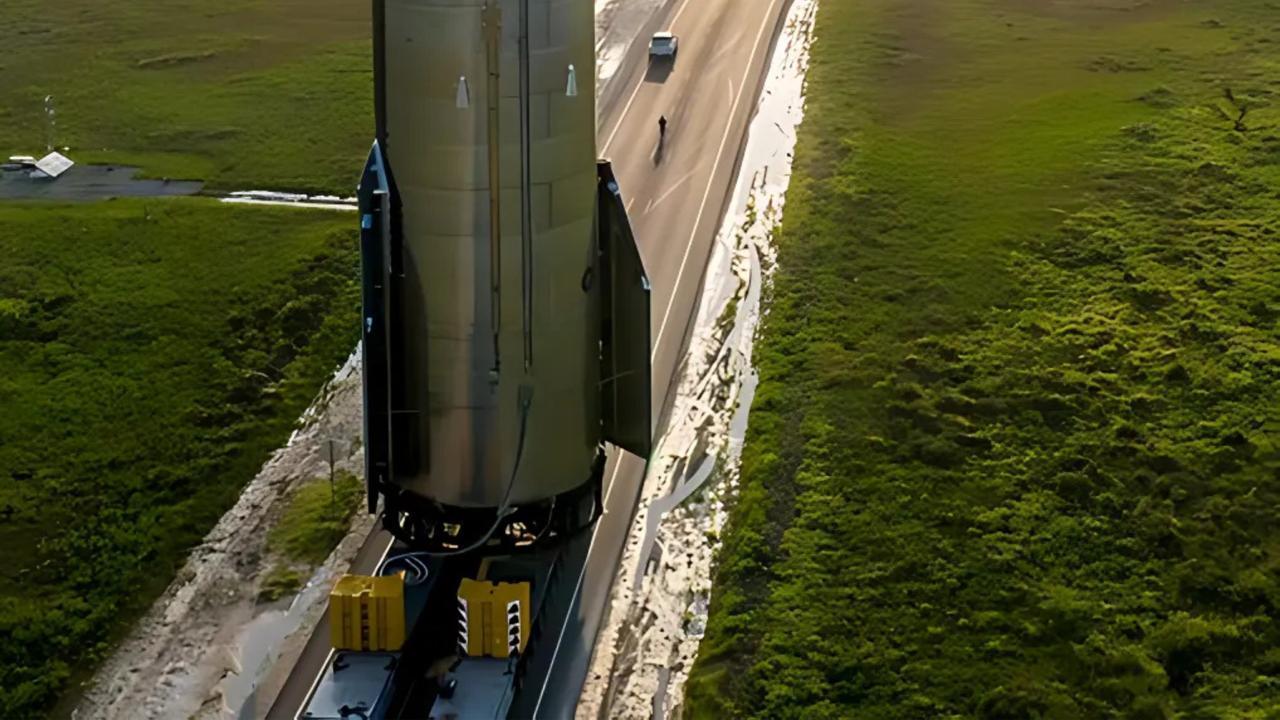
Photo : X / Dima Zeniuk
SpaceX Targets 2026 for Starship Rideshare Service Launch
SpaceX is preparing to disrupt the commercial launch market yet again, this time with the introduction of a dedicated Starship rideshare service. Scheduled to begin operations in 2026, the new offering will allow multiple customers to send large payloads into space aboard the fully reusable Starship launch vehicle. This move marks a significant evolution in the rideshare model, traditionally dominated by smaller rockets, and is poised to open unprecedented opportunities for satellite operators, research organizations, and commercial space ventures worldwide.
A New Era in Rideshare Capabilities
The rideshare concept is not new to SpaceX. The company’s Falcon 9 rocket has been at the forefront of low-cost rideshare missions for years, carrying dozens of small satellites for a variety of clients. However, Starship’s scale changes the equation entirely. With a payload capacity exceeding 100 metric tons to low Earth orbit (LEO), Starship will dwarf all previous rideshare missions in both volume and mass capability.
SpaceX envisions Starship rideshare missions carrying entire constellations of satellites in one go, along with secondary payloads ranging from science instruments to technology demonstration platforms. The expanded volume means larger spacecraft that were once too bulky for shared launches can now be included without prohibitive costs.
Affordable Access to Space on a Large Scale
One of the defining features of the new service will be its pricing strategy. SpaceX has built its reputation on reducing the cost of access to space, and executives have hinted that the rideshare slots on Starship will be priced far below current industry rates for equivalent capacity. By leveraging Starship’s full reusability, the company aims to offer a cost per kilogram that undercuts even the most competitive current providers.
According to preliminary industry estimates, a Starship rideshare could allow customers to send medium-sized satellites for a fraction of the cost of booking a dedicated launch. This could prove transformative for startups, emerging space agencies, and scientific institutions working with limited budgets.
Technical Advantages Over Existing Platforms
Starship’s design provides not only more mass capacity but also greater flexibility in payload configurations. Its cavernous payload bay, larger than any operational rocket in history, allows for more complex deployment arrangements. In addition, the vehicle’s ability to land back on Earth after each mission promises quicker turnaround times and a higher frequency of launch opportunities.
Another advantage lies in Starship’s versatility. Beyond rideshare to LEO, SpaceX plans to offer missions to geostationary transfer orbit (GTO), cislunar space, and even interplanetary destinations. This could expand the rideshare model to markets that have historically relied on bespoke, high-cost launch contracts.
Competitive Ripples in the Space Industry
The announcement of a Starship rideshare service is likely to send shockwaves through the commercial launch sector. Competitors like Rocket Lab, Arianespace, and Blue Origin have been refining their own rideshare programs, but none can match the sheer scale and payload flexibility of Starship.
Industry analysts predict that SpaceX’s entry into large-scale rideshare will force rivals to reevaluate their pricing models and mission capabilities. For satellite constellation operators, the ability to deploy dozens of satellites in a single Starship flight could reduce deployment timelines from years to months, offering a competitive edge in rapidly growing markets like broadband internet, Earth observation, and defense applications.
Opportunities for Emerging Space Nations
Beyond corporate competition, Starship rideshare could be a boon for emerging space nations. Many developing countries lack the resources to build or contract dedicated launch vehicles. Rideshare slots on Starship could allow these nations to place their first satellites into orbit at unprecedentedly low costs, accelerating their entry into the global space economy.
By hosting multiple payloads from different customers on the same mission, SpaceX can offer shared mission planning and reduced launch costs, making it viable for governments, universities, and private enterprises in these countries to participate in space activities.
Operational Timeline and Challenges Ahead
While SpaceX has set an ambitious 2026 start date for the rideshare service, this timeline depends heavily on Starship’s flight test campaign. The rocket has already completed several high-altitude test flights and its first integrated orbital attempt, but more milestones remain, including consistent orbital launches, in-space refueling demonstrations, and a proven record of payload deployment.
Regulatory approval will also play a role, especially for missions carrying international payloads. Coordination with the U.S. Federal Aviation Administration (FAA), international space agencies, and export control authorities will be essential to ensure smooth operations.
Starship’s Role in SpaceX’s Vision
The rideshare program fits neatly into SpaceX’s broader vision for Starship, which includes crewed missions to Mars, lunar landings for NASA’s Artemis program, and point-to-point suborbital transport on Earth. By offering a steady cadence of commercial rideshare missions, SpaceX can generate recurring revenue that supports Starship’s more ambitious, long-term goals.
Furthermore, regular rideshare flights would help SpaceX refine Starship’s operational reliability, build a track record with customers, and further reduce costs through iterative improvements. The model mirrors the company’s approach with Falcon 9, where frequent launches for commercial customers helped finance development for more advanced projects.
Industry Voices on the Announcement
Sarah Cruddas, a space journalist and broadcaster, notes:
“Starship’s rideshare service could be the most democratizing development in space access since the introduction of reusable rockets. For small operators and developing nations, the implications are massive.”
Similarly, Dr. Jonathan McDowell, an astronomer and satellite tracking expert, cautions that while the potential is huge, operational realities will determine success:
“The technical promise is undeniable, but delivering reliable, regular Starship rideshare missions will be a complex logistical challenge.”
Implications for the Future of Space Access
If SpaceX successfully executes this vision, the cost of launching payloads could drop to levels that fundamentally change the economics of space operations. More frequent, high-capacity rideshare launches could enable a boom in satellite-based services, from real-time Earth imaging to advanced global communications.
As the space industry watches Starship’s development closely, one thing is clear: the arrival of a dedicated Starship rideshare service will mark a turning point, not just for SpaceX, but for the global space economy.
Starship rideshare, SpaceX launch service







Advances in Aerospace Technology and Commercial Aviation Recovery
Insights into breakthrough aerospace technologies and commercial aviation’s recovery amid 2025 chall

Defense Modernization and Strategic Spending Trends
Explore key trends in global defense modernization and strategic military spending shaping 2025 secu

Tens of Thousands Protest in Serbia on Anniversary of Deadly Roof Collapse
Tens of thousands in Novi Sad mark a year since a deadly station roof collapse that killed 16, prote

Canada PM Carney Apologizes to Trump Over Controversial Reagan Anti-Tariff Ad
Canadian PM Mark Carney apologized to President Trump over an Ontario anti-tariff ad quoting Reagan,

The ad that stirred a hornets nest, and made Canadian PM Carney say sorry to Trump
Canadian PM Mark Carney apologizes to US President Trump after a tariff-related ad causes diplomatic

Bengaluru-Mumbai Superfast Train Approved After 30-Year Wait
Railways approves new superfast train connecting Bengaluru and Mumbai, ending a 30-year demand, easi



