Post by : Avinab Raana
Photo : X / FL360aero
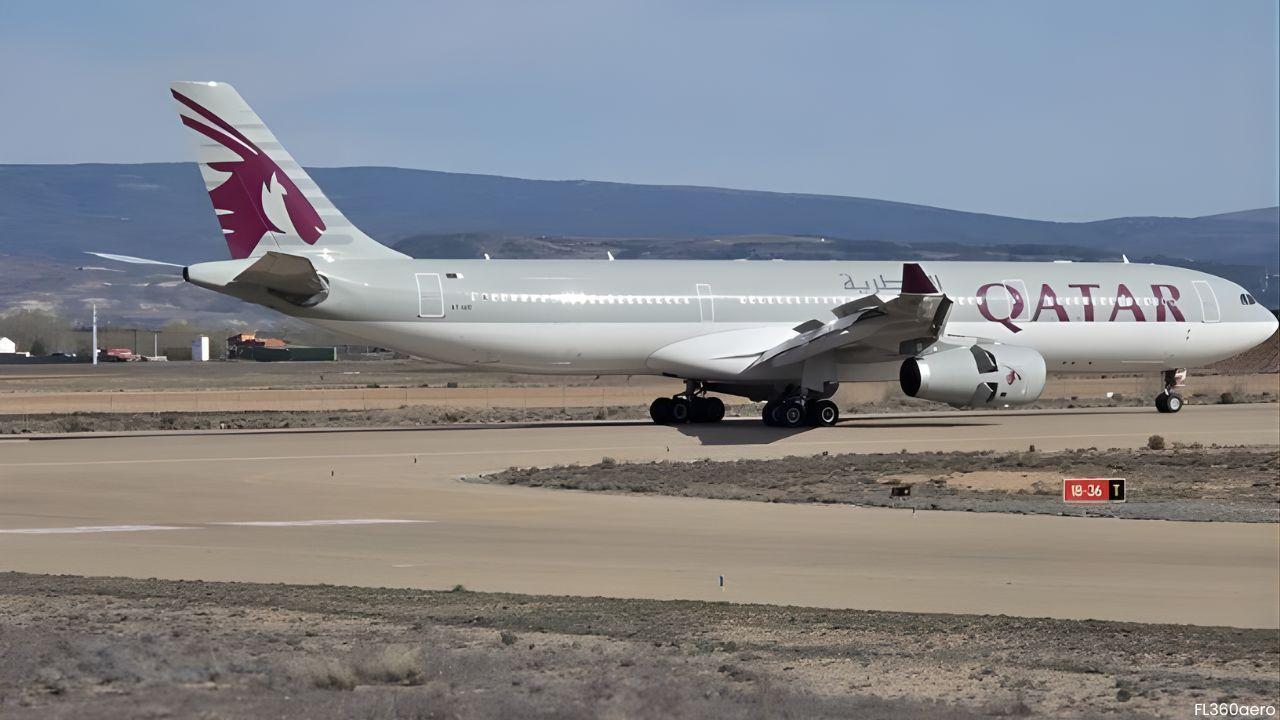
As the Middle East conflict deepens, Qatar Airways has taken a decisive and strategic step by relocating a significant portion of its widebody fleet to Spain, transforming a quiet European airport into a temporary refuge for grounded aircraft. The move reflects the growing severity of aviation disruptions as regional airspace becomes increasingly unsafe.
Located in eastern Spain, Teruel Airport has once again found itself at the center of a global aviation crisis. Known for its vast storage capacity and dry climate, the facility has become the preferred destination for airlines seeking to protect valuable aircraft during periods of uncertainty. In recent days, multiple Qatar Airways widebody jets, including long-haul aircraft, have been flown into the airport under non-commercial operations, signaling a rapid shift in airline strategy.
The relocation comes as large parts of Middle Eastern airspace face restrictions or complete shutdowns due to escalating military tensions. Airlines operating in the region are dealing with a volatile environment where routes can change overnight, forcing carriers to suspend flights, reroute operations, or ground aircraft entirely. For Qatar Airways, whose operations are heavily centered around Doha, the situation has significantly impacted scheduling, connectivity, and fleet utilization.
Moving aircraft to long-term storage facilities is not just a logistical decision, it is a financial and strategic necessity. Widebody jets represent some of the most valuable assets in an airline’s portfolio, and leaving them exposed in unstable regions carries significant risk. By relocating aircraft to Teruel, Qatar Airways is not only safeguarding its fleet but also reducing operational costs associated with idle aircraft at major international hubs.
The current scenario bears striking similarities to the COVID-19 pandemic, when airlines across the globe were forced to ground fleets due to collapsing demand. Once again, storage hubs like Teruel are filling up, highlighting how quickly geopolitical events can disrupt even the most resilient aviation networks. However, unlike the pandemic, this crisis is driven by conflict, making its duration and resolution far more unpredictable.
As tensions continue to rise, the sight of grounded aircraft far from their home bases serves as a stark reminder of aviation’s vulnerability to geopolitical shocks. The decision by Qatar Airways underscores a broader industry reality, flexibility and rapid response are now essential for survival. Whether this is a temporary adjustment or the beginning of a prolonged disruption remains unclear, but one thing is certain: the global aviation landscape is once again being reshaped by forces far beyond the runway.
Qatar Airways fleet storage, Teruel airport Spain, Middle East aviation crisis, airspace closures 2026, aircraft storage strategy, airline war response, global aviation disruption, Qatar airline news







Advances in Aerospace Technology and Commercial Aviation Recovery
Insights into breakthrough aerospace technologies and commercial aviation’s recovery amid 2025 chall

Defense Modernization and Strategic Spending Trends
Explore key trends in global defense modernization and strategic military spending shaping 2025 secu

Tens of Thousands Protest in Serbia on Anniversary of Deadly Roof Collapse
Tens of thousands in Novi Sad mark a year since a deadly station roof collapse that killed 16, prote

Canada PM Carney Apologizes to Trump Over Controversial Reagan Anti-Tariff Ad
Canadian PM Mark Carney apologized to President Trump over an Ontario anti-tariff ad quoting Reagan,

The ad that stirred a hornets nest, and made Canadian PM Carney say sorry to Trump
Canadian PM Mark Carney apologizes to US President Trump after a tariff-related ad causes diplomatic

Bengaluru-Mumbai Superfast Train Approved After 30-Year Wait
Railways approves new superfast train connecting Bengaluru and Mumbai, ending a 30-year demand, easi



