Post by : Amit
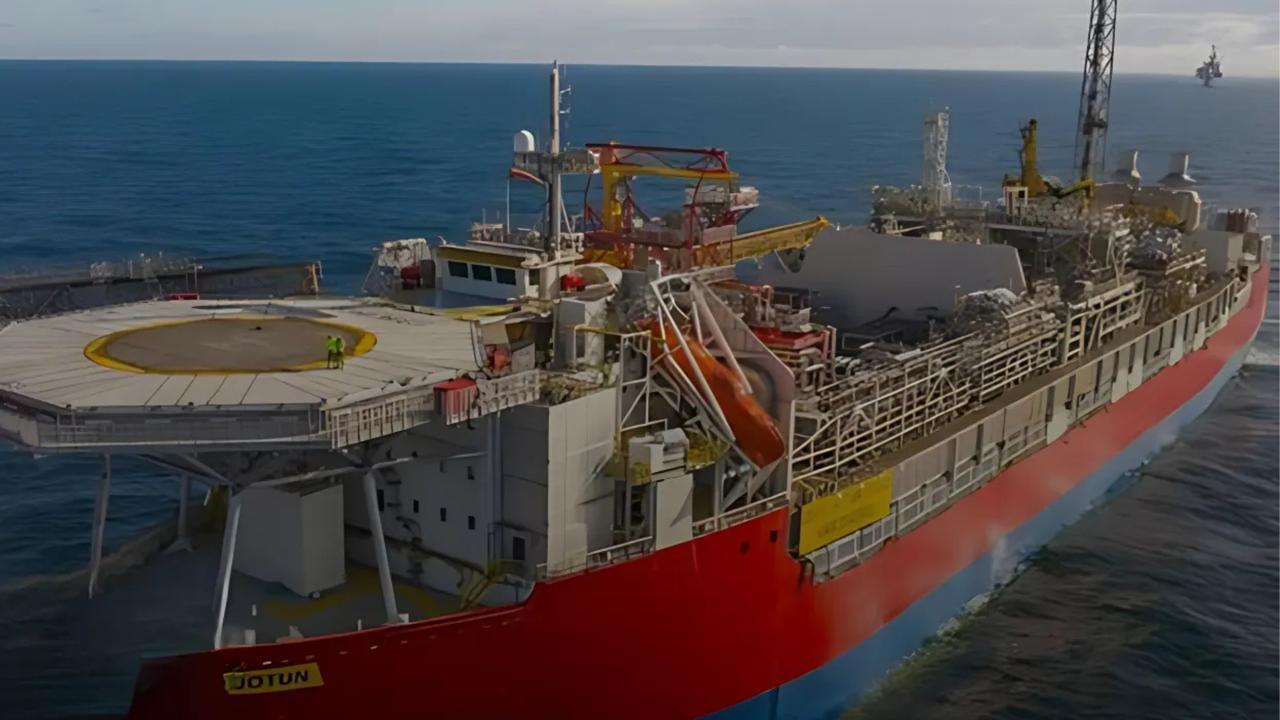
Photo : X / Offshore Energy Today
A Leap Forward for Offshore Digitalization
In a breakthrough that could redefine offshore energy operations worldwide, Norwegian oil and gas producer Vår Energi has introduced a world-first digital connectivity solution aboard one of its Floating Production Storage and Offloading (FPSO) units in the North Sea. The technology, designed to provide continuous, high-bandwidth data exchange between the offshore platform and onshore control centers, is being hailed as a milestone in the integration of digital intelligence into energy production.
For an industry where remote locations, harsh environments, and high-risk operations have long hindered real-time decision-making, this achievement represents far more than a technological upgrade — it’s a strategic shift toward smart, connected, and predictive offshore operations.
Why This Matters in the North Sea Context
The North Sea remains one of the world’s most mature and technologically advanced offshore production zones, hosting a dense concentration of FPSOs, platforms, and subsea installations. Yet even here, digital integration has lagged behind industrial aspirations, largely due to limitations in communications infrastructure, weather-related disruptions, and security concerns over transmitting large volumes of sensitive operational data.
By delivering uninterrupted, high-fidelity digital connectivity, Vår Energi’s project tackles these long-standing pain points head-on. The new system enables constant transmission of equipment performance data, environmental monitoring metrics, production analytics, and even real-time video feeds, allowing onshore teams to collaborate with offshore crews as though they were working in the same control room.
The Technology Behind the Breakthrough
While the company has not disclosed the proprietary details of its solution, industry insiders indicate that the system combines next-generation satellite communications with advanced edge computing and data compression algorithms. This hybrid approach reduces latency, ensures higher resilience against weather-related interference, and allows the FPSO to function autonomously for short periods if connectivity is interrupted.
Crucially, the system is also designed to integrate with digital twin platforms, enabling engineers to create a live, three-dimensional replica of the FPSO and its equipment. This allows for real-time predictive maintenance, scenario simulations, and instant troubleshooting without dispatching physical teams offshore.
A Supply Chain Ripple Effect
The significance of this digital leap extends well beyond Vår Energi’s operational footprint. The FPSO’s enhanced connectivity has direct implications for manufacturing and supply chains, particularly in the offshore support and maintenance ecosystem.
Suppliers and equipment manufacturers can now receive continuous performance feedback from their products in the field, enabling faster service response, fine-tuned upgrades, and more precise forecasting for replacement parts. Logistics providers, too, can plan shipments with greater accuracy, as equipment needs can be identified days or even weeks earlier than before.
The result is a leaner, more predictive offshore supply chain, with reduced downtime, fewer emergency maintenance runs, and optimized inventory management — all of which translate into cost savings and lower carbon emissions from supply vessels.
Energy Transition and ESG Relevance
This innovation also plays into broader Energy Transition and Environmental, Social, and Governance (ESG) strategies. Improved data flow allows for tighter monitoring of emissions, waste, and environmental compliance in real time, enabling proactive interventions before regulatory thresholds are breached.
For investors and regulators, this is a compelling development. The offshore sector has faced growing pressure to improve transparency in environmental reporting. With the ability to stream live environmental impact data to regulators or stakeholders, Vår Energi is setting a precedent for accountability.
From Concept to Deployment
The path from concept to live deployment was far from straightforward. Offshore connectivity projects have historically been constrained by space, power, and environmental durability requirements. Any new equipment added to an FPSO must be robust enough to withstand constant exposure to salt spray, high winds, temperature fluctuations, and vibrations from machinery.
Sources close to the project indicate that Vår Energi’s engineering teams worked closely with technology partners in satellite communications, network infrastructure, and cybersecurity to develop a marine-grade, modular system that could be installed without disrupting ongoing production.
The testing phase reportedly included simulated storm conditions, electromagnetic interference trials, and controlled network outage scenarios to ensure operational continuity under extreme conditions.
Cybersecurity at the Core
In an era where cyberattacks on critical infrastructure are a growing concern, the project incorporates multi-layered security architecture. This includes end-to-end encryption, AI-driven anomaly detection, and real-time intrusion prevention systems.
Given that FPSOs are effectively floating industrial complexes containing sensitive operational and safety systems, this cybersecurity framework is as crucial as the connectivity itself. A single breach could disrupt production, cause environmental incidents, or even endanger lives.
Global Implications for Offshore Operations
The global offshore industry will be watching closely to see how this initiative performs over time. If the system proves to deliver stable, secure, and high-capacity connectivity at scale, it could become a benchmark standard for FPSOs, drilling rigs, and offshore wind farms worldwide.
For emerging offshore markets in West Africa, Southeast Asia, and South America — where communications infrastructure is less mature — such a solution could leapfrog existing limitations and enable state-of-the-art operational oversight from day one.
Voices from the Industry
Vår Energi’s leadership has framed the project as a strategic investment in operational excellence and future-proofing. In a statement, executives emphasized that “real-time digital integration is no longer optional in offshore operations; it is essential for safety, efficiency, and competitiveness.”
Industry analysts agree, noting that digital connectivity is now as critical to offshore production as the physical infrastructure itself. “It’s the nervous system of the operation,” one maritime technology consultant observed. “Without it, you’re operating in the dark — literally and figuratively.”
A Step Toward Autonomous Offshore Facilities
While full autonomy for offshore production units remains a distant goal, experts suggest that this level of digital integration is a necessary foundation. Advanced AI systems and robotics can only function effectively if they have constant access to reliable, high-quality data streams.
The FPSO’s new system effectively creates the data backbone for future autonomous interventions, remote-operated drone inspections, and robotic maintenance crews.
Economic Stakes and Competitive Edge
The economic rationale for this investment is equally compelling. In offshore oil and gas, downtime is notoriously expensive — sometimes costing millions of dollars per day. By enabling predictive maintenance and instant troubleshooting, the new connectivity solution can significantly reduce unplanned shutdowns.
Moreover, the system positions Vår Energi as an innovation leader in a sector where operational margins are under constant pressure. The ability to demonstrate faster response times, higher safety compliance, and more efficient supply chain integration could prove decisive in securing future offshore licenses and partnerships.
Potential for Cross-Sector Applications
Interestingly, the technology’s potential is not limited to oil and gas. The offshore wind sector, which is rapidly expanding in the North Sea and beyond, faces many of the same connectivity challenges. Similarly, deep-sea mining operations, polar research stations, and even maritime shipping fleets could benefit from such a solution.
By being the first to deploy this in a live offshore production environment, Vår Energi may well have opened the door for cross-sector adoption of marine-grade high-bandwidth connectivity solutions.
Future
Vår Energi has indicated that it will closely monitor the FPSO’s performance under this new system for the next 12 months, gathering operational data to refine the technology further. If the pilot proves successful, the company plans to roll out the system across its entire offshore asset portfolio.
Given the interest from other operators, technology vendors, and regulators, the ripple effects of this project are likely to be felt far beyond Norwegian waters.
Setting the Digital Standard Offshore
With its North Sea FPSO now operating under a world-first, fully integrated digital connectivity framework, Vår Energi has placed itself at the forefront of offshore innovation. This is more than a communications upgrade; it’s a strategic transformation that strengthens operational safety, boosts supply chain efficiency, and advances the industry’s ESG commitments.
If successful, this initiative could rewrite the rulebook for offshore operations worldwide, proving that in the modern energy sector, the future isn’t just about producing resources — it’s about producing them smarter, cleaner, and more connected than ever before.
Offshore digital connectivity, FPSO real-time monitoring









Advances in Aerospace Technology and Commercial Aviation Recovery
Insights into breakthrough aerospace technologies and commercial aviation’s recovery amid 2025 chall

Defense Modernization and Strategic Spending Trends
Explore key trends in global defense modernization and strategic military spending shaping 2025 secu

Tens of Thousands Protest in Serbia on Anniversary of Deadly Roof Collapse
Tens of thousands in Novi Sad mark a year since a deadly station roof collapse that killed 16, prote

Canada PM Carney Apologizes to Trump Over Controversial Reagan Anti-Tariff Ad
Canadian PM Mark Carney apologized to President Trump over an Ontario anti-tariff ad quoting Reagan,

The ad that stirred a hornets nest, and made Canadian PM Carney say sorry to Trump
Canadian PM Mark Carney apologizes to US President Trump after a tariff-related ad causes diplomatic

Bengaluru-Mumbai Superfast Train Approved After 30-Year Wait
Railways approves new superfast train connecting Bengaluru and Mumbai, ending a 30-year demand, easi



