Post by : Saif
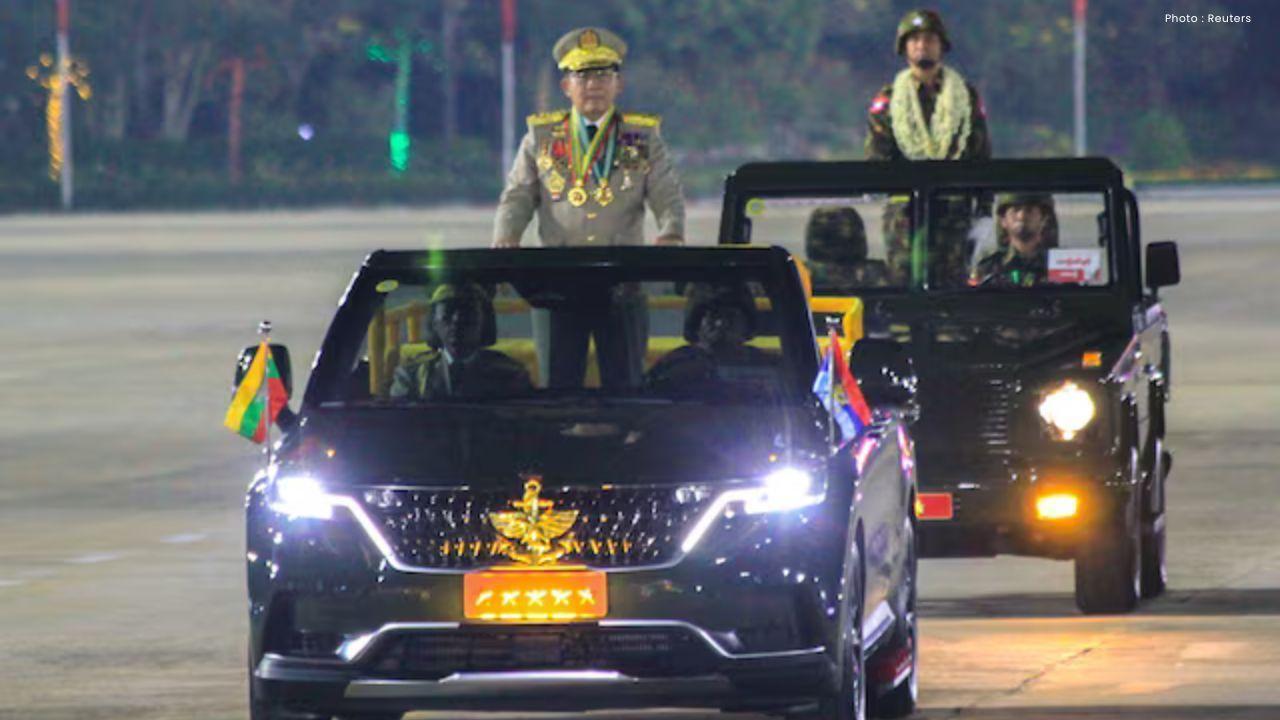
Myanmar has entered another key moment in its political journey as military chief Min Aung Hlaing has been nominated for the country’s presidential vote. The move brings him closer to officially becoming the head of state, at a time when the nation is already facing unrest and global criticism.
The nomination is part of Myanmar’s parliamentary system, where lawmakers choose three candidates for the presidency. These candidates are selected by different groups within parliament, including the military. After that, all lawmakers vote to decide the president, while the remaining candidates are given vice-presidential roles.
Min Aung Hlaing’s nomination was widely expected. The military continues to hold strong control over the political system, giving him a clear advantage in the selection process. For many observers, this development is not a surprise but rather a continuation of the current power structure.
This step comes after a general election held earlier this year. The vote was won by a military-backed party, but the election itself faced strong criticism from international organizations and several countries. Many have questioned its fairness, saying it did not allow proper participation from opposition groups.
Myanmar has been struggling with instability since the military took control in 2021, removing the elected government. Since then, the country has seen protests, violence, and ongoing clashes between the military and armed groups. The situation has forced many people to leave their homes and has created a deep humanitarian crisis.
The current political process is being seen by critics as an attempt to give a formal civilian appearance to military rule. By moving into the role of president, Min Aung Hlaing could present himself as a civilian leader, even though real authority may still remain with the military system.
There is also strong doubt about whether this transition will lead to real change. Many political leaders remain detained, and opposition parties have limited space to operate. Without open participation and fair competition, it becomes difficult for any election or leadership process to reflect the true will of the people.
At the same time, violence continues in several parts of the country. Armed resistance groups remain active, and clashes with the military have not stopped. This ongoing conflict makes it harder to build stability or trust in the political system.
The global response has been largely critical. Many countries have refused to accept the election results, calling the process unfair. They believe that any leadership formed under such conditions may not receive full international recognition or support.
Despite these concerns, the process is moving forward. The final presidential vote is expected after all nominations are completed. The outcome may shape Myanmar’s direction in the coming years, but questions remain about whether it will bring peace or continue the current situation under a new structure.
At this stage, Myanmar stands at a difficult point. The nomination of Min Aung Hlaing shows that the military remains firmly in control. For many citizens, the hope for a more open and democratic system still feels uncertain, as the country continues to deal with conflict, political tension, and an unclear future.
#trending #latest #armustnews #Myanmar #MinAungHlaing #Politics #MilitaryRule #Democracy #AsiaNews #WorldNews #BreakingNews





Advances in Aerospace Technology and Commercial Aviation Recovery
Insights into breakthrough aerospace technologies and commercial aviation’s recovery amid 2025 chall

Defense Modernization and Strategic Spending Trends
Explore key trends in global defense modernization and strategic military spending shaping 2025 secu

Tens of Thousands Protest in Serbia on Anniversary of Deadly Roof Collapse
Tens of thousands in Novi Sad mark a year since a deadly station roof collapse that killed 16, prote

Canada PM Carney Apologizes to Trump Over Controversial Reagan Anti-Tariff Ad
Canadian PM Mark Carney apologized to President Trump over an Ontario anti-tariff ad quoting Reagan,

The ad that stirred a hornets nest, and made Canadian PM Carney say sorry to Trump
Canadian PM Mark Carney apologizes to US President Trump after a tariff-related ad causes diplomatic

Bengaluru-Mumbai Superfast Train Approved After 30-Year Wait
Railways approves new superfast train connecting Bengaluru and Mumbai, ending a 30-year demand, easi



