Post by : Avinab Raana
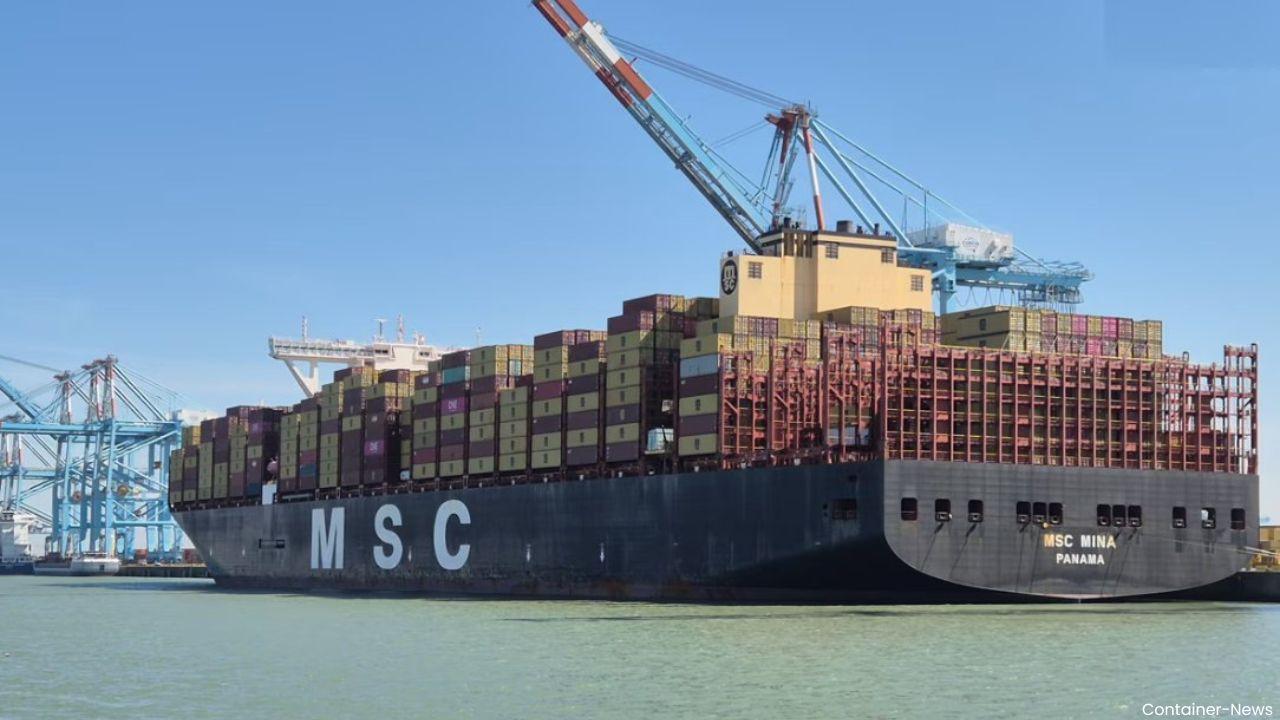
Photo : X / Container-News
Global shipping giant Mediterranean Shipping Company (MSC) is making a bold move to reshape its Asia–US West Coast network, signaling a strategic shift toward reliability over sheer port coverage. In an industry plagued by delays, congestion, and unpredictable schedules, MSC’s latest restructuring aims to streamline operations and deliver more consistent service performance across one of the world’s busiest trade lanes.
At the heart of this transformation is a simple yet powerful idea: fewer port calls, better predictability. By trimming complex routing patterns, MSC is positioning itself to navigate ongoing supply chain disruptions with greater agility and precision.
One of the most significant changes in MSC’s revised network is the removal of select port calls, including Oakland, from certain trans-Pacific services. This decision reflects a growing industry realization that excessive port rotations often increase exposure to congestion, delays, and operational inefficiencies.
By reducing the number of stops and optimizing port sequences, MSC is effectively minimizing bottlenecks that have long plagued US West Coast logistics. The strategy is designed to ensure vessels spend less time waiting at congested terminals and more time maintaining reliable transit schedules.
Beyond the US side, MSC is also recalibrating its Asian port rotations, including adjustments to calls in key manufacturing hubs such as Vietnam and China. These changes are carefully designed to create a more balanced and resilient network structure, where cargo flows can be managed with greater predictability.
By aligning port calls with actual demand patterns and operational realities, MSC is reducing schedule volatility—a critical factor for shippers who rely on just-in-time delivery models. The result is a network that prioritizes stability without compromising essential market coverage.
The trans-Pacific trade lane has faced significant challenges in recent years, from labor uncertainties to geopolitical disruptions and fluctuating cargo volumes. In this volatile environment, reliability has emerged as the most valuable currency for carriers competing for shipper trust.
MSC’s decision to consolidate services reflects a broader industry trend where carriers are shifting focus from capacity expansion to service consistency. Instead of adding more vessels or routes, companies are refining existing networks to deliver predictable, on-time performance—an approach that is increasingly demanded by global supply chains.
What MSC is implementing today could soon become the standard across the industry. As supply chains grow more complex and customer expectations rise, shipping lines are being forced to rethink how their networks are structured.
This move highlights a deeper transformation in maritime logistics where efficiency is no longer defined by how many ports a vessel can serve, but by how reliably it can deliver cargo. The emphasis is shifting toward smarter, leaner networks that can adapt quickly to disruptions while maintaining service integrity.
MSC’s network consolidation sends a clear message: the future of global shipping lies in simplification and precision. For shippers, this could mean fewer delays, more predictable transit times, and improved supply chain planning. For ports, it signals increased competition, where only the most efficient and strategically positioned hubs will remain integral to major trade routes. As the trans-Pacific corridor continues to evolve, one thing is certain—reliability is no longer a differentiator; it is the foundation of survival in modern maritime logistics.
#trending #latest,#MSC #TransPacificTrade #ShippingReliability #SupplyChain #ContainerShipping










Advances in Aerospace Technology and Commercial Aviation Recovery
Insights into breakthrough aerospace technologies and commercial aviation’s recovery amid 2025 chall

Defense Modernization and Strategic Spending Trends
Explore key trends in global defense modernization and strategic military spending shaping 2025 secu

Tens of Thousands Protest in Serbia on Anniversary of Deadly Roof Collapse
Tens of thousands in Novi Sad mark a year since a deadly station roof collapse that killed 16, prote

Canada PM Carney Apologizes to Trump Over Controversial Reagan Anti-Tariff Ad
Canadian PM Mark Carney apologized to President Trump over an Ontario anti-tariff ad quoting Reagan,

The ad that stirred a hornets nest, and made Canadian PM Carney say sorry to Trump
Canadian PM Mark Carney apologizes to US President Trump after a tariff-related ad causes diplomatic

Bengaluru-Mumbai Superfast Train Approved After 30-Year Wait
Railways approves new superfast train connecting Bengaluru and Mumbai, ending a 30-year demand, easi



