Post by : Saif
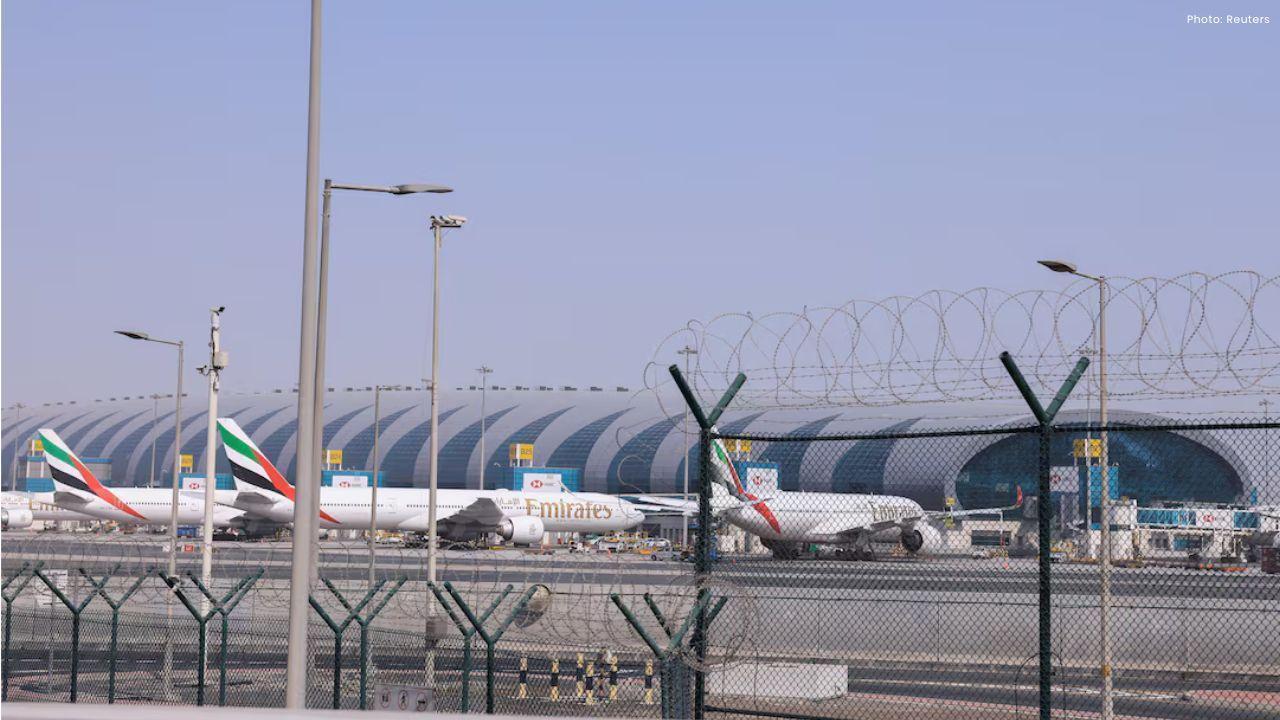
The ongoing war in the Middle East has turned a spotlight on one of the world’s busiest air travel centers — Dubai’s aviation hub. Once seen as nearly unshakable, the hub is now facing serious challenges because of the conflict and the closing of airspace across the Gulf. These events are testing the hub’s strength and its ability to recover fast.
Dubai’s airports, especially Dubai International Airport, have been crucial for global travel for decades. They connect people across six continents and handle hundreds of thousands of flights each year. Many travellers from Europe, Asia, Africa, and the Americas pass through Dubai on the way to their final destinations.
However, the recent escalation of the conflict involving Iran, the United States, and other nations led to the shutdown of Gulf airspace. This decision was taken as a safety measure after missile and drone attacks forced airlines to suspend flights in the region. The result was a sudden halt in travel and a major disruption in flight routes.
Because of this disruption, tens of thousands of passengers were stranded. Flights were cancelled or diverted, and airlines had to change their plans at short notice. Even large and experienced carriers found it hard to maintain normal schedules.
One of the biggest challenges for Dubai now is how to rebuild confidence among travellers. In normal times, many people preferred flying through Dubai because it offered flexible connections and high-quality services. But in the current situation, travellers may choose more direct flights that skip major hubs altogether. This could mean fewer people use Dubai as a stopover in the future.
Experts say that Dubai’s location and economic strength give it a real advantage. About one third of the world’s population lives within a four-hour flight from the city, and about two thirds are within eight hours. This makes it a natural meeting point for global travel.
Still, competition is increasing. Other airports, including those in Turkey, Saudi Arabia, and India, are expanding their networks and could attract passengers who are now looking for alternatives.
The conflict has also affected the city’s image as a safe and stable place for travellers and investors. Dubai has long been known as a secure destination for business, tourism, and living. But attacks and travel chaos have shaken that confidence, at least temporarily.
Some analysts believe the disruption is temporary. They point to Dubai’s history of quickly recovering from past crises, including economic downturns and other regional tensions. They say that once the war eases and flight paths reopen, Dubai could rebuild its network and return to strong performance.
Others are more cautious. They warn that long-term changes in travel habits may not disappear quickly. Many travellers and airlines are now thinking about avoiding conflict zones for good. If that trend continues, Dubai and its partner airlines like Emirates and flydubai may need new strategies to attract passengers back.
Another problem is the impact on future growth plans. Expansion projects, including new terminals and airport facilities, may face delays or reduced investment if airlines and governments become more careful with spending.
Despite these challenges, there is reason for cautious optimism. Dubai’s hub was built over many years with careful planning, strong infrastructure, and deep global connections. Many key airline partners and officials remain committed to keeping it a central part of international travel.
The next few weeks and months will be critical. How quickly the conflict slows and how fast airspace can fully reopen will shape the future of Dubai’s aviation hub. Dubai has faced difficult moments before, and its ability to adapt will be closely watched by travellers, airlines, and countries around the world.
#trending #latest #Dubai #Aviation #MiddleEastConflict #GlobalTravel #Airports #TravelIndustry #Airlines #EconomicImpact #armustnews







Advances in Aerospace Technology and Commercial Aviation Recovery
Insights into breakthrough aerospace technologies and commercial aviation’s recovery amid 2025 chall

Defense Modernization and Strategic Spending Trends
Explore key trends in global defense modernization and strategic military spending shaping 2025 secu

Tens of Thousands Protest in Serbia on Anniversary of Deadly Roof Collapse
Tens of thousands in Novi Sad mark a year since a deadly station roof collapse that killed 16, prote

Canada PM Carney Apologizes to Trump Over Controversial Reagan Anti-Tariff Ad
Canadian PM Mark Carney apologized to President Trump over an Ontario anti-tariff ad quoting Reagan,

The ad that stirred a hornets nest, and made Canadian PM Carney say sorry to Trump
Canadian PM Mark Carney apologizes to US President Trump after a tariff-related ad causes diplomatic

Bengaluru-Mumbai Superfast Train Approved After 30-Year Wait
Railways approves new superfast train connecting Bengaluru and Mumbai, ending a 30-year demand, easi



