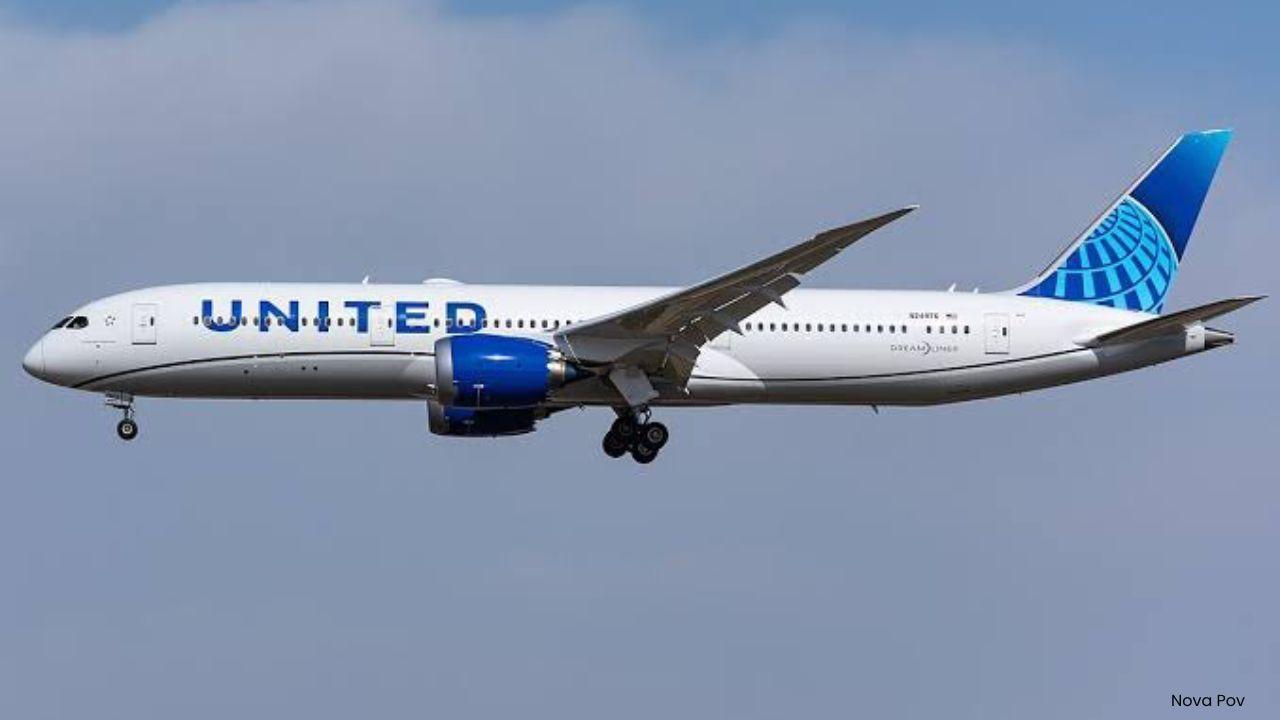
Post by : Avinab Raana
Photo : X / Nova Pov
International aviation networks faced severe turbulence after US and Israeli military strikes on Iran triggered widespread airspace shutdowns across parts of the Middle East. The sudden escalation forced multiple countries to suspend civilian air traffic, leading to cascading Middle East flight disruptions affecting routes between Europe, Asia, and North America.
Authorities in Iran and Israel swiftly closed their respective airspaces, citing security concerns. Iraq followed with precautionary restrictions, further tightening one of the world’s most strategically important aviation corridors. The closures significantly reduced available flight paths for long-haul operators, compelling airlines to reroute aircraft or suspend services entirely.
Major international carriers responded by cancelling flights to and from affected destinations, while others opted for longer alternative routes that bypass restricted zones. Flights operating between Europe and South Asia were among the most heavily impacted, as many traditional paths cross Iranian or Iraqi airspace.
The airspace closure crisis led to extended flight times, higher fuel consumption and increased operational costs for airlines already navigating tight margins. Several Gulf carriers adjusted schedules, and European airlines temporarily suspended operations to Israeli airports until further clarity on regional security conditions.
Passengers travelling via major transit hubs in the Gulf experienced delays and missed connections as airlines scrambled to reorganise aircraft rotations and crew assignments.
Airports across the region activated contingency protocols to manage disruptions. Ground handling teams faced irregular arrival and departure patterns, while air traffic controllers coordinated rerouted traffic through alternative corridors. The situation highlighted the fragility of global air networks when key airspaces become inaccessible.
For airport infrastructure operators, managing sudden capacity imbalances posed operational challenges. Aircraft originally scheduled for quick turnarounds were forced into extended holding or diversion, straining parking stands and ground support resources.
In India and Southeast Asia, airports advised travellers to verify flight status prior to departure, as westbound routes remained particularly vulnerable to last-minute changes.
Civil aviation authorities prioritised passenger and crew safety, emphasising that airspace closures are precautionary measures during periods of military uncertainty. Airlines continuously assess risk using real-time intelligence and international aviation safety advisories before determining route viability.
The Iran Israel airspace shutdown underscores how geopolitical tensions can rapidly disrupt commercial aviation. The Middle East sits at the crossroads of intercontinental travel, meaning even short-term closures can reverberate globally.
Aviation analysts note that prolonged restrictions could lead to sustained route adjustments, higher ticket prices and scheduling volatility. If diplomatic de-escalation does not occur swiftly, airlines may need to redesign flight paths for weeks or months.
For now, the industry remains in adaptive mode, balancing safety priorities with operational continuity. As geopolitical developments unfold, global carriers and airport operators will continue monitoring the situation to minimise disruption and maintain essential connectivity.
Middle East flight disruptions, airspace closure crisis, Iran Israel airspace shutdown








Advances in Aerospace Technology and Commercial Aviation Recovery
Insights into breakthrough aerospace technologies and commercial aviation’s recovery amid 2025 chall

Defense Modernization and Strategic Spending Trends
Explore key trends in global defense modernization and strategic military spending shaping 2025 secu

Tens of Thousands Protest in Serbia on Anniversary of Deadly Roof Collapse
Tens of thousands in Novi Sad mark a year since a deadly station roof collapse that killed 16, prote

Canada PM Carney Apologizes to Trump Over Controversial Reagan Anti-Tariff Ad
Canadian PM Mark Carney apologized to President Trump over an Ontario anti-tariff ad quoting Reagan,

The ad that stirred a hornets nest, and made Canadian PM Carney say sorry to Trump
Canadian PM Mark Carney apologizes to US President Trump after a tariff-related ad causes diplomatic

Bengaluru-Mumbai Superfast Train Approved After 30-Year Wait
Railways approves new superfast train connecting Bengaluru and Mumbai, ending a 30-year demand, easi



