Post by : Avinab Raana
Photo : X / Electrek.co
A New Era for Electric Highways
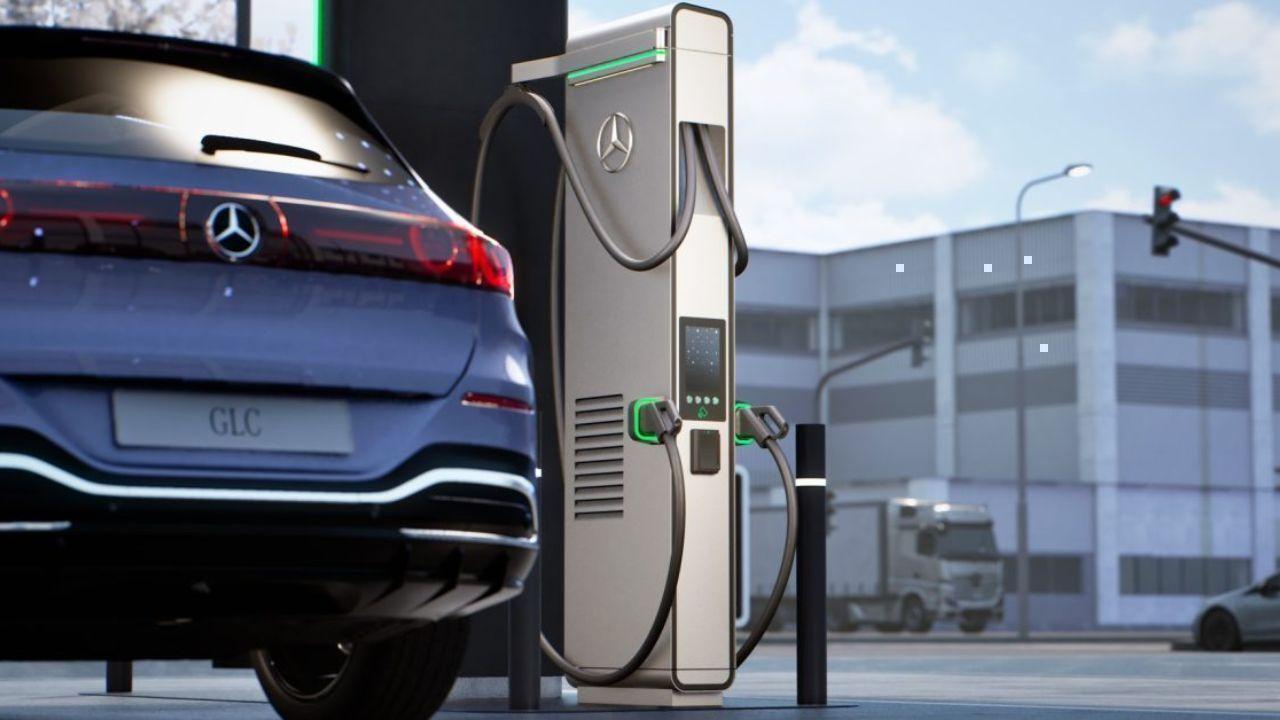
When Mercedes-Benz confirmed its plan to deploy 600 kW ultra-fast charging systems starting in 2026, it marked more than a technical milestone—it signaled a cultural shift in how we think about road trips, fuel stops, and the entire rhythm of driving. Partnering with Alpitronic, the German company famous for its advanced charging systems, Mercedes is not just promising speed but redefining what convenience means in the electric age.
For years, skeptics argued that electric cars would never truly replace gas vehicles until charging felt as quick and effortless as refueling. With these new ultra-fast chargers, Mercedes is daring to erase that doubt.
The Promise of 600 kW Power
At the heart of this revolution is the Alpitronic HYC 1000, a charging unit capable of pumping up to 600 kW into a single vehicle. To put that in perspective, today’s most common fast chargers top out around 150–350 kW. This leap isn’t incremental; it’s exponential.
Imagine a family on a summer holiday. They stop at a charging hub, stretch their legs, and in less than ten minutes, their EV has gained over 200 miles of range. The kids barely have time to unwrap their snacks before it’s time to get back on the road. That is the lived impact of ultra-fast charging, and it’s exactly the experience Mercedes is aiming to normalize.
Modular Power for Real-World Needs
The genius of the Alpitronic system lies not only in brute force but in flexibility. Each external power unit can serve up to four separate charging dispensers. When one car is connected, it takes the full 600 kW. When two, three, or four cars arrive, the system dynamically distributes power based on demand.
That adaptability addresses a frequent frustration among EV drivers: arriving at a "fast charger" only to find your car crawling because someone else plugged in. By making power distribution smarter, Mercedes is building infrastructure that works with real-world traffic, not just laboratory scenarios.
Racing Inspiration Meets Daily Driving
Mercedes is no stranger to testing limits. A prototype of this ultra-fast charging technology was used with the Mercedes-AMG GT XX, a track-focused concept car that broke the 1 MW charging barrier. The feat required an advanced liquid-cooled CCS cable delivering more than 1,000 amps—numbers that sound more like rocket science than road travel.
Now, Mercedes is taking lessons from the racetrack and translating them into roadside stations. That trickle-down effect has always been part of Mercedes’ DNA: innovations tested under extreme conditions before becoming everyday convenience.
Building a Global Network
Speed alone is meaningless without reach. That’s why Mercedes is investing heavily in building its own charging network. By the end of this decade, the company plans to install more than 10,000 ultra-fast charging points worldwide, including in Europe, North America, China, and key markets across Asia.
Already, around 80 Mercedes charging hubs operate globally, each designed not only as a power source but as a user-friendly stop. Comfortable waiting areas, app-based reservation systems, and seamless integration with navigation tools make the charging experience feel premium rather than burdensome.
Open Access, Premium Perks
A key part of Mercedes’ plan is inclusivity. These stations will be open to all EV drivers, regardless of brand. This is significant because some manufacturers, like Tesla, began with closed ecosystems before gradually opening. Mercedes is positioning itself as a host rather than a gatekeeper.
That said, owning a Mercedes will bring extras. Through the MB.CHARGE platform, drivers can reserve slots, enjoy prioritized access, and have charging stops seamlessly integrated into route planning. In short, while everyone can benefit, Mercedes customers get the first-class treatment.
A Shift in Customer Expectations
For decades, customer loyalty in the auto industry hinged on design, performance, and reliability. In the electric era, infrastructure is becoming just as critical. The brand that ensures you can drive stress-free across a continent may win hearts as decisively as horsepower once did.
By investing in ultra-fast charging, Mercedes is quietly acknowledging that selling EVs is no longer enough. Drivers want the whole ecosystem—cars, apps, energy, and infrastructure—to work together in harmony.
Competitors in the Fast Lane
Mercedes is not alone in this race. Porsche has been pushing the envelope with its Turbo Charging network, and Tesla’s Superchargers remain a benchmark for accessibility. However, the 600 kW milestone positions Mercedes and Alpitronic at the top of the pack in terms of sheer charging speed.
Industry analysts believe that while most EVs on the road today cannot yet absorb 600 kW, building the infrastructure early is crucial. It signals to battery manufacturers and rival automakers that the era of ultra-high-power charging has arrived, nudging the entire industry forward.
Technical Hurdles and Safety
Delivering 600 kW is not as simple as turning up the dial. It involves managing immense electrical loads safely. Alpitronic’s liquid-cooled cables are essential to prevent overheating, while advanced software ensures that cars receive exactly what they can handle—no more, no less.
Critics point out that the grid itself may become a bottleneck. Feeding 600 kW to multiple cars at once requires robust energy management, local storage solutions, and in some cases, renewable integration. Mercedes has acknowledged this by exploring on-site battery packs and solar tie-ins to balance demand.
Environmental Angle
Ultra-fast charging also carries environmental weight. The quicker people can charge, the more appealing EV adoption becomes. Faster adoption means lower emissions overall. Yet, questions remain about the sustainability of delivering such massive bursts of power.
Mercedes insists its strategy is tied to clean energy sourcing, ensuring that ultra-fast charging doesn’t just shift emissions from tailpipes to power plants. Aligning charging hubs with renewable grids will be key in making sure speed and sustainability grow together.
Human Side of the Story
For the driver stuck on a rainy highway at midnight, these chargers mean relief. For the delivery driver balancing schedules, they mean efficiency. For parents juggling school runs and work commutes, they mean less stress.
The story of ultra-fast charging is not just about watts and cables—it’s about making electric life livable. It’s about shrinking the inconvenience gap so that choosing an EV feels natural, not sacrificial.
Industry Voices
While Mercedes leads with bold ambition, industry experts suggest cooperation is essential. Shared standards, cross-brand compatibility, and government support will all determine whether ultra-fast charging becomes the norm or remains a premium perk.
Alpitronic’s involvement is critical here. As a leading name in charging technology, its systems are designed with interoperability in mind, increasing the odds that Mercedes’ investments ripple outward rather than remain siloed.
Opportunity
Looking forward, the introduction of 600 kW chargers may shape how batteries are designed. Current EV batteries often max out below 400 kW acceptance. Future packs, however, will be engineered to take full advantage of the new ceiling. That means lighter batteries, faster turnarounds, and perhaps even new vehicle categories optimized for ultra-fast charging. In other words, Mercedes is not just responding to the present, it is paving the runway for the next generation of EVs.
From Refueling to Reimagining
The partnership between Mercedes-Benz and Alpitronic is more than a technical upgrade, it is a cultural signal. The age-old ritual of pulling into a gas station, waiting a few minutes, and hitting the road is being reborn for the electric era.
Ultra-fast charging won’t just change how cars run; it will change how journeys feel. By 2026, the idea of lingering half an hour at a charger may feel as outdated as waiting for dial-up internet. And once that expectation shifts, the road ahead for electric mobility looks faster, freer, and brighter than ever.
Mercedes-Benz, Ultra-fast charging, Alpitronic









Advances in Aerospace Technology and Commercial Aviation Recovery
Insights into breakthrough aerospace technologies and commercial aviation’s recovery amid 2025 chall

Defense Modernization and Strategic Spending Trends
Explore key trends in global defense modernization and strategic military spending shaping 2025 secu

Tens of Thousands Protest in Serbia on Anniversary of Deadly Roof Collapse
Tens of thousands in Novi Sad mark a year since a deadly station roof collapse that killed 16, prote

Canada PM Carney Apologizes to Trump Over Controversial Reagan Anti-Tariff Ad
Canadian PM Mark Carney apologized to President Trump over an Ontario anti-tariff ad quoting Reagan,

The ad that stirred a hornets nest, and made Canadian PM Carney say sorry to Trump
Canadian PM Mark Carney apologizes to US President Trump after a tariff-related ad causes diplomatic

Bengaluru-Mumbai Superfast Train Approved After 30-Year Wait
Railways approves new superfast train connecting Bengaluru and Mumbai, ending a 30-year demand, easi



