Post by : Amit
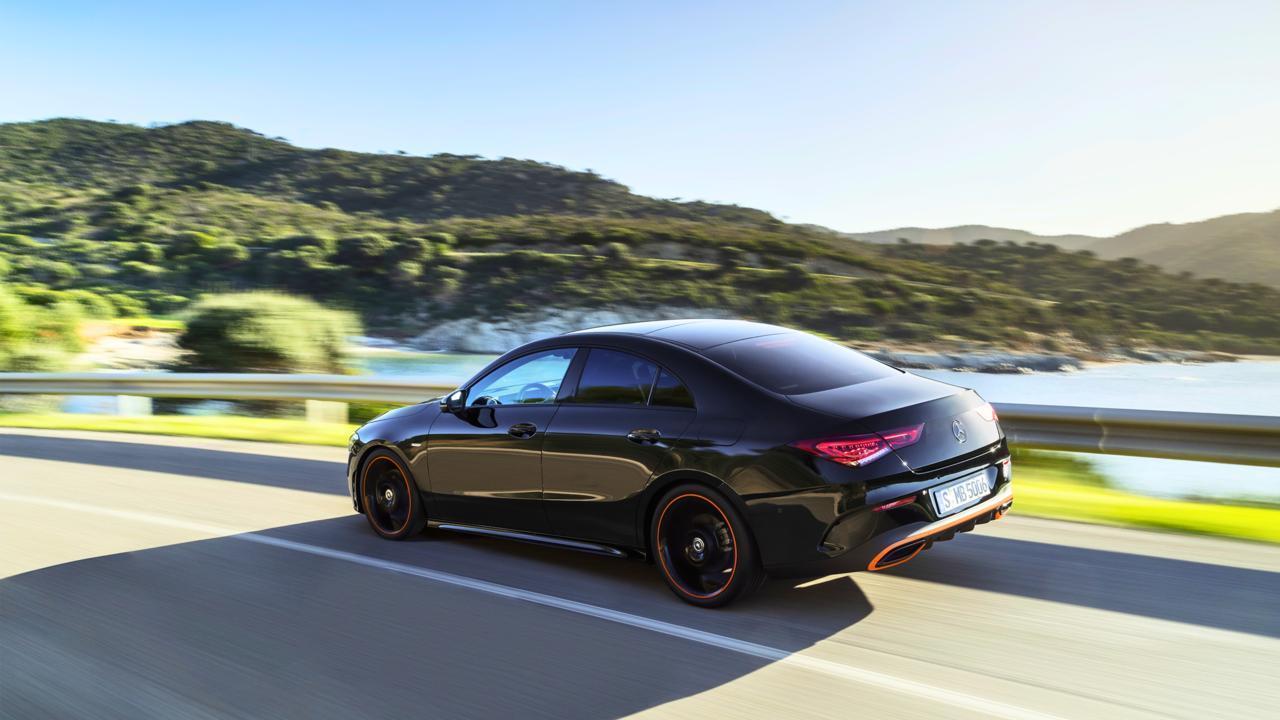
Photo : X / Mercedes-Benz
AI Takes the Wheel in Mercedes’ CLA Reinvention
In an era where software is rapidly overtaking horsepower as the heart of automotive innovation, Mercedes-Benz is making its most significant bet yet on the future of mobility. The German luxury automaker has redefined the concept of the car with its all-new CLA, the brand’s first true software-defined vehicle (SDV), powered by a high-performance proprietary operating system dubbed MB.OS.
More than just a refresh of a compact sedan, the CLA is Mercedes’ flagship attempt to fuse luxury with intelligence. At its core is artificial intelligence—not simply as a marketing gimmick, but as the functional foundation of how the car operates, adapts, learns, and evolves. With this bold step, Mercedes is declaring that the future of premium driving lies not in chrome or combustion, but in code.
MB.OS: The Operating System That Drives the Experience
Unlike conventional vehicles where software plays a supporting role, the CLA is built around MB.OS, a platform Mercedes has developed entirely in-house. This bespoke operating system governs nearly every aspect of the vehicle—from infotainment and navigation to powertrain management and predictive maintenance.
“MB.OS is our foundation to make the car smarter every day,” said Mercedes-Benz CTO Markus Schäfer. “The CLA is the first product that really showcases the full breadth of what this platform can do.”
By designing the OS internally, Mercedes gains end-to-end control over software updates, system integration, data flows, and cybersecurity—areas traditionally outsourced to suppliers. This is a strategic shift that gives the automaker flexibility and speed in a rapidly changing tech landscape, allowing it to push updates and new features in real time, much like a smartphone.
A Hyper-Personalized User Experience
At the center of the CLA’s AI transformation is its radically reimagined user interface. The car doesn’t just respond to commands—it learns from its driver. With natural language processing, context-aware AI, and proactive suggestions, the system builds a digital profile of the driver’s preferences, habits, and routines.
From adjusting cabin temperature based on weather forecasts to recommending alternate routes for a recurring commute, the CLA’s AI doesn’t just assist—it anticipates.
“You don’t have to scroll through endless menus,” said Schäfer. “The system learns how you drive, how you like your interior settings, your music preferences—and it adapts in real time.”
This level of personalization is a direct challenge to Tesla, whose AI and OTA (over-the-air) capabilities have long set the benchmark. But where Tesla often favors a minimalistic, self-service approach, Mercedes leans into luxury by crafting an intuitive, elegant digital assistant that aims to enhance—not overwhelm—the driving experience.
Built for Updates: From Static to Dynamic
One of the most revolutionary aspects of the CLA is that it’s never truly “finished” at the point of sale. With MB.OS and AI at the core, Mercedes can deliver continuous over-the-air software upgrades—not just bug fixes or map updates, but fundamental improvements to performance, features, and even battery efficiency.
For example, AI-driven energy management algorithms can be fine-tuned post-sale, increasing range and optimizing charging patterns based on user behavior and regional power infrastructure. Likewise, predictive maintenance capabilities alert owners to service needs before issues arise, reducing unscheduled downtime and cost of ownership.
In the future, these updates could even include new AI-driven safety features, like advanced driver monitoring or accident prediction systems—features that evolve as regulations and technologies mature.
Designing AI from the Ground Up
Unlike many automakers that retrofit digital features into existing architectures, Mercedes is engineering the CLA as a native software-defined vehicle. The car’s hardware—everything from sensor arrays to central processing units—was designed in parallel with MB.OS to ensure seamless data flow and real-time computation.
The vehicle’s electrical architecture supports zonal computing, where AI-powered domain controllers manage distinct systems such as powertrain, infotainment, and driver assistance independently yet collaboratively. This decentralization boosts redundancy, improves latency, and allows future upgrades without total system overhauls.
More critically, this structure is essential for real-time decision-making, especially as AI takes on more autonomous and safety-critical functions.
The China and Tesla Challenge
Mercedes’ AI push comes amid rising pressure from both ends of the market spectrum. On one side is Tesla, whose industry-leading software has become the benchmark for real-time data processing and self-updating vehicles. On the other is China’s fast-growing EV sector, where brands like Nio, Xpeng, and BYD are pushing boundaries with AI-powered features, aggressive pricing, and highly integrated supply chains.
While German engineering has long stood for mechanical excellence, the new battleground is digital—and Mercedes knows it can’t afford to be complacent.
“Our competition is global and moving fast,” said Schäfer. “But we believe that with MB.OS, we have the most comprehensive and customizable platform in the market.”
Indeed, Mercedes’ internal development approach is aimed not just at matching Tesla or Chinese rivals feature-for-feature, but at surpassing them in refinement, safety, and premium AI services that elevate the overall ownership experience.
Subscription Models and Monetization
As part of its shift to AI-centric vehicles, Mercedes is also exploring new revenue models. The CLA and future SDVs will offer subscription-based digital services—from enhanced driver assistance to personalized concierge features. While such offerings may be polarizing, they represent a broader industry trend where software becomes a key profit driver.
Mercedes aims to ensure these services deliver real, daily value. Features like adaptive learning routes, proactive maintenance alerts, and AI-driven eco-driving tips are pitched not just as luxury add-ons, but as tools to improve ownership efficiency and longevity.
A Strategy Rooted in Ethics and Safety
Of course, with great AI power comes great responsibility. Mercedes has emphasized that MB.OS is built with privacy and safety in mind. All AI decisions—especially those affecting driving, braking, or steering—are subject to human verification protocols and regulatory compliance.
“We see AI not as a replacement for the driver, but as a partner,” Schäfer explained. “All critical systems are designed with fail-safes, and we ensure full transparency in how decisions are made.”
This human-in-the-loop strategy mirrors Mercedes’ cautious yet ambitious approach. Rather than overpromising full autonomy, the company focuses on smart automation that enhances safety, comfort, and personalization without diminishing driver agency.
A New Benchmark for Legacy Automakers
Mercedes’ CLA isn’t just a new car—it’s a template. For legacy automakers navigating the storm of digital disruption, it offers a glimpse into how traditional craftsmanship can be fused with bleeding-edge intelligence.
By developing MB.OS in-house and embedding AI at every level of the vehicle lifecycle, Mercedes is attempting something few other heritage brands have managed: regaining control of the software stack while preserving the brand DNA.
For consumers, it signals that AI in cars doesn’t have to be cold or utilitarian. It can be graceful, deeply human, and even delightful.
If Mercedes’ bet on AI pays off, the CLA will not only compete with the tech giants of the road—it may become the new north star for what a luxury car can be in the software age.
Mercedes, AI-Powered Car, Software-Defined Car








Advances in Aerospace Technology and Commercial Aviation Recovery
Insights into breakthrough aerospace technologies and commercial aviation’s recovery amid 2025 chall

Defense Modernization and Strategic Spending Trends
Explore key trends in global defense modernization and strategic military spending shaping 2025 secu

Tens of Thousands Protest in Serbia on Anniversary of Deadly Roof Collapse
Tens of thousands in Novi Sad mark a year since a deadly station roof collapse that killed 16, prote

Canada PM Carney Apologizes to Trump Over Controversial Reagan Anti-Tariff Ad
Canadian PM Mark Carney apologized to President Trump over an Ontario anti-tariff ad quoting Reagan,

The ad that stirred a hornets nest, and made Canadian PM Carney say sorry to Trump
Canadian PM Mark Carney apologizes to US President Trump after a tariff-related ad causes diplomatic

Bengaluru-Mumbai Superfast Train Approved After 30-Year Wait
Railways approves new superfast train connecting Bengaluru and Mumbai, ending a 30-year demand, easi



