Post by : Avinab Raana
Photo : X / NewsDrum
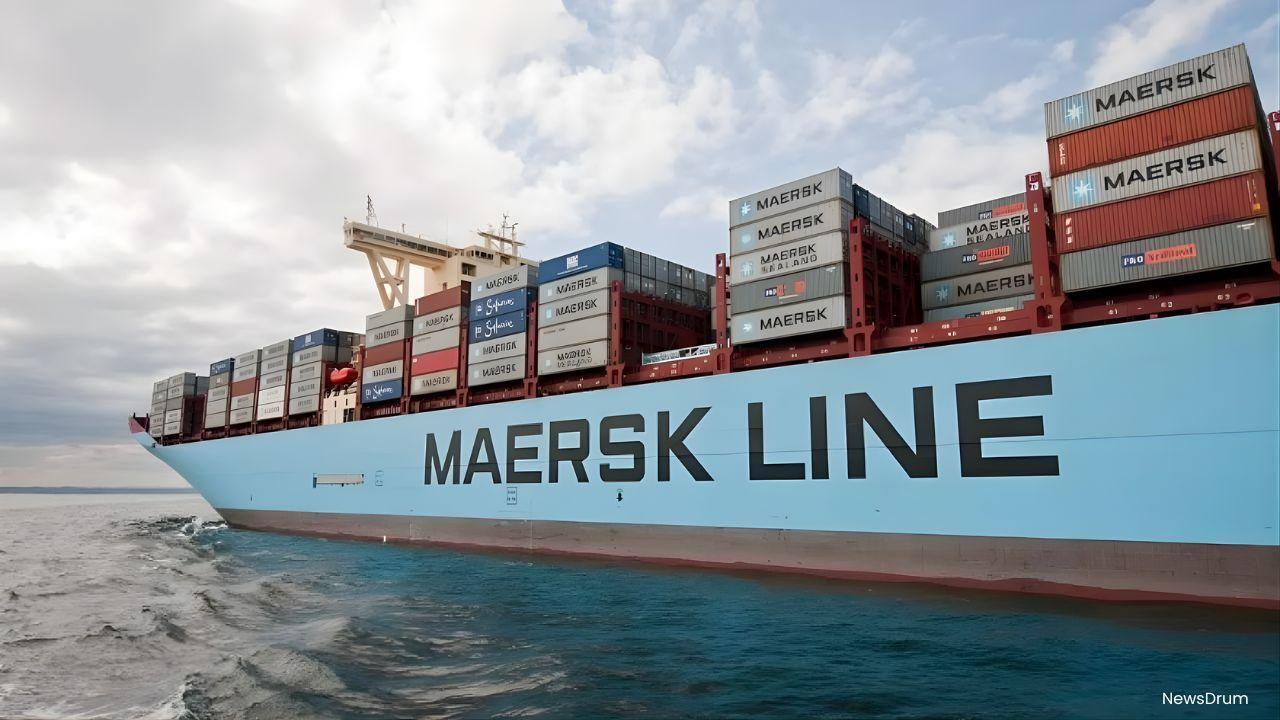
Global shipping major Maersk has introduced a temporary emergency bunker surcharge as geopolitical tensions in West Asia continue to disrupt fuel supply chains and maritime trade routes. The decision comes at a time when shipping companies worldwide are facing mounting operational pressure due to rising fuel costs and unstable shipping corridors.
The surcharge is expected to impact cargo bookings across international routes, including shipments connected to India. As one of the world’s largest container shipping companies, Maersk’s decision signals how deeply the West Asia shipping crisis is affecting global logistics networks.
The introduction of the Maersk bunker surcharge is directly tied to disruptions in marine fuel availability and rapidly increasing bunker fuel prices. Shipping companies rely heavily on bunker fuel to power cargo vessels, and fluctuations in fuel supply can dramatically increase operational costs.
Recent geopolitical tensions have disrupted energy supply chains passing through critical maritime chokepoints in the Middle East. These disruptions have created uncertainty in fuel availability, forcing shipping companies to take emergency measures to stabilize their global operations.
The surcharge has therefore been introduced to cover additional costs related to fuel availability, pricing volatility, and operational adjustments required to maintain shipping services.
The emergency bunker surcharge will apply to new cargo bookings made across Maersk’s global shipping network. Industry insiders say the charge will vary depending on container type and shipment size, affecting both standard and specialized cargo containers.
For exporters and importers, this means higher freight costs for shipments moving across major international trade corridors. The surcharge is expected to influence shipping rates for businesses relying on maritime cargo transport, particularly those involved in large-scale containerized trade.
Shipping companies often introduce such emergency charges during periods of extreme market volatility to maintain service continuity and avoid disruptions to cargo movement.
The broader global shipping disruption has been triggered by escalating tensions in the Middle East, one of the world’s most critical regions for energy and maritime trade. Key sea routes connecting Asia, Europe, and Africa pass through these waters, making any instability in the region a major concern for shipping companies.
When security risks increase in strategic maritime corridors, vessels are often forced to reroute or delay operations. Such changes increase fuel consumption, extend travel times, and push shipping costs higher. For logistics providers and shipping lines, these disruptions create complex operational challenges that affect global trade flows and supply chain reliability.
The ripple effects of the Maersk bunker surcharge are likely to extend far beyond the shipping industry. Higher freight charges can affect global supply chains, increasing transportation costs for manufacturers, exporters, and retailers.
Companies that depend heavily on maritime shipping may see increased logistics expenses, which could eventually translate into higher prices for goods in international markets. Exporters in sectors such as electronics, machinery, and consumer goods are particularly sensitive to changes in container shipping rates. As shipping costs rise, businesses may need to reconsider supply chain strategies, adjust shipping schedules, or renegotiate freight contracts with logistics providers.
The introduction of the emergency bunker surcharge highlights the fragile nature of global maritime trade during periods of geopolitical instability. Shipping companies are constantly balancing operational efficiency with the need to maintain reliable cargo movement across international routes.
For Maersk and other major shipping operators, managing rising maritime fuel costs while maintaining service continuity will remain a key challenge as the crisis in West Asia continues to evolve.
If tensions persist and fuel supply chains remain unstable, additional surcharges or shipping adjustments could become a common feature across global container trade. For the shipping industry, the coming months may prove crucial in determining how global logistics networks adapt to an increasingly uncertain geopolitical landscape.
#trending #latest,Maersk bunker surcharge, emergency bunker surcharge, global shipping disruption, West Asia shipping crisis, maritime fuel costs, container shipping rates, global supply chains





Advances in Aerospace Technology and Commercial Aviation Recovery
Insights into breakthrough aerospace technologies and commercial aviation’s recovery amid 2025 chall

Defense Modernization and Strategic Spending Trends
Explore key trends in global defense modernization and strategic military spending shaping 2025 secu

Tens of Thousands Protest in Serbia on Anniversary of Deadly Roof Collapse
Tens of thousands in Novi Sad mark a year since a deadly station roof collapse that killed 16, prote

Canada PM Carney Apologizes to Trump Over Controversial Reagan Anti-Tariff Ad
Canadian PM Mark Carney apologized to President Trump over an Ontario anti-tariff ad quoting Reagan,

The ad that stirred a hornets nest, and made Canadian PM Carney say sorry to Trump
Canadian PM Mark Carney apologizes to US President Trump after a tariff-related ad causes diplomatic

Bengaluru-Mumbai Superfast Train Approved After 30-Year Wait
Railways approves new superfast train connecting Bengaluru and Mumbai, ending a 30-year demand, easi



