Post by : Avinab Raana
Photo : X / Martin Woods
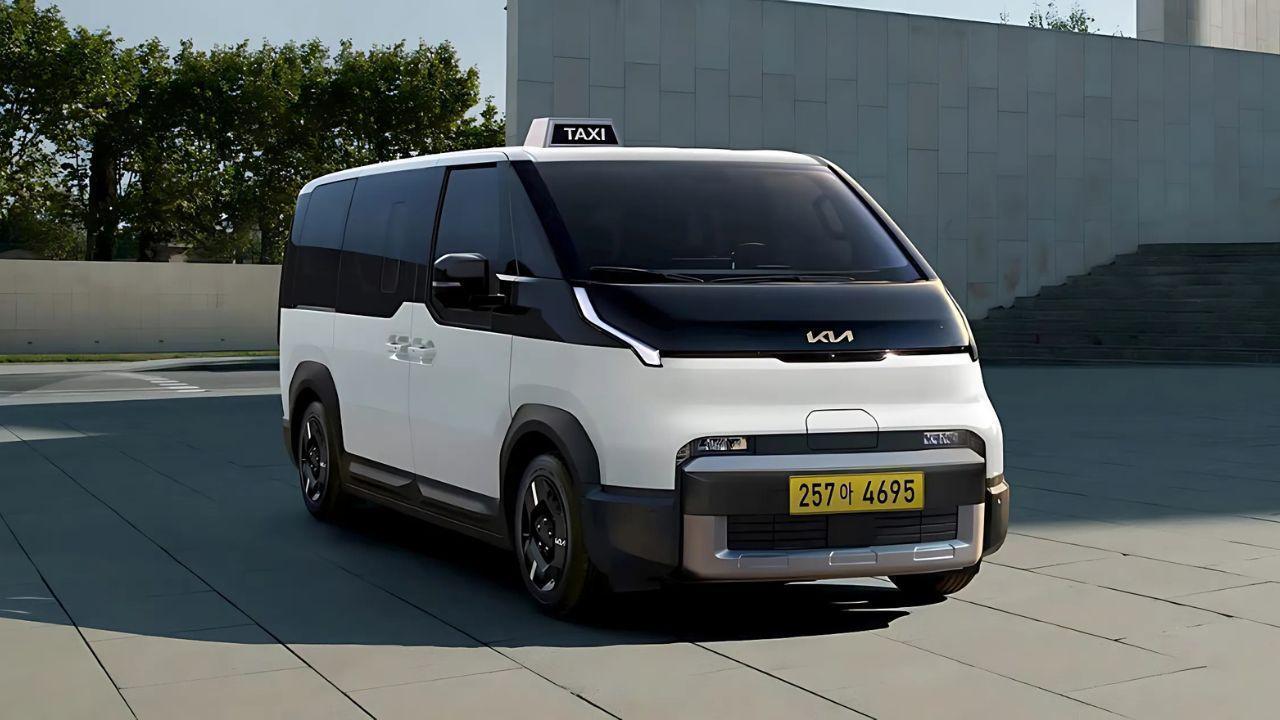
Kia has officially launched the PV5 Taxi variant, its first electric van built specifically for ride-services. Under its Platform Beyond Vehicle (PBV) line, the PV5 is designed to be versatile, but this taxi version brings features aimed squarely at drivers, passengers and fleet operators. With a long-range battery, custom infotainment system, driver-friendly touches, and a competitive price, Kia aims to pull ahead in the growing electric taxi market, especially in places pushing for clean transit solutions.
The PV5 is Kia’s first electric van under its PBV business. PBV stands for “Platform Beyond Vehicle” and signals a shift to vehicles built for many use-cases. The PV5 will be offered in many body styles: passenger, cargo, open bed, luxury versions, and others. The taxi version joins this flexible family. The core architecture is supported by Kia’s E-GMP.S platform, a skateboard style EV platform with multiple battery pack options. This gives Kia the ability to deliver range, performance, and adaptability needed for both private use and commercial fleets.
The PV5 Taxi is built around a 71.2 kWh battery pack, which gives it approximately 358 km (222 miles) of range on a single charge. That kind of range is significant for taxi drivers who need longer shifts and must minimize downtime. For charging, Kia claims it can be fast-charged from 10% to 80% in about 30 minutes, depending on the charger, which helps reduce scheduling issues for frequent users. The passenger and cargo versions also have smaller battery options, which may trade off range for lower cost and lighter payloads.
Kia has outfitted the PV5 Taxi with upgrades aimed at driver and passenger comfort. Features include protective floor mats for easy cleaning, USB-C ports for rear passengers to charge devices, a driver footrest, sliding doors for second row passenger access, and a special infotainment system dubbed “All-in-One Display 2”. The display integrates taxi-specific needs: navigation, payment apps, passenger info, Kia Connect, driver assistance features, all neatly in a 12.9-inch screen. These touches are not just cosmetic. They reflect Kia’s understanding that fleet operators want durability, easy maintenance, and features that serve riders’ expectations.
In Korea, the PV5 Taxi starts at 45,400,000 won (about US$33,000) with the standard configurations. The upgraded All-In-One Display 2 is an optional extra (~370,000 won or ~US$268). Kia expects to sell 3,000 to 4,000 PV5 units in its first full year of availability. But by the end of the decade, the goal is far larger: about 17,000 PBVs annually across variants. South Korea gets the early start; Europe is also in Kia’s rollout plans. The strategy is to scale both production and service usage to make PV5s a common sight in fleets, ride-hail services, and cargo use.
What gives the PV5 Taxi an edge is the combination of range, price, and features. Many electric vans or taxis today compromise heavily in one of those areas: either cost is very high, or range is limited, or comfort is basic. Kia has tried to balance these. The 222-mile range lets the taxi work without constant charging breaks. The pricing is aggressive for a dedicated EV taxi variant. And the custom features like rear USB ports, sliding doors, easy-clean materials reduce wear, reduce complaint rates, and improve passenger satisfaction. For fleet operators, total cost of ownership may look favorable when factoring lower fuel cost, fewer maintenance points, and these enhancements.
Still, launching a dedicated EV taxi is not without risk. Charging infrastructure must be available and reliable. In many cities, public chargers or depot chargers may be limited. The claimed fast-charge times assume ideal conditions; in real traffic, heat and charger availability affect speeds. Payloads matter too—fully loaded, with passengers or luggage, range drops. Also, cost of maintenance, battery degradation over time, and assuring high uptime will be critical for fleet buyers. Kia will need strong after-sales service, parts availability, and warranty support to make operators comfortable.
Adding the PV5 Taxi into markets where taxi or ride-hail fleets are pushing toward electrification means Kia could see big adoption. Cities are enforcing emissions rules, offering incentives or subsidies, pushing for clean-air zones. Having a van designed for taxi use gives Kia an opening into public transport fleets, shared mobility services, airport shuttles, and ride-hailing partners. It can help accelerate electrification of urban mobility, reduce noise and air pollution, and give riders a better experience.
For drivers, lower running cost, fewer moving parts, no tailpipe emissions, and lower operating cost per mile are key benefits. The improved cabin layout, driver features like the footrest, durable flooring, easy access sliding doors reduce fatigue and attempt to make long shifts bearable. Passengers get modern amenities: charging ports, clean sealed interiors, possibly apps integrated in the cabin, good visibility, and better comfort. For both, cleaner rides, quieter operation, and lower emissions are big pluses. For many riders, EV taxis are becoming the preferred choice, especially in cities where pollution or cost of fuel are high.
The PV5 is the spearhead of Kia’s broader PBV business. PBV aims to serve not just private customers but commercial, logistic, ride-hail, service vehicles, mobile shops, and specialized uses. Variants like luxury passenger, refrigerated cargo, pickup or open bed, and campers are planned. The strategy behind platforms like this is flexibility: build a strong base, allow many versions, keep production efficient, and amortize development across variants. With the PV5 Taxi, Kia is showing it can design not just for consumers, but for business demands, which often are tougher (uptime, reliability, cost pressure).
Competing electric vans and taxi-suitable vehicles exist: VW ID.Buzz, Mercedes eSprinter, Ford E-Transit (in markets where available). PV5 matches or beats some in range, sometimes lags others in top speed or interior opulence. But for many fleet buyers, a balanced package matters more than headline specs. If Kia’s pricing, battery durability, charging infrastructure advantage hold up, PV5 Taxi may beat rivals on total cost and usability. The modular design and specific taxi features give it differentiation. Also, Kia’s early production scaling and factory capacity will influence how quickly PV5s can reach fleet operators.
Much depends on how Kia executes from 2025 onward. Production must be smooth. Kia’s Hwaseong EVO plant in South Korea is set to produce PBVs including PV5. The first deliveries happen in Korea and Europe, then expansion to more markets. Governments and local authorities offering incentives for EV taxis will matter. Fleet financing options, leasing options, residual value will matter to operators. If Kia can partner with ride-hail platforms or city taxi authorities, it can accelerate adoption. Also service networks, charging infrastructure, and parts supply must keep pace.
The Kia PV5 Taxi marks an exciting new chapter in electric van adoption for ride services. It blends long range, practical features, and cost that could make it a strong choice for fleets aiming to go electric. While there are risks charging infrastructure, range under real loads, maintenance and resale value, it seems Kia has thought through many of the major pitfalls.
If the PV5 Taxi proves reliable, durable and cost-efficient in real life, it could push many operators over the line to switch to electric. The van electrification wave could move from light delivery and private use into the core of urban mobility: taxis, shuttles and shared rides. That’s where PV5 could shine.
For riders, fewer emissions, cleaner skies and smoother, quieter rides. For drivers and operators, savings and long term performance. For cities, lower pollution, less noise and better mobility infrastructure. The PV5 Taxi is more than just a van on wheels, it might be a blueprint for what electric urban transport looks like in coming years.
Kia PV5, Electric van taxi, PBV platform









Advances in Aerospace Technology and Commercial Aviation Recovery
Insights into breakthrough aerospace technologies and commercial aviation’s recovery amid 2025 chall

Defense Modernization and Strategic Spending Trends
Explore key trends in global defense modernization and strategic military spending shaping 2025 secu

Tens of Thousands Protest in Serbia on Anniversary of Deadly Roof Collapse
Tens of thousands in Novi Sad mark a year since a deadly station roof collapse that killed 16, prote

Canada PM Carney Apologizes to Trump Over Controversial Reagan Anti-Tariff Ad
Canadian PM Mark Carney apologized to President Trump over an Ontario anti-tariff ad quoting Reagan,

The ad that stirred a hornets nest, and made Canadian PM Carney say sorry to Trump
Canadian PM Mark Carney apologizes to US President Trump after a tariff-related ad causes diplomatic

Bengaluru-Mumbai Superfast Train Approved After 30-Year Wait
Railways approves new superfast train connecting Bengaluru and Mumbai, ending a 30-year demand, easi



